Introduction to Kerala Green Palette Meen Peera Gemstones
Kerala green palette Meen Peera gemstones define Kerala. You see this warm yellow-green tone in rice fields, monsoon skies, and in gemstones passed across generations. Meen Peera Pattichathu shows this color naturally, linking to Peridot, Green Tourmaline, Jade, and other earthy stones. As someone who studies color every day, I often notice unexpected parallels between the natural shades in our cuisine and the mineral tones found deep underground. This idea connects closely to what I wrote in my article Chatti Choru and Rough Gems: Raw Beauty in Food and Stone, where color in food reflects deeper stories. Meen Peera Pattichathu offers one of the clearest examples. Its warm yellow-green tint links beautifully to Peridot, Green Tourmaline, Jade, and other earthy stones that share the same gentle glow.
Meen Peera Pattichathu and the Kerala green palette Meen Peera gemstones
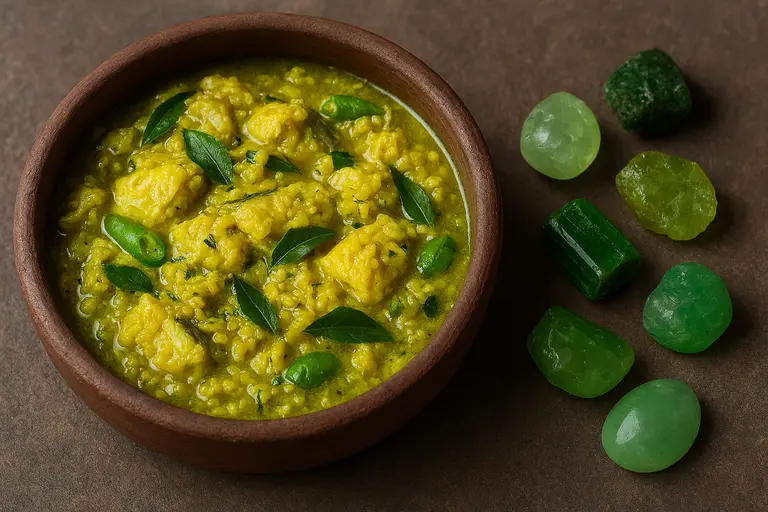
Meen Peera Pattichathu remains one of Central Kerala’s most honest dishes, not just in taste but also in color. The preparation starts with small fish such as Anchovies or Sardines mixed with grated coconut, Kanthari chillies, ginger, turmeric, and salt. Slowly cooking this mixture creates a soft yellow-green tone rather than a bright, leafy green. The turmeric brings warmth, while the chilies add a faint green tint. When the coconut oil rises, the surface develops a translucent sheen that resembles the oily luster seen in certain gemstones. Gemology describes this area of the spectrum as chartreuse or olive, a region between warm yellow and gentle green. Meen Peera naturally settles into that shade and holds it with surprising consistency.
How Cooking Mirrors Kerala Green Palette Meen Peera Gemstones
The color development in this dish reflects the way certain minerals form in nature. A clay pot behaves like a miniature version of the earth. The ingredients become inclusions, each contributing a part of the final appearance. Slow heat acts like gentle geological pressure. Every minute of cooking merges yellow and green elements, just as iron and magnesium influence gemstone tones. This slow merging gives Meen Peera its signature pale green, a shade that never becomes overly vibrant because the ingredients remain balanced. The process feels almost lapidary; a careful hand gives better results than aggressive heat, much like the approach I describe in my article Kerala Gemstone Expert Burmese Ruby Meen Mulakittathu, where subtle handling changes the outcome drastically.
Peridot and the Kerala green palette Meen Peera gemstones connection
Peridot stands out as the closest gemstone match for Meen Peera. It receives its green color from iron within its essential structure (rather than trace impurities), which ensures the gem is always a yellow green to olive-green hue. When you hold a well-cut Peridot in light, you often notice an oily shine that resembles the surface of Meen Peera when the dish finishes cooking. Both show a warm, earthy glow created by natural processes without artificial enhancement. This visual and emotional similarity forms the strongest bridge between Kerala’s kitchen and the mineral world.
For readers who want to explore this spectrum in more detail, the GIA Gem Encyclopedia offers clear references to how yellow-green stones develop their tones. The descriptions support how Peridot’s structure keeps its color stable, the same way Meen Peera maintains its gentle green without sudden shifts.
Green Tourmaline in Kerala Green Palette Meen Peera Gemstones
Green Tourmaline, known locally among jewelers as Verdelite, follows Meen Peera on the color spectrum. While Tourmaline varies from mint to deep forest tones, the lighter end of the range aligns beautifully with the coconut base of the dish. The deeper shades echo the curry leaves mixed during cooking. Because Tourmaline carries strong clarity and a Mohs hardness of 7 to 7.5, it remains durable even in Kerala’s humid climate. When correctly oriented and cut, the stone glows from within, just as the dish glows when turmeric and green components merge under low flame. This shared radiance keeps both forms of Kerala’s green consistently appealing.
Emerald, Jade, and Kerala’s Larger Green Context
Although Emerald and Jade do not match the exact color of Meen Peera, they belong to Kerala’s broader green identity. Emerald reflects monsoon-soaked foliage, a deeper and richer green influenced by chromium. Jade carries a waxy smoothness similar to the soft texture of cooked coconut. Both stones represent different versions of Kerala’s landscape and cultural memory. When you compare them to the softer tones of Meen Peera, you begin to recognise how Kerala carries multiple green palettes, each with its own story and ambiance. Every shade fits somewhere within the region’s natural rhythm.
Craftsmanship Across Kitchen and Lapidary Bench
Cooking Meen Peera and cutting gemstones require the same discipline. A slight change in timing can alter the dish’s balance. Overheating Kudampuli creates excessive sharpness, while too much turmeric pushes the mixture toward yellow and away from the intended green. Similarly, a gem cutter must orient Green Tourmaline with precision; an incorrect angle leads to extinction, where the stone appears dark. A perfect cut reveals life inside the mineral. Both crafts depend on patience, judgement, and a respect for natural materials. This is why clients often hear me say that cut quality matters more than size. A well-balanced stone behaves like a well-balanced dish, holding color and character without force.
Green as a Thread Between Food and Gemstones
Once you notice the connection, the relationship between Meen Peera and warm green stones becomes clear. One originates from Kerala’s coastline, the other from deep inside the earth. Each carries natural warmth and depends on careful craftsmanship. Together, they offer a color that tells a story of balance, tradition, and nature’s quiet intelligence. The next time you serve Meen Peera, take a moment to observe the pale green on your plate. You may find yourself thinking of Peridot, Tourmaline, or even the gentle hues of early monsoon leaves.
FAQ on Kerala’s Green Palettes
What gemstone color aligns closest with Meen Peera?
The pale yellow-green tone aligns best with Peridot or Yellow-Green Chrysoberyl, which sit naturally in that warm spectrum.
Are green stones practical for daily wear in Kerala?
Tourmalines and Green Sapphires handle daily use well because of their strength. Peridot and Emerald need more attention during heavy work due to their softness and brittleness.
Why explore Kerala cuisine through gemology?
Both food and gemstones celebrate raw, natural beauty. Kerala values unaltered flavors in cooking and unaltered inclusions in stones. The philosophy remains the same—honesty in the final result.
Author Bio
P.J. Joseph, also known as Saju Elizamma, Gemstone & Gold Consultant serving Kerala, Tamil Nadu, and Karnataka.