Introduction to Wood Jewelry Trends
Fashion never stops changing, and fine jewelry naturally changes right along with it. Today, visionary designers are pairing precious metals with carefully treated hardwoods to create pieces that feel modern, light, and deeply personal. While gold still anchors most fine jewelry collections, wood jewelry trends now play a growing supporting role in high-end displays.
Several distinct forces are currently driving this shift in the market. First, gold prices have climbed sharply; consequently, many designers now choose to stretch their precious materials further. Meanwhile, buyers increasingly demand jewelry they can wear all day without physical fatigue. At the same time, sustainability has become a primary concern for modern shoppers, and wood offers a natural, responsibly sourced option. As a result, wood has earned a permanent spot in select fine jewelry lines across the globe. If you enjoyed our earlier piece on sustainable jewelry materials, this guide explains why wood is becoming such a vital addition to contemporary design.
Why Top Designers Embrace Wood Jewelry Trends
Gold has held its prestigious place as the world’s favorite jewelry material for centuries. Still, designers have always experimented beyond metal alone. Throughout history, they have worked with ivory, shell, and jade to create standout pieces. Today, the resurgence of wood jewelry trends joins that same long-standing tradition of mixed-media artistry.
Unlike solid gold, wood carries almost no weight. Due to this physical advantage, designers can create oversized pendants, wide bangles, and dramatic earrings that still feel comfortable on the body. In addition, wood brings a visual warmth and organic texture that polished metal simply cannot match. Specifically, the matte finish of wood provides a stunning backdrop for light-reflecting materials. To compare other modern materials, you can read our guide on titanium jewelry.
Contrast and Visual Depth
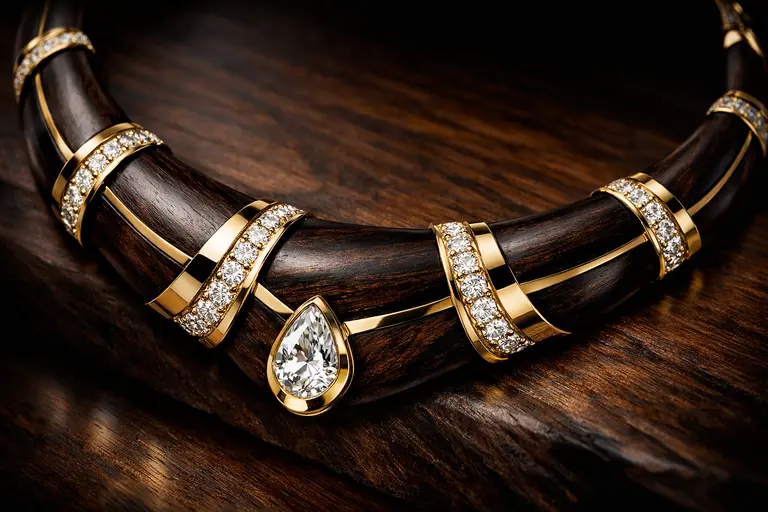
Contrast matters significantly in luxury design. Dark hardwoods, such as ebony or walnut, create a rich backdrop that makes diamonds and pearls stand out even more. For this reason, many designers use wood to support their gemstones rather than compete with them. Nevertheless, most fine jewelers still rely on gold for settings and structural strength. Consequently, wood complements gold instead of replacing it entirely. This balance is a key lesson from the Chow Tai Fook business model, which prioritizes material trust and innovation.
Natural Beauty as a Design Philosophy
Every piece of wood carries its own unique story. Unlike manufactured materials, real wood shows individual grain patterns, subtle color shifts, and a tactile organic texture. Consequently, no two wood jewelry pieces ever look identical. This individuality speaks directly to buyers who value handmade luxury and one-of-a-kind possessions.
Additionally, wood adds an earthy quality that pairs beautifully with high-purity metals. Many designers now blend different textures; therefore, this combination gives jewelry more visual depth than gold alone can offer. As style preferences keep evolving in 2026, this balanced approach continues to gain fans among everyday buyers, not just elite collectors. It reflects the hidden networks in nature and business where the origin of the material defines its ultimate worth.
How Wood Jewelry Trends Impact the Global Market
Several respected jewelry houses have already shown that wood belongs in the world of Haute Joaillerie. For example, some luxury brands combine stabilized hardwoods with sapphires and emeralds. Likewise, independent designers often turn to reclaimed or responsibly sourced wood to craft distinctive rings.
Although wood jewelry remains a specialized category, it has started appearing more frequently at major international exhibitions. As a result, more shoppers now view wood as a premium, artistic choice. For details on responsible sourcing, you can visit the World Gold Council. Similarly, for guidance on ethical practices across the trade, check the Responsible Jewellery Council (RJC). This global oversight is handled by the industry sheepdogs who maintain quality standards in tech and jewelry alike.
Shifting Dynamics in the Indian Jewelry Scene
India holds one of the richest jewelry traditions anywhere. For generations, families have bought heavy gold for weddings and savings. That said, changing urban lifestyles have pushed designers toward lighter, more contemporary pieces. Because of this shift, a small but growing group of Indian designers now experiments with treated wood.
Rather than replacing traditional gold, they blend sandalwood or rosewood with gold and enamel. This creates bold yet lightweight jewelry that appeals to the younger generation. Often, these buyers choose jewelry for its design and craftsmanship rather than for gold content alone. Granted, wood jewelry still remains a niche segment; however, as designers keep innovating, it will likely gain more visibility across the country’s fine jewelry scene. This progress is essential for building India’s global brands.
Durability: Is Wood Jewelry a Lasting Choice?
Many people assume wood feels too fragile for daily wear, but properly treated wood tells a different story. First, skilled craftspeople dry and stabilize the wood using polymer treatments. These treatments strengthen the fibers and reduce the risk of moisture damage. They then apply protective finishes that help the surface resist scratches.
Owners should still avoid prolonged exposure to water and harsh chemicals. Regarding resale value, most commercial wood pieces derive their worth from the attached metals and gemstones. However, limited-edition designer pieces can attract genuine collector interest. Therefore, you should treat wood jewelry as wearable art rather than a purely financial commodity. Organizations like the Gemological Institute of America (GIA) continue to grade the gemstones in these settings to ensure quality.
FAQ About Wood Jewelry Trends
Does wood jewelry count as “fine” jewelry?
Yes, it does. In the context of wood jewelry trends, a piece is considered fine jewelry if it incorporates precious metals like 18k gold and genuine precious gemstones.
Will wood jewelry crack in a dry climate?
If the wood is professionally stabilized with resins, it becomes much more resistant to cracking. However, you should still avoid leaving it near direct heat sources like radiators.
What are the best types of wood for jewelry?
Ebony, sandalwood, rosewood, and walnut are the most popular choices. These hardwoods are dense, durable, and offer beautiful natural grain patterns.
Can I shower with a wood and gold ring?
It is not recommended. While the wood is treated, frequent exposure to soap and hot water can eventually dull the finish or weaken the bond between the wood and the metal.
Is wood jewelry hypoallergenic?
Generally, yes. Since the wood component is a natural material, it rarely causes skin irritation. However, you should always check the metal findings for nickel if you have sensitivities.
Disclaimer
This article serves educational and informational purposes only. The author has no financial affiliation with the jewelry brands or wood suppliers mentioned. Resale values and material durability can vary; therefore, readers should consult with a professional jeweler before making high-value purchases. Always verify certification for gemstones included in wood settings.