
Introduction
In the refined world of gemstones, the colored stone business represents a realm of artistry and opportunity far removed from the standardized precision of diamonds. Unlike diamonds, which follow fixed pricing charts (Rapaport), colored gems thrive in a boutique market where rarity, origin, and exquisite quality drive subjective values.
However, success demands not just business acumen but a gentleman’s virtues: unwavering education, steadfast relationships, and ethical integrity. This guide illuminates the path forward, blending timeless principles with actionable steps to help you navigate this vibrant industry with poise and profit.
Key Principles for the Colored Stone Business
To excel in this trade, you must treat it as a marathon, not a sprint.
1. Educate Yourself on the Colored Stone Business
To begin with, you must commit to lifelong learning. The colored stone business evolves with global trends and new gem mine discoveries. Formal credentials from prestigious bodies like the GIA (Gemological Institute of America) lay a solid groundwork. However, true mastery emerges from immersion—visiting bustling markets in Bangkok (for Rubies), Jaipur (for Emeralds), or the legendary Tucson Gem Show. Furthermore, engaging directly with seasoned traders reveals the dynamics of supply and demand that no classroom can replicate.
2. Build Strong Relationships and Trust
Next, prioritize personal connections. This industry hinges on reputation more than any contract. In South India, especially, business is personal. Cultivate bonds with suppliers and jewelers through transparency; a simple handshake backed by honest dealings often seals a deal worth a fortune. As a result, certifications from trusted labs act as your “passport,” turning one-time transactions into lifelong partnerships. You can read more about avoiding pitfalls in my guide on Gemstone Buying Mistakes.
3. Analyze the Colored Stone Business Market
Additionally, you must master the marketplace. Pinpoint your niche—whether the illustrious “Big Three” (Ruby, Sapphire, Emerald) or esoteric rarities like Paraiba Tourmaline. For instance, decide early if you will trade in rough stones or polished gemstones, as each segment attracts distinct players. Understanding these divides sharpens your competitive edge.
4. Understand Pricing and Value
Pricing is an art form. You must dissect the 4Cs—Color (hue, tone, saturation), Clarity, Cut, and Carat Weight—while factoring in Origin. For example, a Burmese “Pigeon’s Blood” Ruby fetches premiums far beyond its Mozambique counterpart. Tools like the new GIA Origin Reports 2026 help demystify this subjectivity, empowering informed negotiations.
5. Responsible Sourcing in the Colored Stone Business
Finally, ethical sourcing elevates your enterprise. Align with standards from the Responsible Jewellery Council (RJC), ensuring traceability from mine to market. In an era of scrutiny, a full provenance trail not only mitigates risks but enhances allure for discerning clients.
Practical Steps for Your Colored Stone Business
Transitioning from principles to practice requires deliberate action in the colored stone business.
Develop Your Eye for the Colored Stone Business
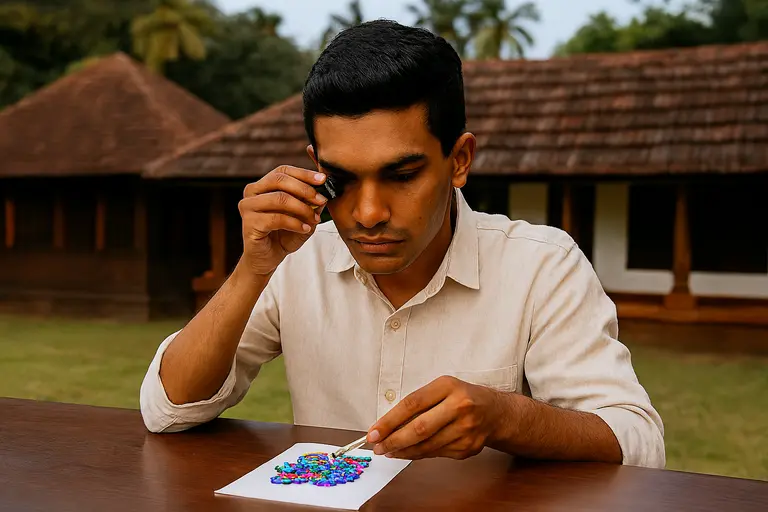
Start by honing your evaluation skills. Train your eye using a loupe, flashlight, and tweezers. Consequently, you will learn to spot treatments or synthetics—common pitfalls for novices. You can compare natural versus treated stones in my article on Kempu Ruby: Tamil Nadu vs Kerala.
Source Wisely
Next, prepare meticulously for trade shows. Curate a targeted stone list, set firm budgets, and interrogate origins. Moreover, compare vendors side-by-side. If you are buying Pearls, knowing the difference between Hyderabad (Processing) and China (Source) is critical. Read my guide on The Hyderabad Pearl Myth to understand this supply chain.
Certify Your Inventory
Therefore, always certify high-value items via impartial labs like GIA or GII. These reports detail color grades and treatments, instantly boosting credibility and resale value.
Market Your Colored Stone Business Effectively
Ultimately, blend digital prowess with a personal touch. Use SEO-optimized websites (like Sajuelizamma.com) to tell stories. For instance, pair a Kashmir Sapphire with a cultural tale. This draws clients who value narrative as much as sparkle.
Conclusion
In essence, the colored stone business promises handsome margins on bespoke pieces. Yet, it rewards patience, expertise, and relational finesse above all.
If you stick to the gentleman’s code of ethics, you will not just make a living; you will build a legacy.
FAQ
How do colored stones differ from diamonds in pricing?
Diamonds follow standardized price lists, while the colored stone business relies on subjective factors like origin and color purity, creating boutique pricing with higher volatility.
What are the best places to source rough stones?
Bangkok dominates for Ruby and Sapphire rough material, while Jaipur is famous for Emeralds and other colored stones. Always verify treatments on-site.
Is certification essential for sales?
Absolutely. GIA or GII reports build trust, especially for high-value items, reducing disputes and justifying premiums.
How can I ensure ethical sourcing?
Partner with RJC members and demand chain-of-custody documentation to uphold integrity.
What is the biggest challenge for newcomers?
Spotting treatments (like glass filling or heat treatment) is the hardest part. Counter it with hands-on training and lab verification.
Author Bio
P.J. Joseph, also known as Saju Elizamma, Gemstone & Gold Consultant serving Kerala, Tamil Nadu, and Karnataka.