gemstone identification

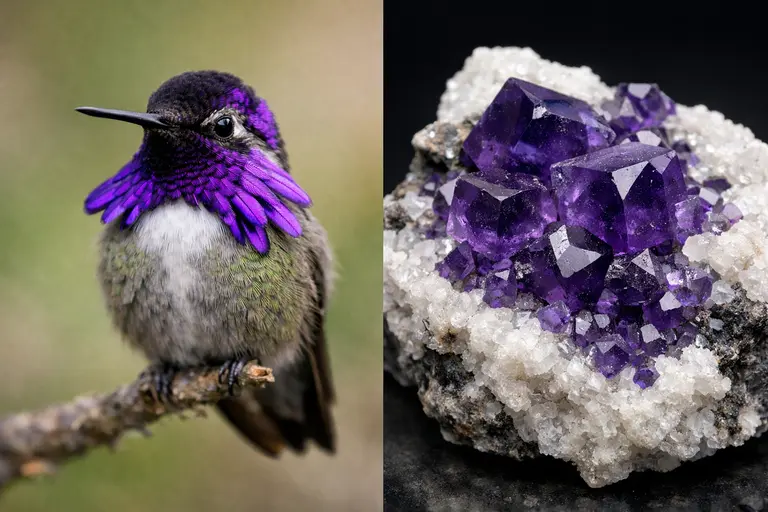
A side-by-side comparison of Purple Fluorite and Costa's Hummingbird displaying identical violet hues.

Purple Fluorite and Costa’s Hummingbird: Nature’s Match

Introduction to Purple Fluorite and Costa’s Hummingbird Have you ever spotted a color so vivid that it makes you stop and stare? The electric purple of Purple Fluorite and Costa’s Hummingbird does exactly that. Even though one soars through scorching desert skies and the other sits in a quiet collector’s display case, these two natural wonders share a […]

Purple Fluorite and Costa’s Hummingbird: Nature’s Match Read More »
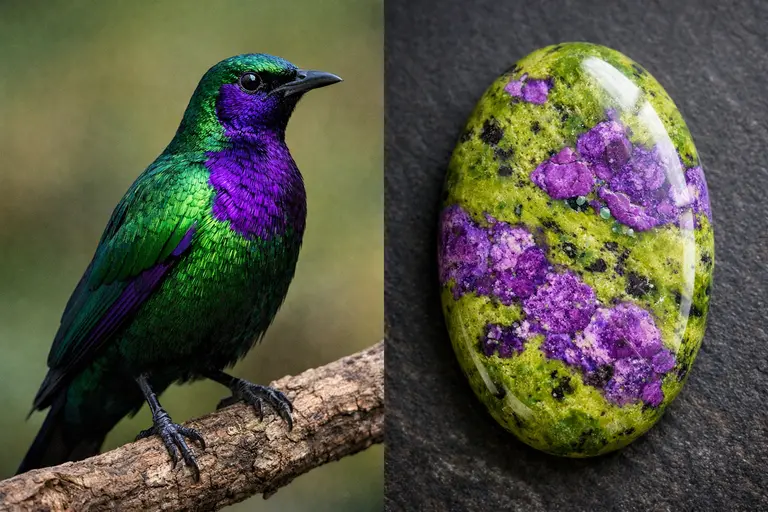
A side-by-side comparison of an emerald starling and atlantisite gemstone showing identical green and purple patterns.

Emerald Starling and Atlantisite: Nature’s Twin Colors

Introduction Nature loves to repeat its most beautiful patterns across different kingdoms. If you look closely at the emerald starling and atlantisite, you will notice something truly remarkable: they look almost identical. Both display a vivid, metallic green base covered with splashes of deep purple and violet. Whether you are a birdwatcher, a crystal lover, or

Emerald Starling and Atlantisite: Nature’s Twin Colors Read More »

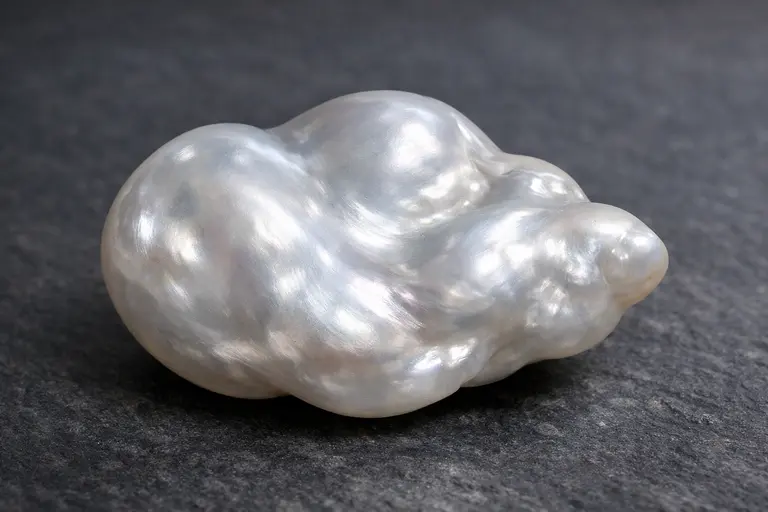
A large, white, baroque-shaped Giant Clam Pearl showing a distinct flame structure.

Giant Clam Pearls: What Every Buyer Needs to Know

Introduction Giant Clam Pearls rank among the rarest natural gems on Earth. Most people have never heard of them; yet some of the biggest pearls that explorers found came from giant clams rather than oysters. Whether you spotted one at a specialty market or found a curious listing online, you must understand what makes these gems unique. Specifically,

Giant Clam Pearls: What Every Buyer Needs to Know Read More »

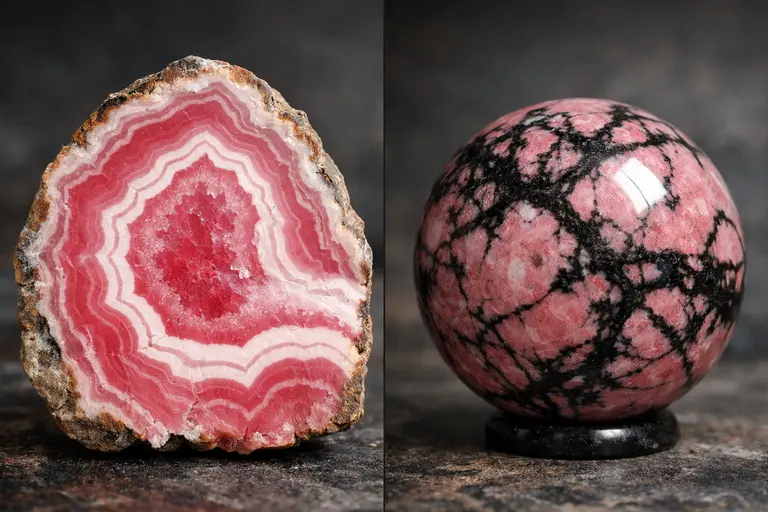
A pink banded Rhodochrosite cabochon next to a black-veined Rhodonite sphere illustrating Rhodochrosite vs Rhodonite.

Rhodochrosite vs Rhodonite: Differences, Uses & Buying Tips

Introduction In the mineral kingdom, names can be deceiving. Rhodochrosite vs Rhodonite are two of the most visually striking pink gemstones in the world. Both stones draw their names from the Greek word Rhodon, meaning “Rose.” Furthermore, both owe their warm, rosy hues to the presence of the element Manganese. As a result, they are frequently confused with one

Rhodochrosite vs Rhodonite: Differences, Uses & Buying Tips Read More »

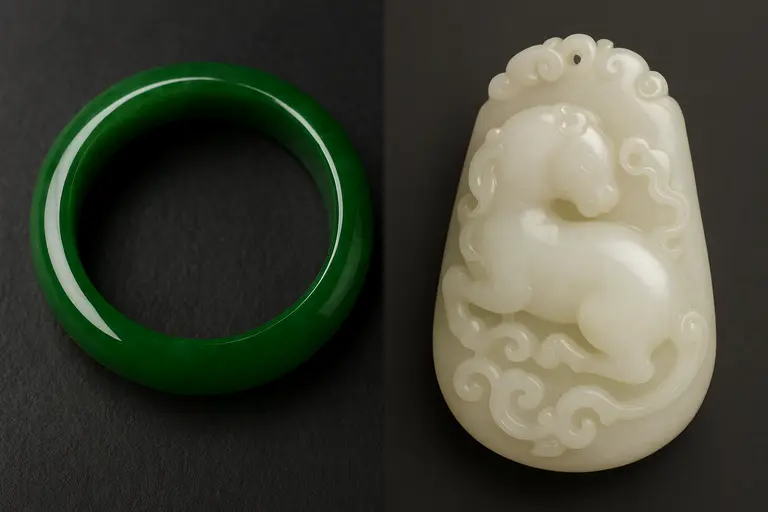
A comparison of a green translucent Jadeite bangle vs a creamy opaque Nephrite carving.

Nephrite vs Jadeite Jade: From One Name to Two Stones

Introduction In the world of gemstones, few words carry as much weight as “Jade.” For thousands of years, cultures across Asia and the Americas used this word to describe any tough green stone suitable for carving. However, modern gemology now recognizes a crucial distinction. Nephrite vs Jadeite Jade refers to two scientifically and commercially distinct minerals. While they

Nephrite vs Jadeite Jade: From One Name to Two Stones Read More »

Chrysoberyl gemstones showing standard yellow-green, cat’s eye, and alexandrite color change.

Chrysoberyl vs Alexandrite: Avoid This Costly Mistake

Summary Many buyers confuse chrysoberyl with alexandrite. That’s a costly mistake. While both belong to the same gem family, chrysoberyl vs alexandrite is a story of rarity, color, and value. Alexandrite’s color change makes it unique, while standard and cat’s eye chrysoberyl are beautiful, affordable, and strong.Learn how to identify each, avoid fake claims, and

Chrysoberyl vs Alexandrite: Avoid This Costly Mistake Read More »

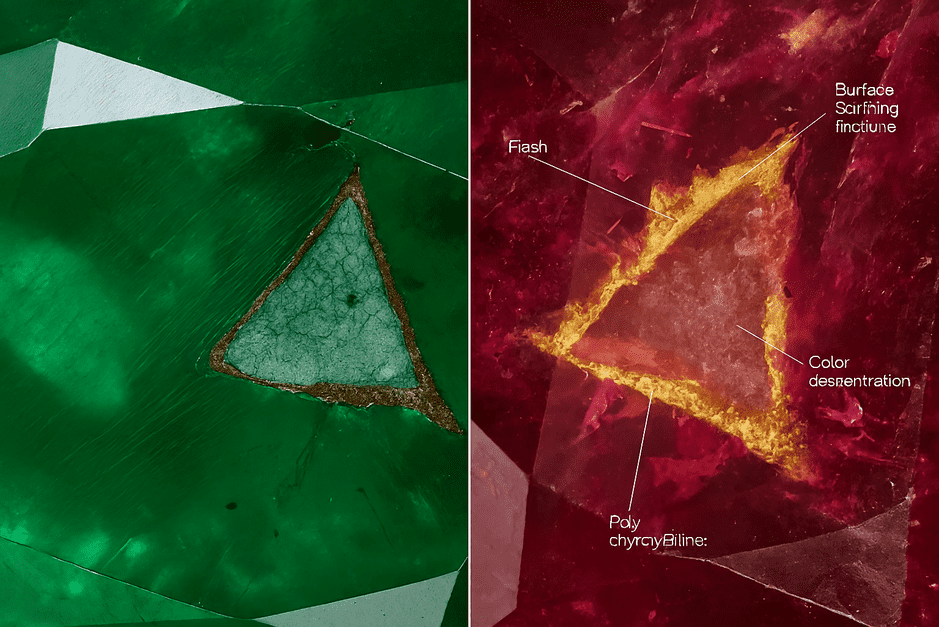
Fracture-filled emerald showing flash effect under loupe

Fracture-Filled Emerald Ruby | Spot the Flash Effect

Summary Many emeralds and rubies on the market are fracture-filled with glass or resin to improve their clarity. You can identify these treated gems by spotting the flash effect—bright color flashes seen through a loupe. This guide explains how fracture-filling works, how to detect it, and why it matters for gem buyers and collectors. Introduction

Fracture-Filled Emerald Ruby | Spot the Flash Effect Read More »

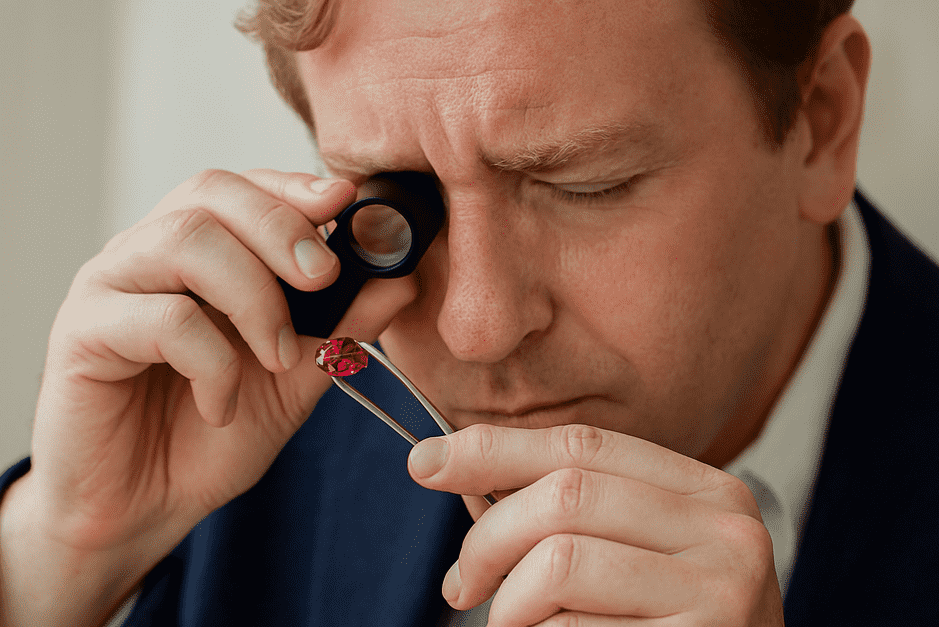
A gemologist examining a gemstone under a microscope, showing the importance of professional testing.

Knowing When You Don’t Know: Key Gemologist Skill

Summary In gemology, the wisest skill is humility. Knowing When You Don’t Know protects credibility, builds client trust, and keeps your science sharp. Introduction After 40 years in gemology, I’ve learned this truth: Knowing When You Don’t Know is your strongest professional skill.It’s not about memorizing data or mastering instruments—it’s about knowing your limits and

Knowing When You Don’t Know: Key Gemologist Skill Read More »

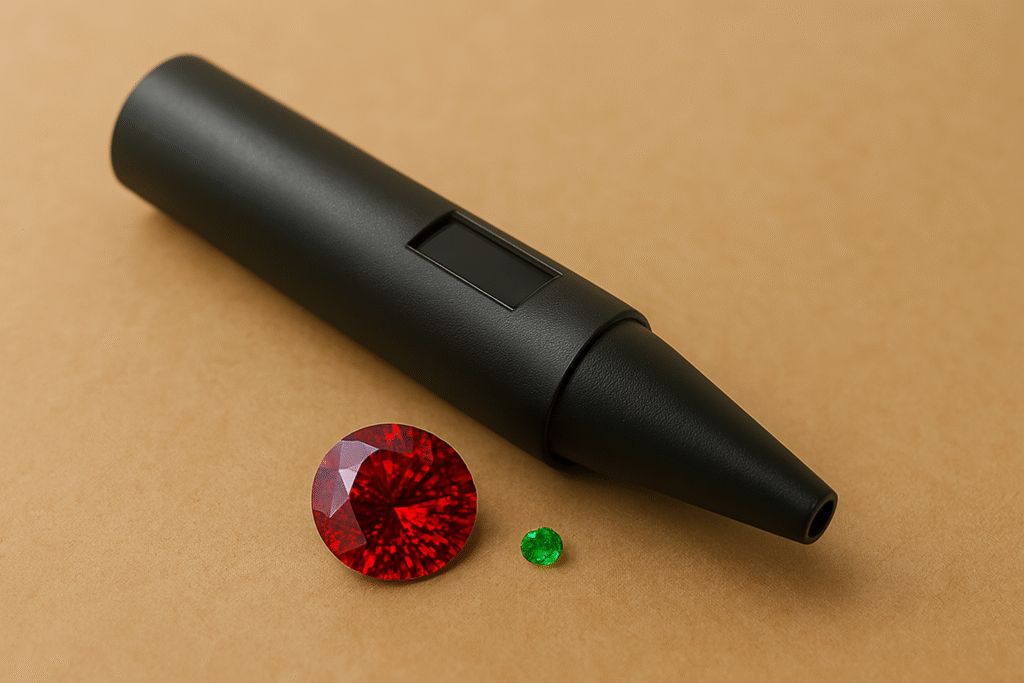
IndiRAM Portable Raman Spectrometer for Gemstone Testing

IndiRAM Portable Raman Spectrometer for Gemstone Testing

Summary The IndiRAM Portable Raman Spectrometer enables quick, non-destructive gemstone testing with dual mode acquisition, high throughput, and built-in spectral reference. It’s compact, field-ready, and suitable for lab and gem trade applications. Introduction The IndiRAM™ Portable Raman Spectrometer brings fast, non-destructive gemstone analysis to your lab or field setup.With dual mode signal acquisition, high Raman

IndiRAM Portable Raman Spectrometer for Gemstone Testing Read More »

How to Use a Spectroscope in Gemology

Summary The spectroscope helps gemologists identify gemstones by analyzing how they absorb light.This tool separates stones like ruby, spinel, garnet, and jadeite through unique absorption spectra.Understanding these spectral lines makes gemstone identification faster, more reliable, and scientific. Learn how to use a spectroscope in gemology. Discover how this simple tool separates rubies, garnets, spinels, and

How to Use a Spectroscope in Gemology Read More »