gemstone identification

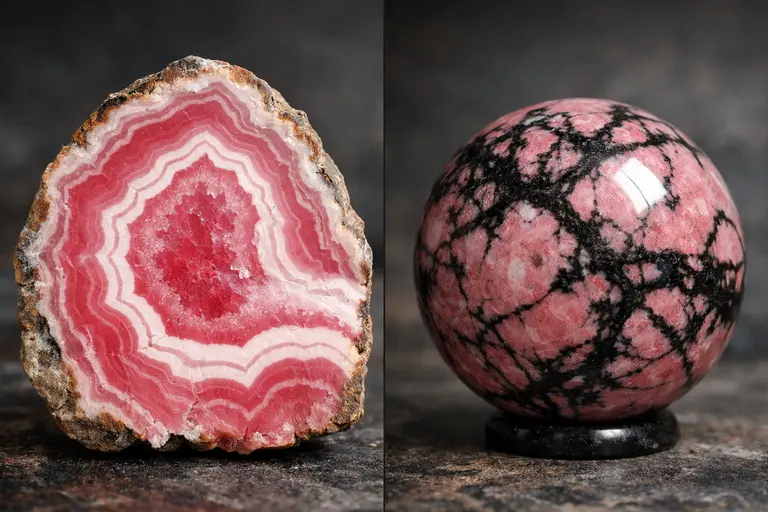
A pink banded Rhodochrosite cabochon next to a black-veined Rhodonite sphere illustrating Rhodochrosite vs Rhodonite.

Rhodochrosite vs Rhodonite: Differences, Uses & Buying Tips

Introduction In the mineral kingdom, names can be deceiving. Rhodochrosite vs Rhodonite are two of the most visually striking pink gemstones in the world. Both stones draw their names from the Greek word Rhodon, meaning “Rose.” Furthermore, both owe their warm, rosy hues to the presence of the element Manganese. As a result, they are frequently confused with one […]

Rhodochrosite vs Rhodonite: Differences, Uses & Buying Tips Read More »
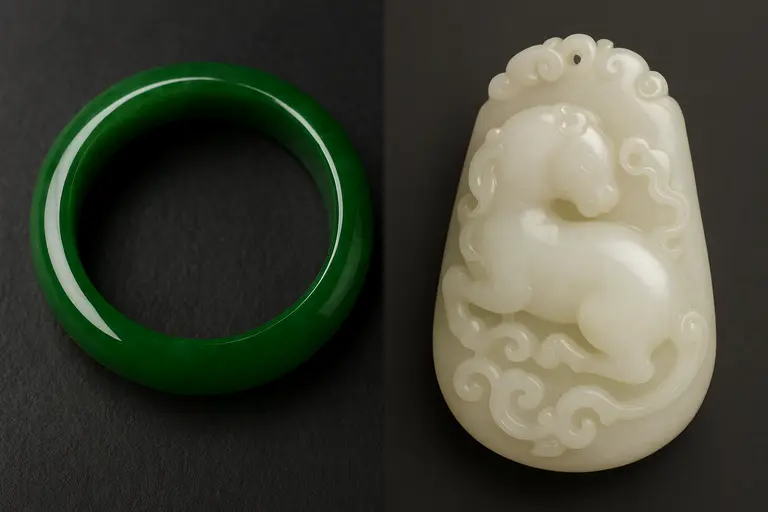
A comparison of a green translucent Jadeite bangle vs a creamy opaque Nephrite carving.

Nephrite vs Jadeite Jade: From One Name to Two Stones

Introduction In the world of gemstones, few words carry as much weight as “Jade.” For thousands of years, cultures across Asia and the Americas used this word to describe any tough green stone suitable for carving. However, modern gemology now recognizes a crucial distinction. Nephrite vs Jadeite Jade refers to two scientifically and commercially distinct minerals. While they

Nephrite vs Jadeite Jade: From One Name to Two Stones Read More »

Chrysoberyl gemstones showing standard yellow-green, cat’s eye, and alexandrite color change.

Chrysoberyl vs Alexandrite: Avoid This Costly Mistake

Summary Many buyers confuse chrysoberyl with alexandrite. That’s a costly mistake. While both belong to the same gem family, chrysoberyl vs alexandrite is a story of rarity, color, and value. Alexandrite’s color change makes it unique, while standard and cat’s eye chrysoberyl are beautiful, affordable, and strong.Learn how to identify each, avoid fake claims, and

Chrysoberyl vs Alexandrite: Avoid This Costly Mistake Read More »

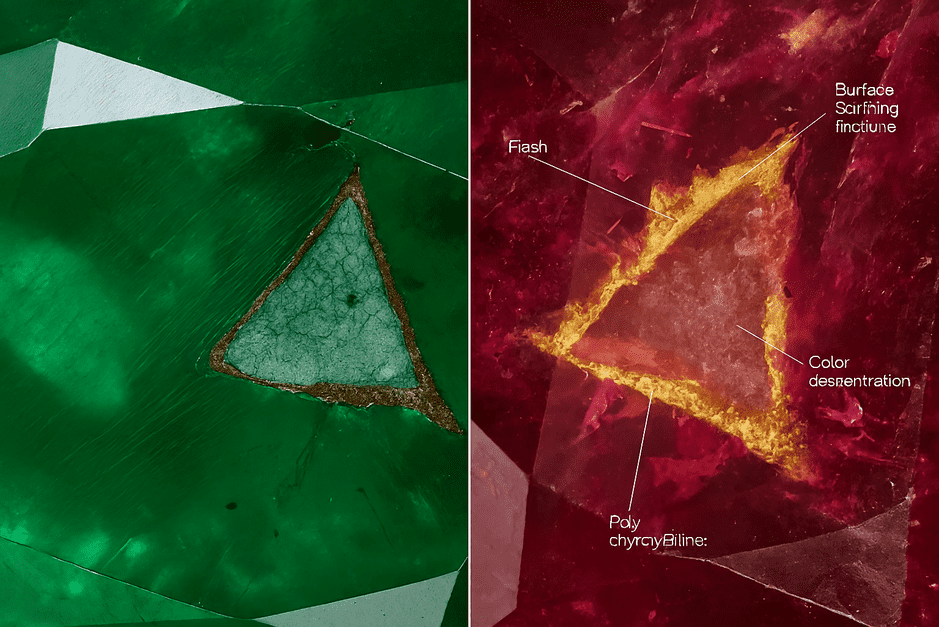
Fracture-filled emerald showing flash effect under loupe

Fracture-Filled Emerald Ruby | Spot the Flash Effect

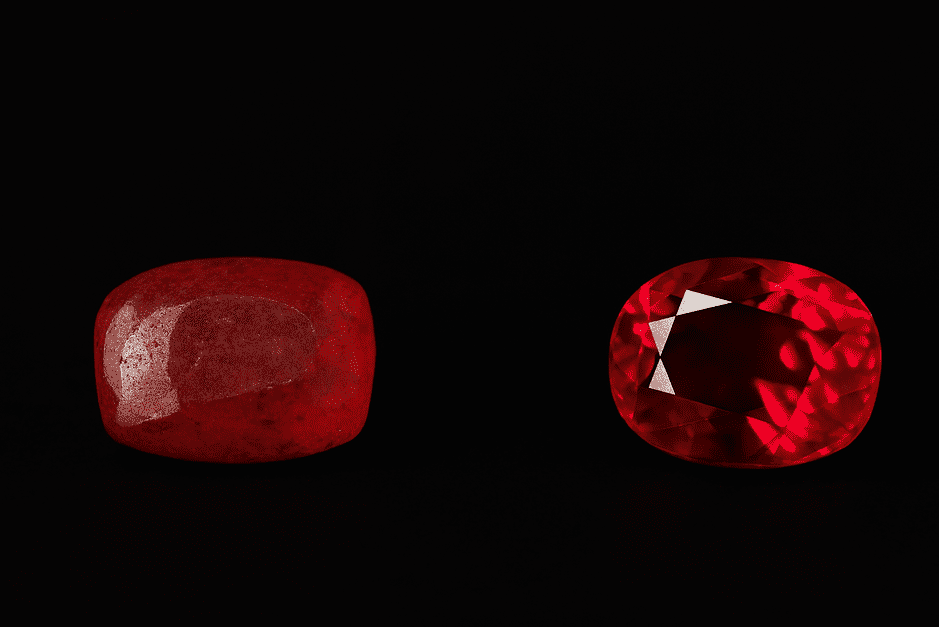
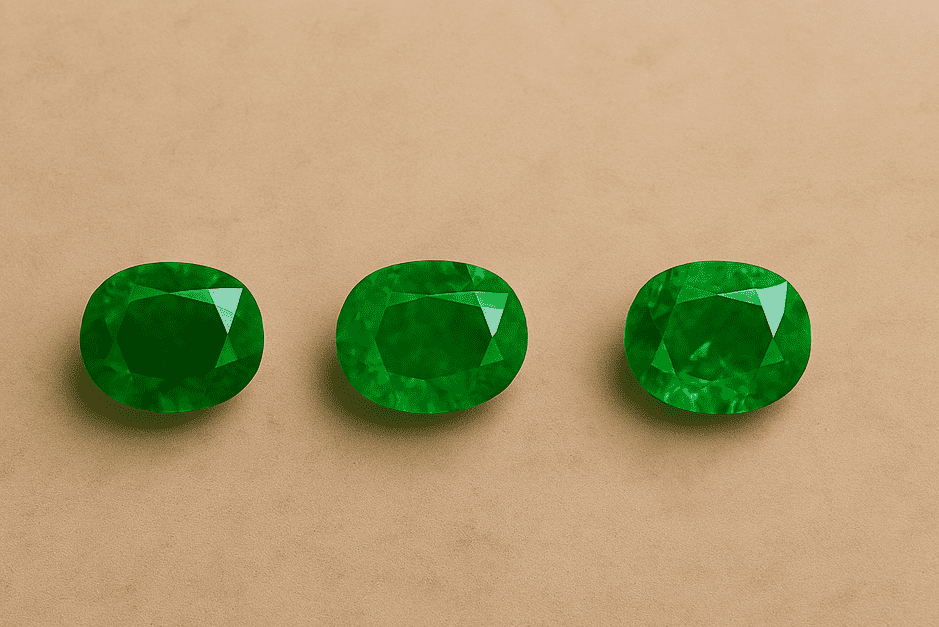
Summary Many emeralds and rubies on the market are fracture-filled with glass or resin to improve their clarity. You can identify these treated gems by spotting the flash effect—bright color flashes seen through a loupe. This guide explains how fracture-filling works, how to detect it, and why it matters for gem buyers and collectors. Introduction

Fracture-Filled Emerald Ruby | Spot the Flash Effect Read More »

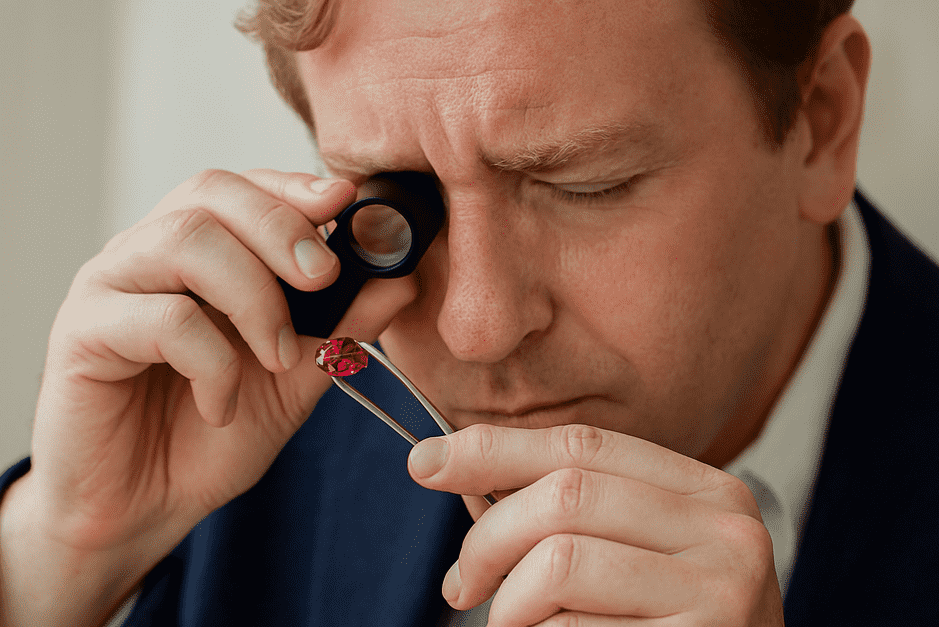
A gemologist examining a gemstone under a microscope, showing the importance of professional testing.

Knowing When You Don’t Know: Key Gemologist Skill

Summary In gemology, the wisest skill is humility. Knowing When You Don’t Know protects credibility, builds client trust, and keeps your science sharp. Introduction After 40 years in gemology, I’ve learned this truth: Knowing When You Don’t Know is your strongest professional skill.It’s not about memorizing data or mastering instruments—it’s about knowing your limits and

Knowing When You Don’t Know: Key Gemologist Skill Read More »

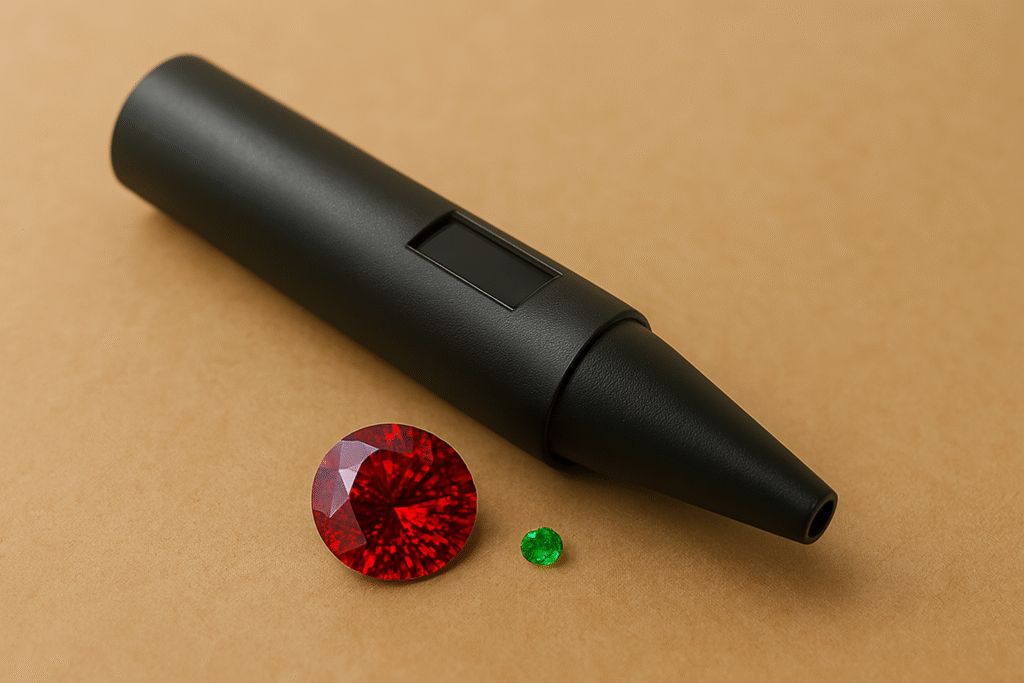
IndiRAM Portable Raman Spectrometer for Gemstone Testing

IndiRAM Portable Raman Spectrometer for Gemstone Testing

Summary The IndiRAM Portable Raman Spectrometer enables quick, non-destructive gemstone testing with dual mode acquisition, high throughput, and built-in spectral reference. It’s compact, field-ready, and suitable for lab and gem trade applications. Introduction The IndiRAM™ Portable Raman Spectrometer brings fast, non-destructive gemstone analysis to your lab or field setup.With dual mode signal acquisition, high Raman

IndiRAM Portable Raman Spectrometer for Gemstone Testing Read More »

How to Use a Spectroscope in Gemology

Summary The spectroscope helps gemologists identify gemstones by analyzing how they absorb light.This tool separates stones like ruby, spinel, garnet, and jadeite through unique absorption spectra.Understanding these spectral lines makes gemstone identification faster, more reliable, and scientific. Learn how to use a spectroscope in gemology. Discover how this simple tool separates rubies, garnets, spinels, and

How to Use a Spectroscope in Gemology Read More »

Gemologist using a refractometer to measure the refractive index of a gemstone placed table-down with contact liquid.

Refractometer in Gemology: A Simple Guide to R.I. Measurement

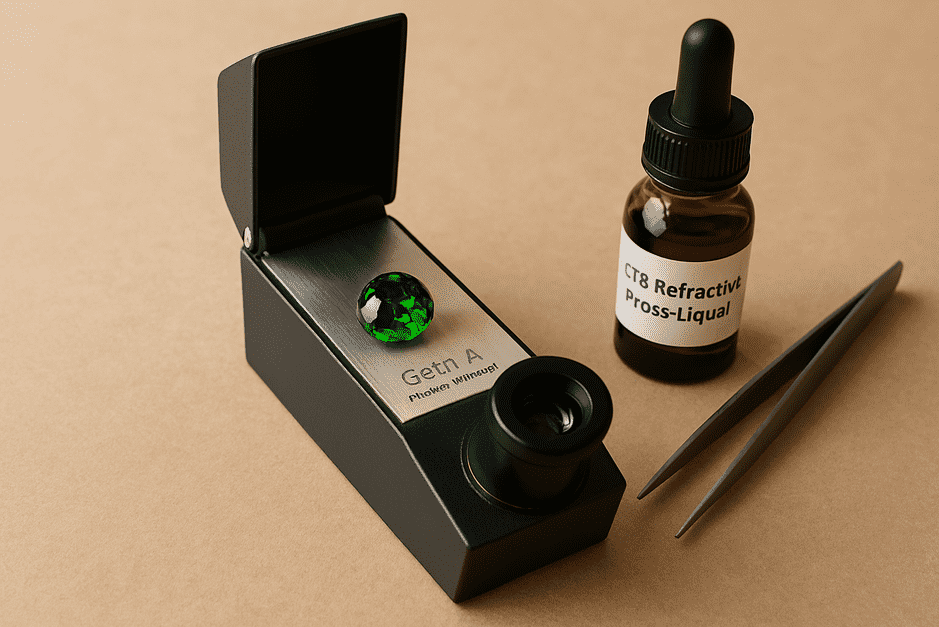
Summary A refractometer measures a gemstone’s refractive index using total internal reflection. It’s a quick, non-destructive, and accurate test in gemology. You’ll need a clean surface, contact liquid, and proper setup for reliable results. Flat surfaces reveal optic properties; curved surfaces provide mean R.I. values. Introduction A refractometer is one of the most important tools

Refractometer in Gemology: A Simple Guide to R.I. Measurement Read More »

The Black Prince’s “Ruby,” a large red spinel set in the British Imperial State Crown, mistaken historically for a ruby.

Red Spinel vs Ruby: Avoid Misidentification

Summary Red Spinel is often misidentified as ruby, a mistake that costs money and credibility. Learn how to distinguish them using simple tools and why honesty protects your reputation. Introduction For collectors and sellers, understanding red spinel vs ruby is crucial. Many people have mistakenly sold red spinels as rubies, including the famous Black Prince’s

Red Spinel vs Ruby: Avoid Misidentification Read More »

Comparison of natural, synthetic, and imitation gemstones showing different origins and appearances.

Natural, Synthetic, or Imitation Gemstones: Know Before You Buy

SummaryThis guide explains the differences between natural, synthetic, and imitation gemstones. Learn how each is formed, their value, and why asking the key question before buying protects your wallet. Discover practical tips, certification advice, and how to make informed gemstone purchases. What Are Natural, Synthetic, and Imitation Gemstones? Every gemstone sparkles, but do you know

Natural, Synthetic, or Imitation Gemstones: Know Before You Buy Read More »