Introduction
Most people recognize gold, silver, and platinum instantly, yet osmium remains a complete mystery to nearly everyone outside a scientific laboratory or a specialist jewelry workshop. Indeed, osmium holds the title of the rarest precious metal on Earth, and it also combines that extreme scarcity with incredible density and unusual chemical behavior. Consequently, high-end collectors and luxury designers have recently started paying closer attention to it, especially in its refined, crystalline form.
For many years, the industry ignored osmium because it was difficult to work with and required complex processing. However, modern technology has unlocked its potential as a decorative and investment asset. This article therefore explains why osmium is so scarce, where refiners find it, who actually uses it, and whether an everyday collector should consider owning the rarest precious metal on Earth. By understanding the unique properties of this element, you can appreciate why it is becoming a significant player in the alternative investment market.
Defining the Rarest Precious Metal on Earth
First and foremost, osmium exists in astonishingly small quantities within the Earth’s crust. According to the Royal Society of Chemistry, its average crustal abundance measures only 0.000037 parts per million. Therefore, when compared with gold, silver, or even platinum, osmium becomes almost invisible in geological terms. Because osmium belongs to the platinum-group metals (PGMs), miners rarely dig for it directly. Instead, refiners recover it as a byproduct while processing nickel and other platinum-group ores.
Origins of the Rarest Precious Metal on Earth
In addition to its natural rarity, the history of Earth’s formation explains much of osmium’s scarcity. Since osmium strongly bonds with iron, large amounts likely migrated toward Earth’s core during the planet’s early developmental stages. As a result, only tiny traces remain within reach in the crust today. Furthermore, osmium originally formed through intense nuclear processes inside dying stars.
Altogether, cosmic origins and planetary history combine to make osmium the rarest precious metal on Earth. Because the supply is so limited, any increase in industrial or luxury demand can significantly impact its market value. Unlike gold, which is found in large veins, osmium must be meticulously separated from tons of other material.
Mining the Rarest Precious Metal on Earth
Rather than forming its own distinct deposits, osmium typically appears alongside other platinum-group minerals in specific regions. Specifically, major global supplies come from the Bushveld Complex in South Africa, the Great Dyke in Zimbabwe, and the Norilsk-Talnakh region in Russia. According to the U.S. Geological Survey, these locations provide the bulk of the world’s platinum-group elements.
Consequently, osmium’s supply chain differs sharply from golds. While a gold deposit often justifies an entire mining operation on its own, osmium usually represents just a tiny fraction of a larger platinum-group refining process. Moreover, the political stability of these regions often dictates the global availability of the metal. Therefore, supply shocks in South Africa or Russia can lead to immediate scarcity in the osmium market. To learn more about how rare materials are authenticated, see our guide to gemstone and luxury verification.
Scientific Roles for the Rarest Precious Metal on Earth
Interestingly, many industrial and scientific uses involve osmium tetroxide rather than the metal itself. Specifically, researchers use this compound as a staining agent in microscopy to reveal cellular structures. However, this compound demands extremely careful handling because it can seriously damage the lungs, skin, and eyes. Consequently, collectors should never attempt to handle raw osmium chemicals without professional training.
Engineering the Rarest Precious Metal on Earth
Meanwhile, metallic osmium serves a handful of specialized industrial roles. Historically, manufacturers used hard osmium alloys for fountain-pen tips, instrument pivots, and electrical contacts. Furthermore, certain osmium compounds function as catalysts in complex chemical processes. As a result, the rarest precious metal on Earth maintains genuine industrial value even though its overall market stays relatively small compared to copper or iron.
Jewelry Trends for the Rarest Precious Metal on Earth
In recent years, a new market has emerged around crystalline osmium. Specialist companies now market this form for jewelry, high-end watches, and private collecting. For instance, the International Institute of Gemology (IIG) in Mumbai has introduced crystalline osmium to India’s jewelry professionals. This shows how the material has entered the country’s specialist gem conversation.
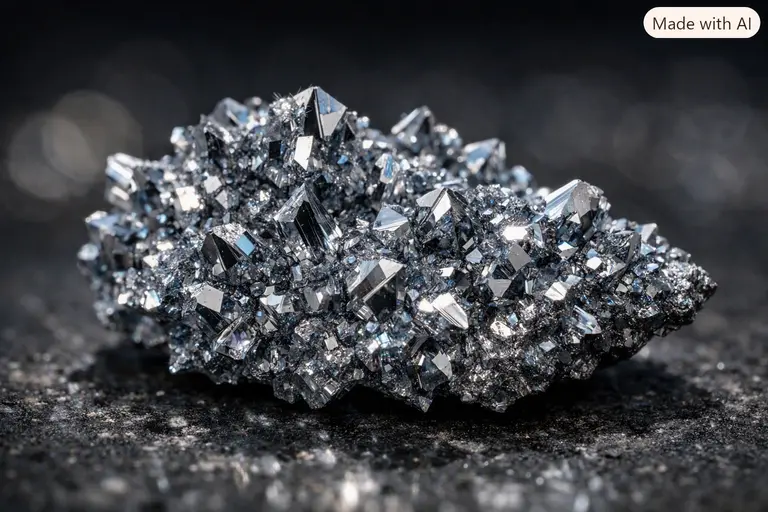
Crystallization changes the metal’s physical form from a dull powder into a brilliant, blue-silver surface that sparkles under light. However, buyers should understand that crystallization simply alters the physical appearance; it does not create a new chemical element. Consequently, collectors must still ensure they are purchasing metallic osmium from certified sources. The “sparkle” of crystalline osmium is often compared to a “galaxy” of tiny diamonds, making it a favorite for unique watch dials.
Investing in the Rarest Precious Metal on Earth
Although sellers promote crystalline osmium as a powerful alternative asset, it still lacks the deep, transparent market that gold enjoys. Therefore, before buying, a sensible collector should ask who will repurchase the item later. Since osmium does not offer the same liquidity as traditional precious metals, most people should treat it as a specialized collectible rather than a core financial investment.
Handling the Rarest Precious Metal on Earth
For an ordinary buyer, a few simple habits go a long way. First, always purchase a professionally prepared solid specimen from a reputable specialist. Next, protect the piece from unnecessary impact, since its high density does not guarantee it won’t chip. Finally, never attempt to melt or chemically alter an osmium specimen at home, as the vapors can be hazardous.
FAQ: Guide to the Rarest Precious Metal on Earth
Is Osmium really rarer than gold?
Yes, indeed. Osmium is significantly less abundant than gold. In fact, for every 10,000 tons of gold mined, only a few kilograms of osmium are recovered.
Is it safe to wear osmium jewelry?
Metallic osmium is generally safe to wear once it has been crystallized and certified. It is the chemical compounds of osmium, like the tetroxide, that are hazardous.
Why is osmium so dense?
Osmium is the densest naturally occurring element. Its atoms are packed together more tightly than those of any other material, making a small cube of it surprisingly heavy.
Can I buy osmium in India?
Yes. Specialist outlets and institutes like Osmium Institute India now provide certified crystalline osmium to local buyers and jewelers.
Does osmium tarnish like silver?
No. Osmium is highly resistant to corrosion and does not tarnish when exposed to air at room temperature. This makes it an excellent material for long-lasting luxury items.
Conclusion
Ultimately, osmium represents the pinnacle of geological rarity. As the rarest precious metal on Earth, it offers a combination of scientific wonder and aesthetic beauty that few other elements can match. Although it remains a niche market today, the growing interest from jewelry houses and watchmakers suggests a bright future. Whether you view it as a scientific curiosity or a unique addition to a jewelry collection, osmium proves that the Earth still holds many hidden treasures. For the smart collector, the key is to stay informed, verify certifications, and appreciate the incredible cosmic journey of this remarkable metal.
Disclaimer
This article serves general educational purposes only. Osmium products vary widely in form and purity. Readers should independently verify any specimen, seller, and pricing claim before making a purchase. The author has no financial affiliation with the labs or organizations mentioned.