
Summary
Too-good-to-be-true pearl prices often hide red flags—thin nacre, dull luster, poor matching, or even fake coatings. Learn how to identify these scams, protect your money, and buy pearls with confidence.
When a Pearl Price Looks Too Good
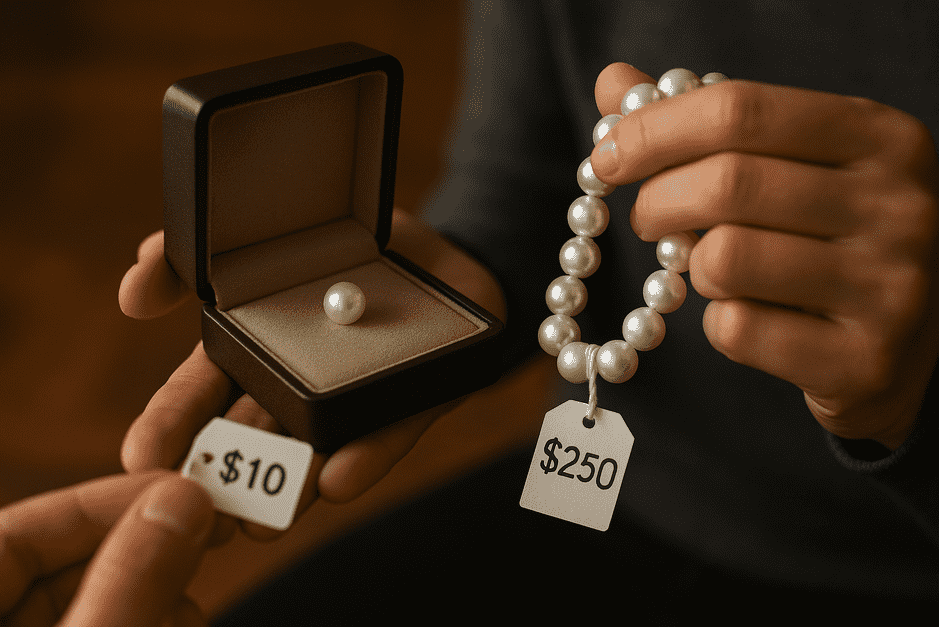
You walk into a shop and see a string of pearls at half the market price. It feels tempting. But before you reach for your wallet, stop and notice the pearl price red flags around you.
From my years in gemology, I’ve seen countless “discount” pearl offers that ended badly. Sellers cut corners to keep prices low, often at the buyer’s expense.
To learn how genuine pearls are formed, visit GIA’s Pearl Quality Guide
Common Pearl Price Red Flags
Thin nacre
A quality pearl forms thick layers of nacre. Cheap pearls often have a thin coating that peels or dulls fast.
Poor luster
Premium pearls glow deeply. Bargain pearls look chalky or flat.
Bad matching
Real pearl necklaces show even color and size. Discount strands are often mismatched.
Fake or imitation pearls
Many are plastic or glass beads coated with chemicals. They may sparkle briefly but soon fade.
For a clear comparison, read How to Identify Real Pearls and Natural vs Cultured Pearls
A Real Story from My Desk
A customer once brought me a necklace she bought during a “festival offer.” The price was too good to ignore. Within months, the surface chipped, and the luster vanished. She later discovered she had paid gold rates for coated beads.
Stories like this highlight the same pattern—pearl price red flags ignored at purchase often lead to regret later.
Questions to Ask Before You Buy
- How thick is the nacre layer?
- Do the pearls have consistent shine across the strand?
- Is there certification from GIA, IGI, or another trusted lab?
- Would you still buy them at a genuine pearl price?
Visit Gem Buying Tips for Beginners for a practical guide before your next purchase.
Practical Tip
If a pearl price looks suspiciously low, look deeper.
Real pearls take years to form and cannot be rushed or mass-produced cheaply.
Choose quality over quantity every time.
For authentic examples, see Mikimoto’s Pearl Craftsmanship
FAQ
1. What are the biggest pearl price red flags?
Unrealistic discounts, uneven colors, and lack of certification are the top warning signs.
2. Why are some pearls much cheaper than others?
They’re usually low-quality or imitation pearls with thin nacre and poor durability.
3. How can I confirm if pearls are genuine?
Rub two pearls together—real ones feel slightly gritty. You can also ask for lab certification.
4. Are fake pearls harmful?
Coated beads may peel or stain clothes over time. Always verify authenticity before buying.