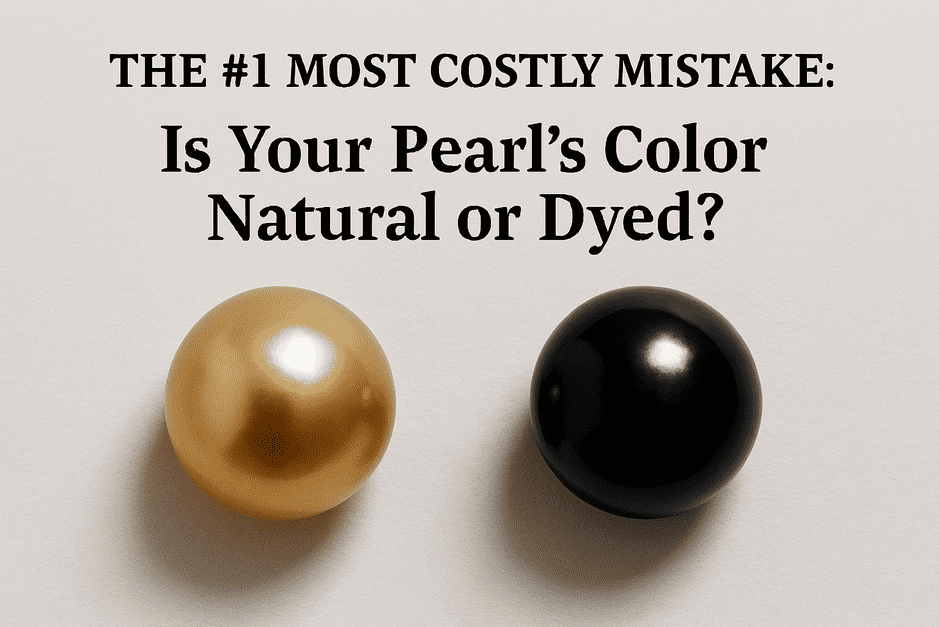
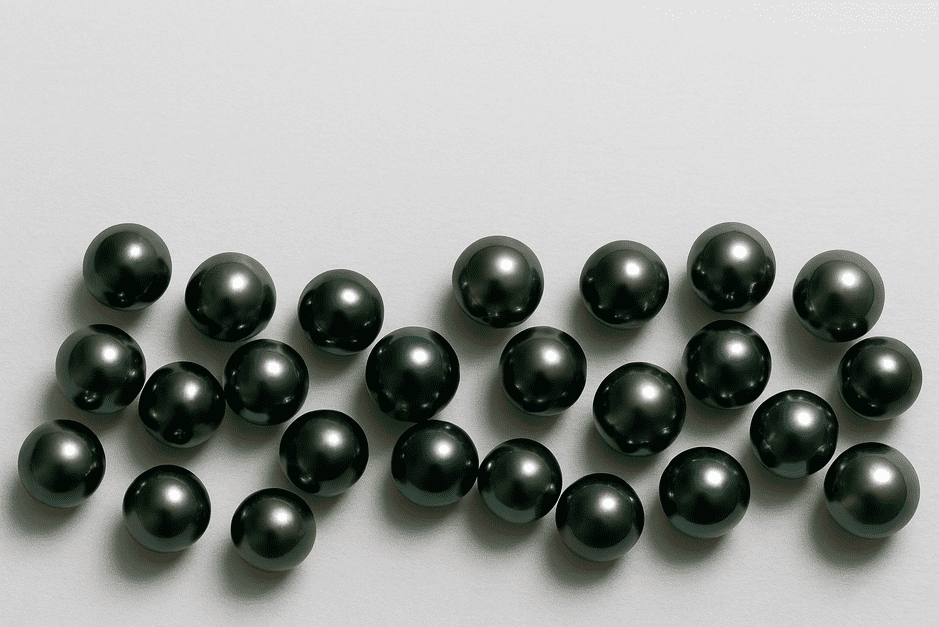
Many buyers see a dark pearl and assume it’s Tahitian. That’s a costly mistake.
In reality, most dark pearls sold as “Tahitian” are dyed or treated. Understanding Tahitian vs dark pearls helps you avoid imitations and choose authentic jewellery that holds long-term value.
Key Clues to Identify Real Tahitian Pearls
1. Size
Tahitian pearls range from 8–16 mm. Smaller sizes are rarely genuine.
2. Shape
They’re often semi-baroque or oval, not perfectly round.
3. Color
Real Tahitians show natural overtones — gray, green, peacock, or aubergine.
Dyed dark pearls look flat black with no depth.
4. Lustre
True Tahitian pearls shine with mirror-like glow, while dyed ones appear dull.
Tahitian vs Dark Pearls in My Gem Lab
A client once brought me a “Tahitian” strand that looked flawless — identical, round, and glossy.
Testing revealed dyed freshwater pearls, worth only a fraction of the price.
Knowing how to spot real Tahitian vs dark pearls saves buyers from costly errors.
Ask These Questions Before Buying
- Where did the pearls originate?
- Can you show a certificate of authenticity?
- Why do they look too perfect?
Read related guides on Saju Elizamma like The Zero Making Charge Myth in Kerala Gold Buying and Decoding a Kerala Jeweller’s Bill, to sharpen your buying sense.
Expert Tip: Authentic Tahitian vs Dark Pearls
Compare your pearls under natural light — real Tahitians reveal complex reflections, not a single black tone.
Visit the Gemological Institute of America (GIA) to learn how authentic pearls are certified.
FAQ
1. Are all dark pearls Tahitian?
No. Most are dyed freshwater or Akoya pearls.
2. How can I tell the difference?
Check color depth, size, and lustre. Lab testing confirms origin.
3. Why are Tahitian pearls so valuable?
Their rarity and natural color make them prized among collectors.