Introduction
Mineral Art is one of the most fascinating intersections of science and creativity. Specifically, it encompasses a broad spectrum of practices, from the meticulous scientific illustration of geological specimens to the use of raw mineral pigments in painting. Whether you are a collector, a painter, or simply someone who appreciates the raw beauty of the earth, this art form offers something extraordinary.
At its core, Mineral Art refers to any creative practice that either depicts geological specimens, uses them as a medium, or presents them as the artwork itself. From ancient cave paintings made with Ochre and Hematite to hyperrealistic oil paintings of Amethyst crystals, the relationship between art and geology is as old as human creativity itself. Today, it has grown into a recognized genre with dedicated galleries. As a Gemologist who has spent 40 years studying the “Art of Nature,” I see this as the ultimate tribute to the earth. In this guide, we explore the major types, the artists pushing boundaries, and the technical nuances that make mineral-based materials so unique.
Types of Mineral Art: From Paper to Stone
First, understanding the different categories helps clarify the range of techniques behind each practice.
Mineralogical Illustration
Originally, mineralogical illustration originated as a scientific tool. Historically, naturalists and geologists used it to document specimens with extreme precision for academic reference. Over time, however, this functional practice evolved into a celebrated art form. Today, artists like Carly Waito have elevated it. Her hyperrealistic oil paintings of crystalline structures—including Tourmaline Colors and Quartz—emphasize the intricate interplay of light and geometry. Her portfolio is a remarkable example of how scientific accuracy and artistic expression can coexist.
Mineral Pigment Painting
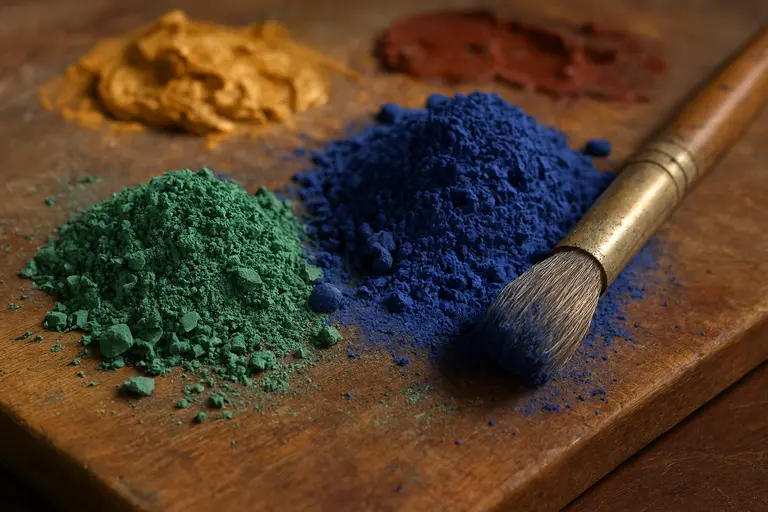
Another significant branch involves using pigments derived directly from crushed rocks. Rather than relying on synthetic dyes, artists grind raw materials such as Lapis Lazuli (Blue), Hematite (Red), and Malachite (Green) into fine powders. This technique connects modern art to ancient practices. In fact, this is the foundation of Kerala Mural Painting. Traditional artists in Kerala use natural mineral pigments (Red Ochre, Yellow Ochre) to create the vibrant frescoes found in temples like Padmanabhaswamy Temple Treasures. Because mineral pigments are naturally resistant to fading, these works outlast their synthetic counterparts by centuries.
Mineral Specimen Curation
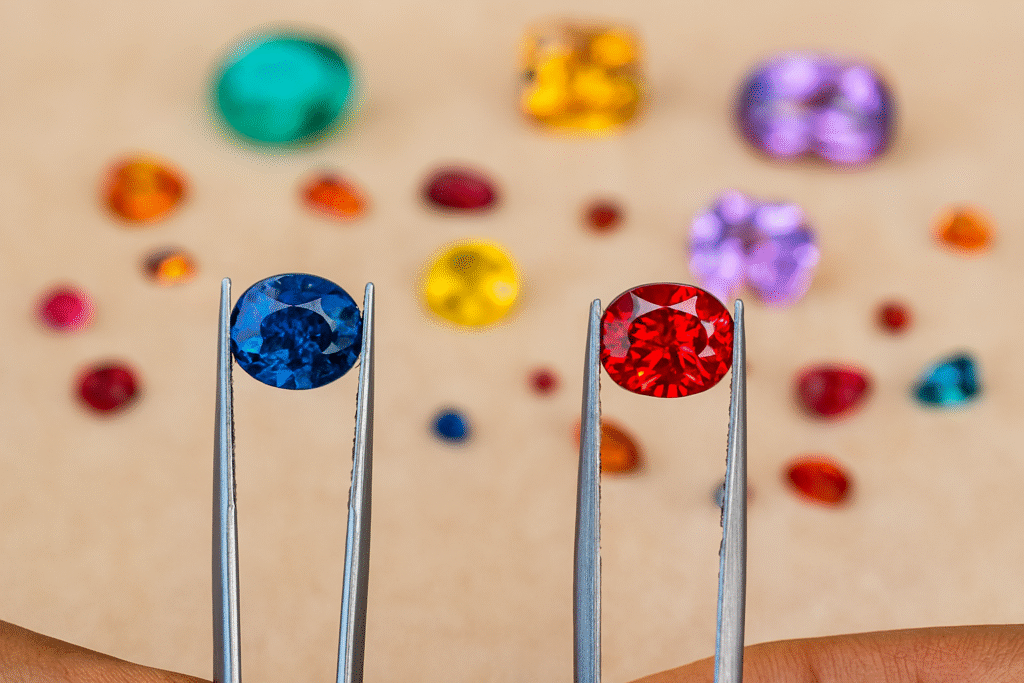
Not all Mineral Art requires a brush. Frequently, in many galleries, raw mineral specimens are curated and displayed as natural sculptures. In fact, these so-called “Museum-Quality” specimens are selected for their rarity, color saturation, and the perfection of their crystal formations. In this sense, the curator becomes the artist, making intentional choices about lighting to enhance the aesthetic impact. If you collect specimens, read my guide on Trapiche Gemstones for unique geometric forms.
Lapidary Art: Sculpting the Stone
Lapidary Art refers to the craft of cutting, polishing, and faceting raw stones into decorative objects. Remarkably, it is one of the oldest human art forms, evident in ancient Egypt and Mesopotamia. Today, modern lapidary artists combine traditional techniques with contemporary design.
- Faceting: Creating geometric planes to reflect light (like a Diamond).
- Carving: Creating organic shapes (like a Jade dragon).
For instance, the intricate carvings found in Thewa Jewelry (Gold on Glass) or the relief work in Thanjavur Art Plate are forms of metal-lapidary fusion. If you are new to this craft, resources like Lapidary for Beginners offer a solid foundation. The transformation of a rough stone into a brilliant gem is one of the most satisfying processes in all of Mineral Art.
Notable Artists in the Field
Beyond the artists already mentioned, several others deserve recognition. Mishal Mohan, for example, creates abstract contemporary work. Her piece Minerals uses impasto brushstrokes and layered golds to evoke the depth of geological formations. Similarly, Kirsten Kurtz creates “Earth Paintings” using pigments derived entirely from soil. Together, these artists demonstrate that Mineral Art is a living, evolving field.
Technical Differences: Mineral vs. Synthetic Paints
For artists considering working with mineral-based materials, it is important to understand the chemistry. According to experts, there are several notable distinctions.
- Color Mixing: Mineral colors like Cadmium Red tend to “grey down” when mixed with white. By contrast, modern synthetic colors maintain high chroma.
- Texture: Mineral colors typically dry to a Matte surface, whereas synthetics produce a glossier appearance. This creates a “Velvet” look similar to the Kashmir Sapphire.
- Adhesion: On porous surfaces like pottery, mineral paints “sit” on the surface with sharp edges. This makes them ideal for decorative ceramic work, like Jaipur Blue Pottery.
Conclusion: The Earth as a Palette
Ultimately, Mineral Art bridges the natural world and human creativity. Whether you are drawn to the precision of illustration or the earthy richness of natural pigments, there is a form that speaks to every sensibility. In summary, art is not just about what you paint; it is about what you paint with.
FAQ: Mineral Art
What minerals are most commonly used in Mineral Art?
Historically, Lapis Lazuli (Ultramarine Blue), Malachite (Green), Azurite (Blue), and Ochre (Red/Yellow) are the most significant pigments. Today, artists also depict Quartz, Amethyst, and Tourmaline in illustrations.
Is mineral pigment painting archival?
Yes. Because mineral pigments are inorganic (stone), they are naturally stable and resistant to UV light. Indeed, many ancient cave paintings have survived for thousands of years with minimal color loss.
Can beginners practice Mineral Art?
Absolutely. Lapidary art is accessible with a simple tumbler. Watercolor painting depicting mineral specimens is also a popular entry point. You can even make your own paints by grinding soft stones like chalk or ochre.
Where can I buy Mineral Art prints?
Currently, many artists sell signed prints online through platforms like Etsy. Look for “Scientific Illustration” or “Geological Art” to find high-quality reproductions of crystal paintings.
Does Indian art use minerals?
Yes. Indian art forms like Kerala Murals, Madhubani, and Kangra miniatures traditionally used exclusively natural mineral and vegetable pigments, giving them their distinctive earthy tones.