Introduction to Luxury Fruit and Gemstone Pricing
Most people will never bid on a $27,000 melon or wear a $71 million diamond. However, both industries follow the same playbook to justify their staggering price tags. Specifically, they sell rarity, perfection, and social status rather than just a physical product. Once you understand the mechanics of Luxury Fruit and Gemstone Pricing, you start seeing these patterns everywhere—in elite jewelry stores, boutique gourmet shops, and even your local high-end supermarket. This guide explores how these two seemingly different worlds create value and what that means for the average consumer. You should also read our guide on gemstone buying mistakes to understand how these same value-driven narratives can sometimes lead buyers astray.
How Japan Influenced Luxury Fruit and Gemstone Pricing
Japan currently leads the world in luxury fruit culture, and this dominance did not happen by accident. In fact, Japanese farmers apply the same rigorous discipline to growing fruit that master lapidaries apply to cutting stones. For example, Yubari King melons are grown in highly controlled greenhouses where workers hand-pollinate every flower and limit each vine to a single fruit.
As a result, the melon grows so flawlessly that buyers treat it like a piece of fine art. Similarly, Ruby Roman grapes must weigh at least 20 grams each and reach a specific sugar content before they qualify for sale. Furthermore, growers reject entire clusters that fall even slightly short of these standards. In short, Japanese farmers grade their fruit exactly like gemologists grade diamonds. Consequently, both industries reward absolute perfection with premium prices. To learn more about how agricultural standards shape global value, you can visit the Japanese Ministry of Agriculture.
Ultra-Luxury Models in Gemstone and Fruit Pricing
At the very top of the market, luxury fruits compete directly with auction-house gemstones in terms of prestige. Moreover, the internal logic of Luxury Fruit and Gemstone Pricing works in identical ways for these flagship items.
Rarity in Luxury Fruit and Gemstone Pricing
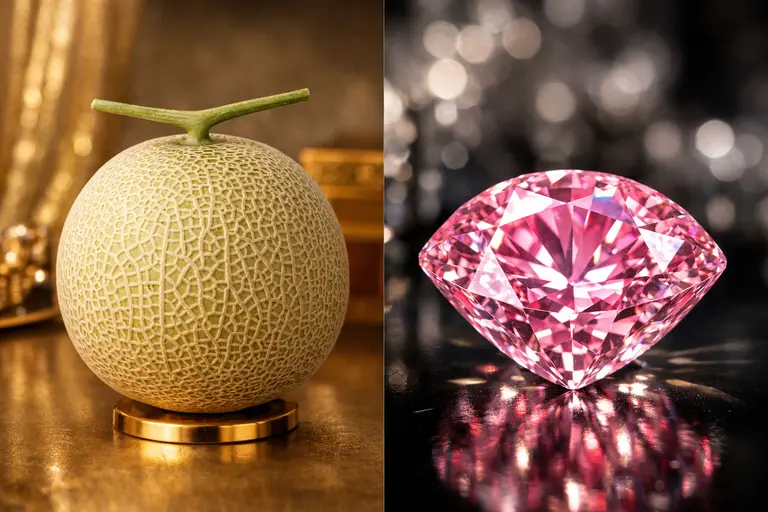
Consider the comparison between the Yubari King Melon and the Pink Star Diamond. Both sit at the absolute peak of their respective categories. The Pink Star Diamond was sold at Sotheby’s for $71 million because it is a geological anomaly. Likewise, auction buyers pay extraordinary sums for Yubari melons because owning them signals rare status. In both cases, the narrative of scarcity does the heavy lifting for the sale. Therefore, the price reflects the difficulty of acquisition rather than the utility of the item.
Grading Rare Fruits and Precious Gemstones
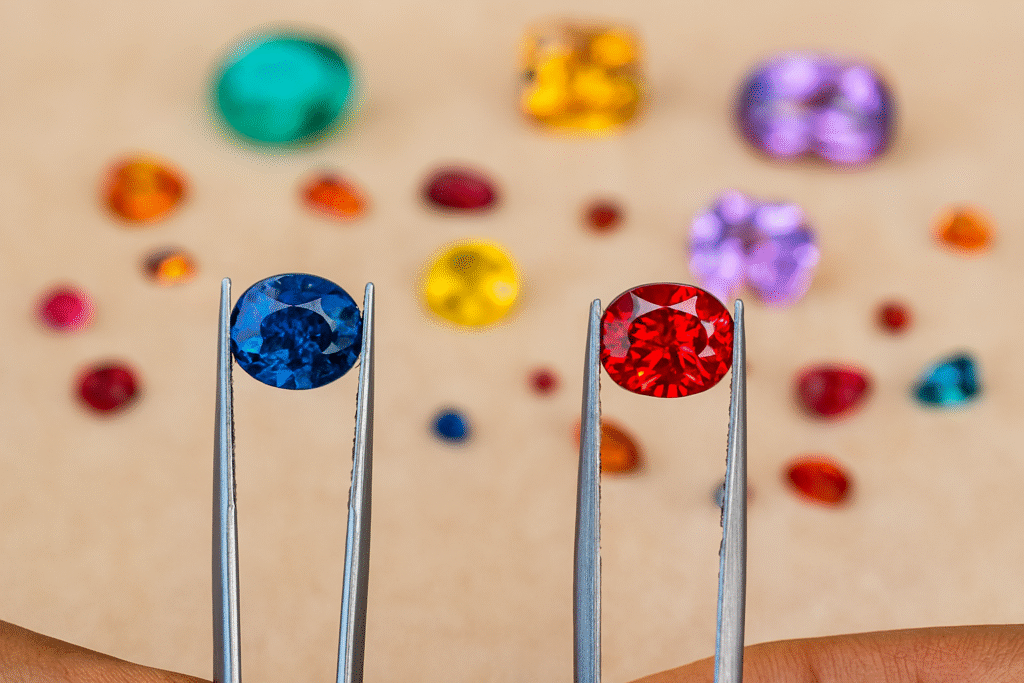
We see another parallel when comparing Ruby Roman Grapes to Pigeon’s Blood Rubies. Each ruby earns its value through the strict grading of its intense red color. Similarly, grapes earn their premium through a minimum weight and a verified sugar level. As a result, color and measurable metrics become the central selling points. For scientific insights into how stones develop these rare hues, you can refer to the Gemological Institute of America.
Design Elements in Luxury Fruit and Gemstone Pricing
Not every high-end product earns its price through natural scarcity alone. Instead, human design and novelty often drive the Luxury Fruit and Gemstone Pricing in this secondary tier. Square watermelons provide a perfect example; farmers grow them inside cube-shaped molds to create a specific look. Notably, the fruit tastes no different from a round one, yet the geometric shape commands a massive premium.
Asscher-cut diamonds work in the same way. The square facets create a dramatic visual effect that buyers pay extra to own. In both instances, the form of the object matters far more than its basic function. Consequently, these products appeal to buyers who want to stand out through unique aesthetics rather than just raw material value.
Standardizing Luxury Fruit and Gemstone Pricing
This tier covers products that take something ordinary and refine it to an extreme degree. Specifically, these are not new inventions; they are elevated versions of things people already know and trust. Sekai Ichi apples, for instance, are the “Round Brilliant Diamonds” of the fruit world. Farmers hand-wash each apple individually and apply a protective sticker by hand to ensure the skin remains unblemished. In the same way, the round brilliant diamond represents centuries of technical refinement aimed at maximizing sparkle. Therefore, both products sell the idea of perfection applied to the familiar.
Learning from Luxury Fruit and Gemstone Pricing
You do not need to purchase a $100 strawberry to take something useful from these market trends. Instead, the real lesson involves recognizing how perceived value is constructed in any industry. Luxury markets always sell a narrative first and a product second.
Therefore, before you pay a premium for any item—whether it is food, jewelry, or electronics—you should ask yourself two honest questions. First, does the extra quality genuinely improve your daily experience? Second, are you paying for real craftsmanship, or simply buying the status associated with a name? Furthermore, understanding Luxury Fruit and Gemstone Pricing helps you make smarter choices across all spending categories. As a result, this awareness saves you money and sharpens your judgment as a consumer over time. For more on the psychology of high-end consumer behavior, check the Harvard Business Review.
FAQ: Luxury Fruit and Gemstone Pricing
Why are Japanese luxury fruits so expensive?
They are expensive because they require extreme manual labor and follow strict grading standards. Additionally, the Japanese culture of “Omiyage” (gifting) treats these fruits as meaningful social currency.
Are luxury fruits more nutritious than regular ones?
No, they are generally not more nutritious. Their value comes from their flawless appearance, rarity, and the prestige of the brand or region.
Is gemstone pricing always based on rarity?
While rarity is the main factor, “market sentiment” and branding also play huge roles. Much like luxury fruit, a diamond’s price is a mix of its physical grade and its perceived social value.
Can regular buyers find value in these markets?
Yes, by looking for “near-flawless” items that offer 90% of the beauty at 50% of the price. In both fruit and gems, the jump from “excellent” to “perfect” is where the most extreme price inflation occurs.
Do these prices ever drop?
Rarity-driven prices tend to stay high as long as the supply remains restricted. However, if a new mine is found or a new farming technique makes “perfection” easy to achieve, the premium usually decreases.
Disclaimer
Auction prices and product availability fluctuate frequently. The comparisons in this article reflect general market patterns rather than fixed financial valuations. Always research current market conditions before making any significant purchase. The author holds no financial affiliation with the agricultural or mining entities mentioned.