
Disclosure: This post contains Blue Nile lab grown diamonds and affiliate links for our jewellery retail guide. If you make a purchase through these links, I may earn a small commission at no extra cost to you.
Introduction
Choosing an engagement ring often feels overwhelming, especially when natural and lab grown diamonds look identical yet carry vastly different price tags. Fortunately, Blue Nile lets American shoppers compare both options in one convenient place. First, however, buyers need to understand what these lab grown diamonds and natural stones truly represent. This guide explains the key differences in plain, active language, so you can decide with total confidence. By breaking down the chemistry, pricing, and resale factors, you ensure your investment aligns with your personal values and budget. You can also browse Blue Nile’s natural and lab-grown comparison as you read this guide. For those seeking a deeper dive into the industry, explore our gemstone buying guide.
How Each Diamond Type Begins
Natural Diamonds vs. Lab Grown Diamonds
Natural diamonds form deep inside the Earth under intense heat and pressure. Many crystallised billions of years ago. Later, powerful volcanic eruptions carried diamond-bearing rock closer to the surface, and miners eventually recovered the stones. Consequently, every natural diamond carries its own unique geological story. For this reason, buyers who value rarity and long-standing tradition often prefer natural stones.
The Process of Creating Lab Grown Diamonds
Producers grow lab grown diamonds in controlled facilities using two primary methods. First, High Pressure High Temperature (HPHT) recreates the Earth’s extreme conditions. In contrast, Chemical Vapor Deposition (CVD) deposits carbon from gas onto a diamond seed. As a result, growers finish a stone in weeks rather than in billions of years. According to the Gemological Institute of America (GIA), specialised equipment can still distinguish the two types, even though they look the same to the human eye.
Are Both Types Real Diamonds?
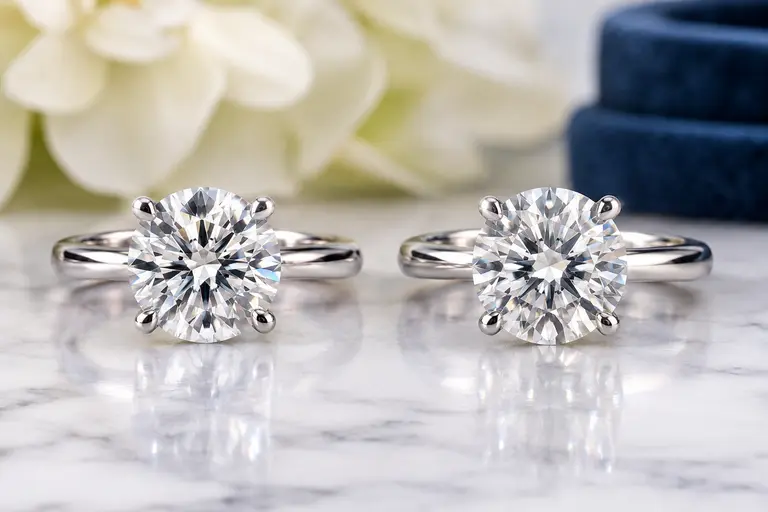
Yes, both types are genuine crystalline carbon. Moreover, they share essentially identical chemical, physical, and optical properties, and both score 10 on the Mohs hardness scale. However, hardness does not make a diamond indestructible. For example, a hard knock can chip both stone at its sharp edges. Therefore, you should judge each diamond by the classic Four Cs: cut, colour, clarity, and carat weight.
In addition, both categories can carry independent grading reports. Nevertheless, laboratories use specific terminology to distinguish them. For instance, GIA introduced a “Premium” and “Standard” assessment system for qualifying lab grown diamonds in October 2025, while Blue Nile’s lab grown listings carry reports from laboratories such as IGI and GIA. Thus, you should read each report carefully before finalizing your choice. Blue Nile explains these details in its certification guide.
Why Lab Grown Diamonds Cost Less Than Natural
Price creates the biggest gap between the two categories. Natural diamonds require expensive exploration, mining, sorting, and international shipping, and their limited supply supports higher prices. In contrast, manufacturers can scale up lab grown production whenever demand rises. As a result, lab grown diamonds usually cost far less than comparable natural stones. For example, an American couple with a $3,000 budget may afford a noticeably larger lab grown centre stone. Consequently, they can direct more money toward housing, savings, or travel. Still, a lower price does not guarantee better quality, so you should compare specifications, reports, and craftsmanship before you pay. Readers who enjoy this topic can also explore our gemstone buying guide.
Resale Value of Lab Grown Diamonds and Natural Diamonds
Resale deserves honest attention. Natural diamonds generally enjoy a more established secondary market. However, they do not hold a fixed share of their retail price, because dealers must still earn a margin. Therefore, nobody should treat a natural diamond as a guaranteed investment. Meanwhile, lab grown diamonds face falling prices as production capacity grows. Consequently, owners should not expect large resale proceeds.
Blue Nile also runs a Lifetime Diamond Upgrade Program, which is not a cash buyback service. Eligible diamonds with GIA, IGI, or AGSL reports earn credit up to the original purchase price. However, the new stone must cost at least twice as much, and the programme generally follows a “like-for-like” rule. In other words, natural diamonds usually upgrade to natural, and lab grown to lab grown, although Blue Nile may approve a switch in some instances. Furthermore, Blue Nile excludes coloured diamonds and several other items, so buyers should read the latest terms first.
Consumer Protection for American Buyers
Federal rules also protect American shoppers. Under FTC guidance, sellers must clearly disclose when a diamond is lab grown rather than mined. Likewise, buyers should verify the report number with the issuing laboratory. Some lab grown stones carry a tiny laser inscription, but shoppers should check each stone individually. Finally, ask the retailer to confirm origin, treatments, return terms, and upgrade eligibility before you reach the checkout. For more help, visit Blue Nile’s diamond education centre.
Which Diamond Suits the 99%?
Households differ, so no single choice fits everyone. Nevertheless, affordability matters more each year. For instance, The Knot’s 2026 Real Weddings Study reported that lab grown stones made up 61 percent of engagement-ring centre stones among couples married in 2025. Moreover, it reported average spending of $4,300 for lab grown buyers and $7,000 for natural diamond buyers. Natural diamonds still appeal to people who value rarity, tradition, and heirloom potential. In contrast, lab grown diamonds suit practical shoppers who want a larger stone without paying a premium for geological origin. Ultimately, a ring should celebrate a relationship, not create years of debt.
Conclusion
Natural and lab grown diamonds both deliver genuine beauty and durability. Natural stones offer rarity and a more established resale market. Meanwhile, lab grown stones offer a similar look at a friendlier price. Blue Nile supports both choices with education, grading reports, and clear upgrade terms. Therefore, pick the diamond that fits your taste and your budget, and never borrow heavily to buy one.
Frequently Asked Questions
Can an ordinary person tell the two diamonds apart?
No. Both look virtually identical to the unaided eye. Even experienced jewellers usually need specialised equipment to confirm the origin.
Will a lab grown diamond last as long as a natural one?
Yes. Both share essentially identical hardness. However, either type can chip after a sufficiently hard impact.
Can I swap a lab grown diamond for a natural one at Blue Nile?
Usually not. The upgrade programme follows a “like-for-like” rule. However, Blue Nile may approve exceptions in some specific circumstances.
Which diamond should a first-time buyer choose?
Choose natural if rarity and tradition matter most. Alternatively, choose lab grown if size and affordability matter more to your budget.
Disclaimer
This article offers general consumer education and does not constitute financial, investment or legal advice. Prices, grading services and Blue Nile policies can change. Therefore, please verify current specifications, return terms and upgrade eligibility with the retailer before you buy.