Introduction
The gem trade treats money differently from ordinary retail. Traders purchase individual natural stones, and nobody truly knows a stone’s definitive value until someone cuts and evaluates it. Therefore, a rough ruby, sapphire, emerald, or diamond can thrill a buyer one week and worry the same buyer the next. Experienced dealers accept this inherent uncertainty as a normal part of business. However, they also know that financial survival matters far more than short-term excitement. For the basics, read our beginner’s guide to buying gemstones. Next, this article shows what happens when gemstone purchases go wrong and how ordinary buyers can protect their personal finances effectively.
Why Losing Money in the Gem Trade Can Feel Like Fun
The Thrill of the Gem Trade Treasure Hunt
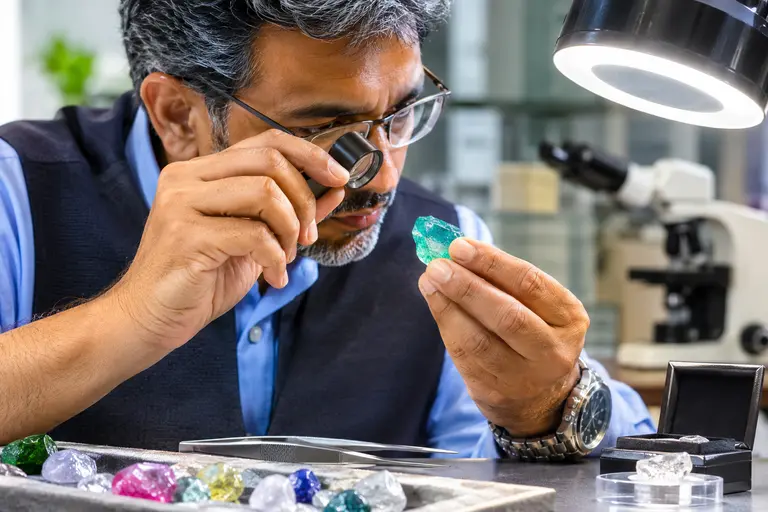
Traders examine colour, transparency, inclusions, and fractures before they estimate a finished stone’s market value. However, rough material rarely reveals its full potential immediately. For example, a cutter may uncover beautiful, vivid colour, or that same cutter may find a hidden, internal fracture. Consequently, this deep uncertainty keeps passionate buyers curious, and the challenge often rewards them as much as the potential profit does.
Paying Gem Trade Tuition Fees for Experience
Many dealers call their financial losses “tuition fees.” Indeed, every failed purchase teaches harsh lessons about quality, treatments, yield, and shifting market demand. Nevertheless, repeating the same mistake is not education. In fact, genuine learning improves later decisions, whereas repeated losses signal weak discipline and poor risk management.
Ego, Pride, and Competition in the Gem Trade
Prestige also drives buyers toward poor decisions. For instance, a Kashmir sapphire or a Burmese ruby earns immense respect in any professional collection. Furthermore, exhibitions tempt dealers to outbid rivals in the heat of the moment. As a result, many buyers overpay and then own a stone they cannot sell at a profit.
Why Losing Money Hurts the Gem Trade
How Cash Gets Locked in Gem Trade Stock
Unlike listed company shares, gemstones have no continuous public market. Therefore, a dealer cannot always sell a stone quickly at a fair price. Meanwhile, rent, salaries, interest, and taxes keep arriving. For this reason, cash matters far more than impressive stock valuations on a balance sheet. In addition, a stone’s estimated market value rarely equals the price a real buyer will actually pay.
How Cutting Errors Destroy Gem Trade Value
One cutting decision can change a stone’s value permanently. For example, a cutter may remove too much weight while chasing a slightly better colour. Similarly, a hidden fracture may break a stone during the processing stage. Moreover, even skilled professionals face these risks daily. Therefore, buyers should never assume that rough material will cut perfectly.
Credit Risk and Reputation in the Gem Trade
Indian traders often use the Jangad system, which sends goods on approval with a memo. The buyer keeps what suits the business and returns the rest. Although this system speeds up trade, it also creates counterparty risk. For instance, a delayed payment or a dishonest partner can drain working capital quickly. Moreover, reputation carries enormous weight in Surat, Mumbai, Jaipur, Bangkok, and Antwerp. Consequently, one broken promise can follow a trader for many years.
Skills That Protect Your Money
Pairing Gemology With Gem Trade Psychology
Technical knowledge identifies natural diamonds, synthetics, and specific treatments. However, it cannot tell you whether the asking price makes sense in the current market. For example, sellers may create false urgency, tell exaggerated origin stories, or show only the best stones in a mixed parcel. Likewise, poor lighting can flatter a stone. Therefore, check important stones under more than one light source and use suitable instruments. Finally, order an independent laboratory report when the stakes justify the cost.
Building a Reliable Gem Trade Warning System
First, ask sellers about treatment, origin, ownership, earlier reports, return terms, and payment conditions. Next, verify big claims yourself instead of trusting a persuasive voice. Above all, remember that a laboratory report records gemological observations. In other words, it does not guarantee market value or resale price.
Trust People but Verify Deals
Dealers often say, “Buy the dealer before you buy the diamond.” Indeed, good relationships bring better goods and useful market news. Still, trust should never replace paperwork. Therefore, write down weights, descriptions, prices, deadlines, memo terms, and responsibility for loss. In the end, years build a reputation, yet a few careless deals can destroy it.
Lessons for the 99% Entering the Gem Trade
Starting Small and Guarding Gem Trade Cash Flow
Newcomers should skip expensive trophy stones. Instead, learn through brokering, supervised evaluation, and small memo deals. Next, pick one narrow category and study its target customers. Additionally, the Gem and Jewellery Export Promotion Council (GJEPC) supports India’s gem and jewellery sector and publishes trade information for newcomers. Likewise, the Indian gem and jewellery trade guide explains each major trading centre.
Knowing Your Exit Before Entering the Gem Trade
Never buy a stone only because it looks cheap. Instead, ask who will buy it, what quality that buyer expects, and how fast you can recover your money. For example, Indian buyers often favour particular colours, sizes, and traditional meanings. In contrast, some international buyers stress precision cutting, treatment disclosure, and recognised laboratory reports. Thus, real demand should guide every purchase, not excitement.
Combining Knowledge With Gem Trade Financial Discipline
Study identification, diamond grading, cutting yield, and treatment disclosure. The Gemological Institute of America (GIA) offers useful technical resources. For instance, its coloured stone reports identify the material and note detectable treatments. Moreover, GIA can add an opinion on geographic origin for ruby, sapphire, emerald, Paraíba tourmaline, red spinel, and alexandrite when possible. However, GIA does not grade coloured gemstone quality. Therefore, nobody should treat these reports as price assessments. Finally, set separate limits for inventory, running costs, and credit exposure, and never risk household money.
Frequently Asked Questions
Is gemstone trading similar to gambling?
Both involve uncertainty. However, professional traders rely on knowledge, market information, and risk control. Buying without an exit plan turns trading into speculation.
Can an experienced gem dealer still lose money?
Yes. For example, natural inclusions, cutting surprises, changing demand, and payment defaults hit experienced traders too. Experience reduces risk, but it never removes it.
Which skill matters most in the gem trade?
No single skill guarantees success. Instead, gemological knowledge, financial discipline, negotiation, and ethical conduct must work together.
Is losing money necessary to become a successful gem dealer?
No. Although some mistakes teach valuable lessons, nobody needs deliberate losses. Learn from professionals and start small to reduce unnecessary damage.
Disclaimer
This article offers general educational information about diamond and coloured gemstone trading. It does not provide financial, investment, legal or tax advice. Moreover, markets, practices and risks vary by location and business model. Therefore, verify gemstone identity, treatments, value, contracts and regulations independently before any transaction. The author has no financial affiliation with the brands or organizations mentioned.