Introduction to the Kerala Art Jewelry Market
The state of Kerala historically runs on gold. Families across the region purchase gold for weddings, festivals, and long-term inheritance. For several generations, gold has symbolized beauty, security, and social status. Consequently, major retailers like Malabar Gold & Diamonds and Kalyan Jewellers built global empires by understanding this cultural reality. However, a quiet but significant shift is currently occurring in 2026. Younger buyers are exploring jewelry that tells a personal story rather than just storing financial value. Tourists want meaningful souvenirs, and NRIs search for gifts that feel genuinely rooted in local culture. Because of this growing demand, a massive opportunity exists to build a Kerala Art Jewelry Market that thrives alongside gold. You should also read our guide on gemstone buying mistakes to understand how quality standards apply to both precious metals and artisanal creations.
Growth Potential of the Kerala Art Jewelry Market
Gold will certainly not disappear from the local landscape anytime soon. However, relying entirely on one product category leaves a massive market gap wide open. Today, social media exposes ordinary buyers to global design trends. Young professionals now desire pieces that reflect their individual personality, not just their family’s investment logic.
Furthermore, many talented local artisans produce beautiful handcrafted work but remain completely anonymous. They often supply large manufacturers without ever building a personal brand. As a result, both the artisan and the buyer miss a valuable connection. The buyer receives a product without a soul, and the artisan receives no recognition for their mastery. The Kerala Art Jewelry Market fixes both of these problems simultaneously. Specifically, it empowers the maker while satisfying the modern consumer’s hunger for authenticity. For more on how independent galleries succeed, you can look at the Patina Gallery model in Santa Fe.
Heritage and the Kerala Art Jewelry Market
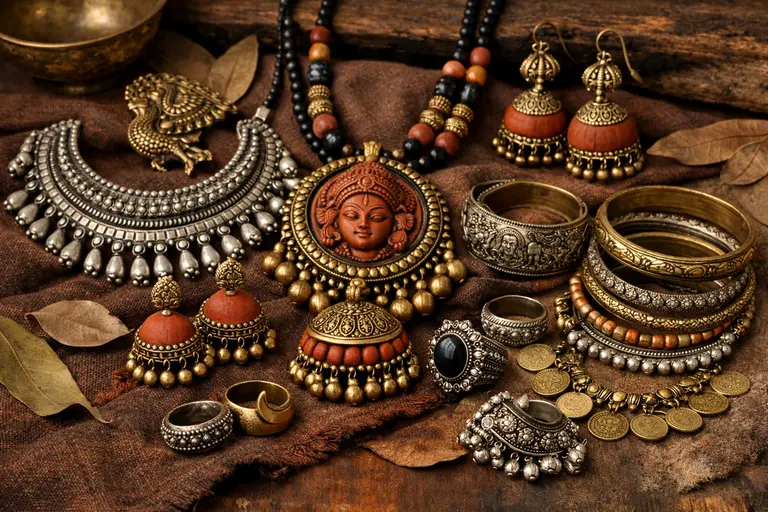
The region already possesses extraordinary creative resources that are perfect for jewelry design. Artisans across the state work with temple traditions, mural painting, and intricate wood carving. These ancient skills carry centuries of visual intelligence that designers can easily adapt for the Kerala Art Jewelry Market.
Local Inspiration for Kerala Artisan Jewelry
Specifically, modern designers can draw inspiration from several cultural anchors:
- Kathakali Masks: These offer bold, layered geometry for statement pendants.
- Mural Painting: This tradition provides earthy pigment palettes for enameled pieces.
- Aranmula Mirror Craft: Makers can utilize this unique alloy tradition for distinctive metalwork.
- Monsoon Textures: Backwater imagery and coconut palm patterns translate beautifully into organic textures.
In addition, Kerala’s Geographical Indication (GI) registered crafts, such as the Aranmula Kannadi, show that the state can protect and promote unique heritage. Jewelry makers can follow a similar path by connecting their designs to specific local traditions. To learn more about regional heritage, visit the official Kerala Tourism portal.
Targeting the Kerala Art Jewelry Market
We must recognize a critical difference between international markets and the local scene. While some galleries thrive on high-value collector art, the Kerala Art Jewelry Market requires a more democratic approach. Therefore, creators should prioritize accessibility without sacrificing artistic quality.
Silver, brass, copper, and terracotta can all produce stunning, design-led pieces at approachable price points. Specifically, pricing between ₹500 and ₹5,000 for entry-level pieces would likely open the market to a massive audience. Additionally, NRI buyers often seek gifts in the ₹2,000–₹10,000 range that feel handcrafted. Consequently, by keeping the concept inclusive rather than exclusive, sellers can build a loyal customer base very quickly. This strategy ensures that art jewelry becomes a lifestyle choice for schoolteachers, nurses, and office workers, not just the elite.
Launching in the Kerala Art Jewelry Market
Location determines success in retail. Therefore, choosing the right launch point for the Kerala Art Jewelry Market matters enormously. Fort Kochi stands out as the strongest candidate. This area already attracts international tourists and hosts the globally recognized Kochi-Muziris Biennale. Visitors arrive with an appetite for culture and discovery, making it the perfect “incubator” for new jewelry styles.
Furthermore, Mattancherry offers a complementary opportunity. Its history in the spice trade creates an atmosphere where story-driven products feel completely at home. Beyond Kochi, boutique opportunities exist in high-traffic tourist zones like Kumarakom, Kovalam, and Thekkady. On the other hand, launching inside a conventional “Gold Street” might create friction. Buyers who enter a gold market usually prioritize weight and purity. Art jewelry needs a retail environment that invites curiosity and storytelling rather than immediate price-per-gram comparisons.
Building Buyer Trust in Kerala Art Jewelry
Perhaps the biggest challenge in launching the Kerala Art Jewelry Market is the necessary mindset shift. Many local buyers currently evaluate jewelry solely by its resale value. Asking them to pay for “design” or “cultural meaning” requires patient education. Fortunately, several practical strategies can accelerate this transition.
First, live demonstrations allow buyers to watch artisans shape metal in real time. Seeing the physical labor involved immediately raises the perceived value of the piece. Second, artisan storytelling—delivered through QR codes or social media videos—helps buyers understand the person behind the product. Third, curated exhibitions that combine jewelry with local textiles create a richer context. Finally, interactive workshops for customers transform passive shoppers into engaged participants. Someone who has tried to hammer silver by hand will never look at handcrafted jewelry the same way again. For professional standards on gemstone ethics, visit the Gemological Institute of America and Gemmological Institute of India.
FAQ: Kerala Art Jewelry Market
Can Kerala really support jewelry beyond gold?
Yes. The demand already exists among younger professionals and tourists. When businesses combine affordable pricing with genuine storytelling, they activate a market that traditional gold shops often ignore.
Who is the target audience for art jewelry?
The primary audience includes young urban professionals, domestic and international tourists, and NRI families looking for unique gifts. It also appeals to anyone who values personal style over investment weight.
Will this trend decrease gold sales?
No. Gold will remain the dominant category for generations. Instead, the Kerala Art Jewelry Market grows as an additional category, offering more choices for different occasions and budgets.
Where can I find these unique pieces?
Currently, you can find them in boutique showrooms in Fort Kochi and through various online artisan platforms. As the market grows, more standalone galleries will likely emerge.
Is art jewelry a good financial investment?
You should view art jewelry as a lifestyle investment. While the materials have value, the true worth lies in the unique design and the cultural story, which often appreciate emotionally over time.
Disclaimer
This article provides editorial analysis based on the Patina Gallery philosophy as reported by INSTORE Magazine and Kerala’s evolving jewelry and craft environment. The ideas presented here reflect general market observations and should not be treated as financial, business, or investment advice. Actual business outcomes depend on location, pricing strategy, execution quality, customer education, and local market demand. Thorough independent market research remains essential before launching any retail concept.