Introduction to the Emerald Supply Chain Guide
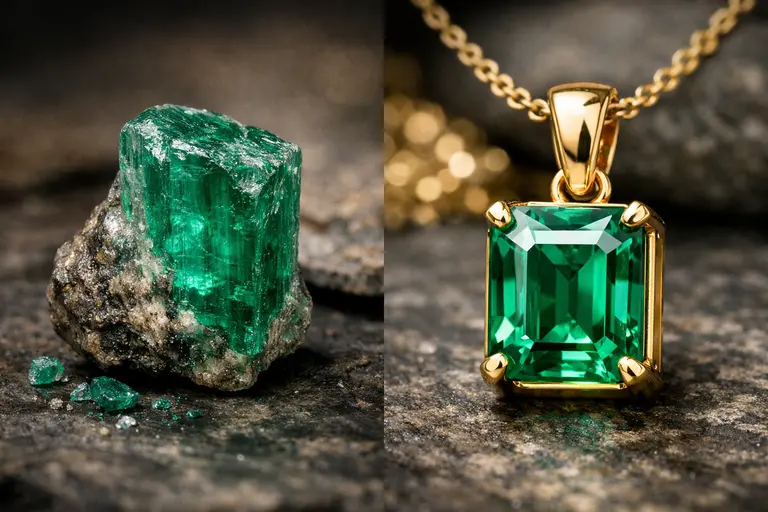
Every precious emerald starts its life millions of years ago, deep within the Earth’s crust. However, before it finally reaches a jewelry store as a polished ring, it must pass through miners, traders, expert cutters, laboratories, and retailers across several continents. In fact, this entire process can take anywhere from six months to two years to complete. Today, in 2026, the global trade looks significantly different than it did even a decade ago. Specifically, large mining companies now run structured auctions and rigorous ethical sourcing programs. Consequently, the journey from rough crystal to finished jewelry remains both complex and fascinating. This Emerald Supply Chain Guide breaks down the entire process in plain language for everyday buyers. You should also read our guide on gemstone buying mistakes to understand how to recognize quality during your next purchase.
Emerald Supply Chain Guide: Timeline to Retail
Most gemstones follow a similar international route, even though the specific timeline depends on the stone’s quality and current market demand. Initially, miners extract the rough emerald from solid rock. After that, workers wash, sort, and grade each stone by color, clarity, and size. This sorting stage alone typically takes one to three months to finish.
Next, traders and mining firms prepare the stones for the global market. Large producers, such as Gemfields, hold invitation-only auctions for international sightholders. Therefore, this trading phase can add another two to six months to the total time. Then, the rough emeralds travel to major cutting centers like Jaipur in India or Bogotá in Colombia. Because emeralds contain natural internal fractures, gem cutters must study each stone with extreme care before they make a single incision. One incorrect move can shatter an entire gem. Consequently, the cutting and polishing phase can last for several more months. Finally, manufacturers set the polished stones into rings and distribute them to boutiques. For a top-tier emerald, the complete journey often stretches close to twenty-four months. To explore more about grading, visit the Gemological Institute of America.
Global Extraction in the Emerald Supply Chain
Mining methods vary significantly because the geology differs from one region to the next. In Colombia and Brazil, companies primarily utilize large open-pit terraces and deep underground tunnel systems. These firms initially remove massive amounts of rock using heavy machinery. Later, however, miners switch to careful manual extraction near the delicate emerald veins to prevent crystal damage. As a result, Colombian mines consistently produce richly saturated green stones with exceptional clarity that collectors prize.
Mining Sources in this Emerald Supply Chain Guide
In Africa, the industry combines massive corporate operations with thousands of independent artisanal miners. Zambia currently hosts some of the world’s most mechanized emerald mines, such as the Kagem mine. In contrast, artisanal miners in Ethiopia and Zimbabwe continue to rely on basic hand tools and traditional knowledge. Furthermore, in high-altitude regions like Afghanistan and Pakistan, miners often carve tunnels directly into steep mountain cliffs. Because heavy machinery cannot reach these remote zones, small-scale miners dominate the local economy. In the United States, small-scale production in North Carolina supports local landowners, though large-scale commercial output remains relatively rare compared to Africa.
Sustainability and the Emerald Supply Chain Guide
The colored gemstone industry still lacks a single, unified global rulebook. Nevertheless, several nations and companies now invest heavily in responsible mining practices. Zambia stands out as one of the strongest examples of progress. Specifically, corporate mines like Kagem actively fund land rehabilitation, water recycling, and community schools. Similarly, Brazil has tightened its environmental oversight by requiring detailed impact assessments before granting new mining permits.
Furthermore, the Colombian government continues to modernize its emerald sector by focusing on worker safety and community inclusion. Even so, many artisanal regions still struggle with informal labor systems and limited environmental oversight. Consequently, sustainability standards can vary enormously depending on the source country. For a deeper look at these ethics, the Responsible Jewellery Council publishes detailed guidelines for the trade. You may also read our article on Understanding BIS Hallmark to see how certification protects jewelry buyers in other sectors.
Traceability Tech in the Emerald Supply Chain
One of the most exciting developments in this Emerald Supply Chain Guide is the rise of digital traceability. Traditionally, emerald supply chains were fragmented because stones passed through too many hands. To solve this transparency problem, the industry now utilizes blockchain and microscopic markers.
A leading example is the “Emerald Paternity Test” developed by the Gübelin Gem Lab. Scientists place microscopic DNA-based nanoparticles inside the natural fissures of rough emeralds at the mine site. Remarkably, these markers survive the intense heat and friction of cutting and polishing. Later, a laboratory can read the invisible marker to confirm the stone’s exact mine of origin. While these systems currently cost more than standard reports, luxury brands increasingly adopt them to provide buyers with total confidence in their investment.
Market Leaders and the Emerald Supply Chain Guide
A few specific companies now shape the majority of the international emerald trade. Gemfields dominates large-scale production in Zambia and utilizes a structured auction model. Additionally, Muzo Emerald Colombia controls the most historically significant deposits in South America, managing everything from extraction to retail. Meanwhile, Belmont Mineração remains a leader in Brazil, supplying major cutting centers across the globe. By understanding who controls the supply, buyers can better navigate the pricing and availability of these green treasures.
FAQ: Emerald Supply Chain Guide
Why does it take so long for an emerald to reach the market?
Emeralds are brittle and fractured. Therefore, cutters must spend months planning the cut to avoid breaking the stone. Combined with shipping and auctions, the timeline is naturally long.
Which country produces the most emeralds?
Currently, Zambia and Colombia are the top producers. Zambia leads in volume, while Colombia is often cited for producing the highest value per carat.
Are ethical emeralds more expensive?
Yes, usually. The cost of DNA testing, blockchain tracking, and land rehabilitation adds a premium to the final retail price.
Can I trust the origin on a certificate?
You should only trust origins verified by reputable labs like GIA, SSEF, or Gübelin. These labs use advanced chemistry to confirm a stone’s geographic home.
Is it safe to buy emeralds from artisanal miners?
It can be, but you must verify the seller’s transparency. Artisanal mining often lacks the documented supply chain found in corporate operations.
Disclaimer
This Emerald Supply Chain Guide provides educational information as of May 2026. Mining regulations and sustainability initiatives fluctuate. Always verify certifications directly with a recognized gemological laboratory before making a high-value purchase. The author holds no financial affiliation with the mining companies mentioned.