Introduction
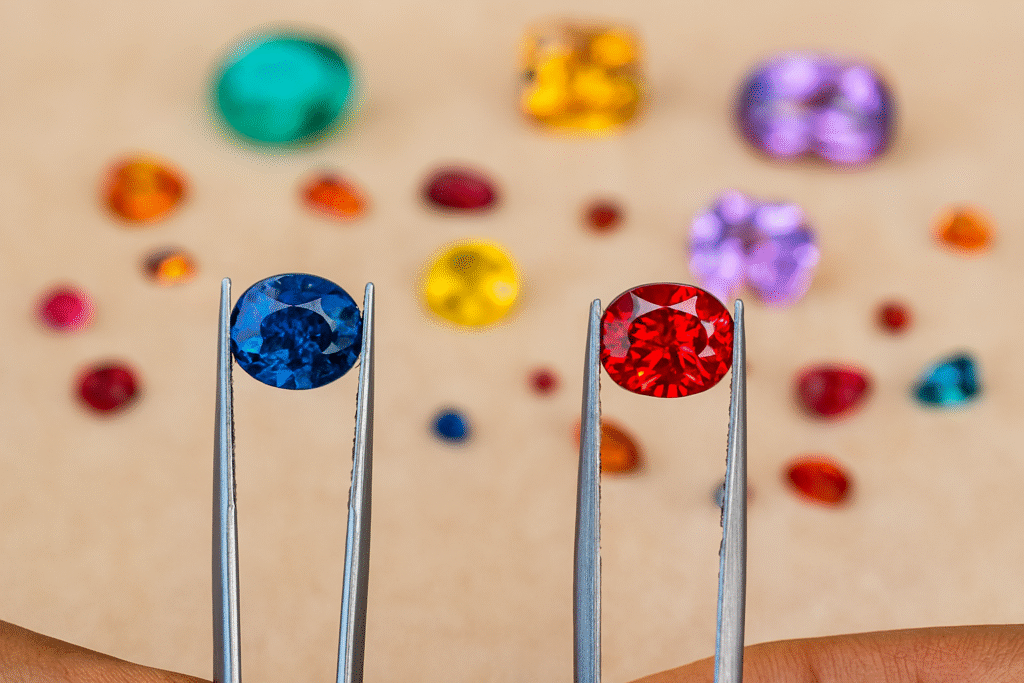
Colored salts and gemstones both show how nature creates colour. However, they differ sharply in chemistry and use. Gemstones decorate jewellery, while salt seasons our daily meals. Furthermore, minerals, clay, crystal flaws, and added ingredients all shape the colour of salt. Indian shoppers already know Himalayan pink salt and Kala Namak. Meanwhile, imported options such as Persian blue salt and French grey salt add more variety. Therefore, this guide compares salt colours with gemstone colours in plain language. Separating these materials teaches you how to source each one safely. For more on choosing stones by hue, see our Gemstone colour guide.
Salt Colors and Their Gemstone Matches
Pink and peach salt equivalents
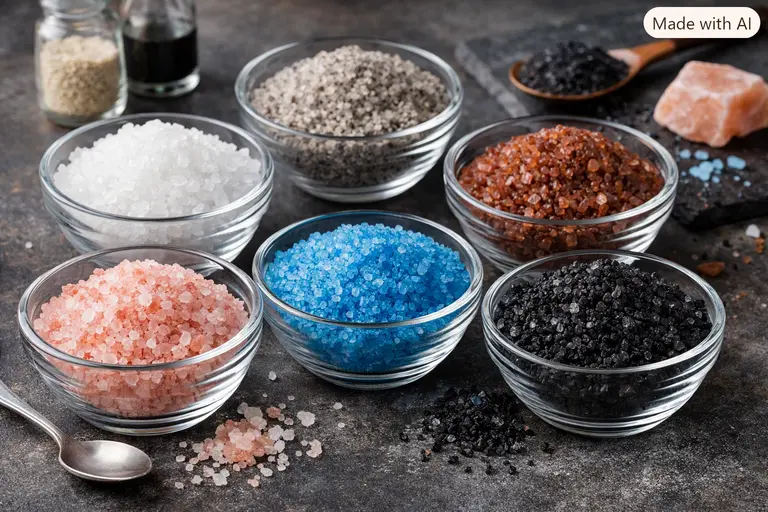
Himalayan pink salt gets its tint from trace iron compounds. Similarly, Australian Murray River salt shows pink and peach shades, and Peru’s Maras salt can look pale pink. These salts resemble rose quartz, morganite, and pink sapphire. However, the match ends at appearance. For instance, rose quartz is mostly silicon dioxide, whereas rock salt is mostly sodium chloride.
Black and charcoal salt varieties
Kala Namak develops its sulfurous smell through traditional processing, and its colour ranges from pinkish grey to dark. In contrast, black lava salt combines sea salt with activated charcoal. Black tourmaline, obsidian, and onyx offer fitting gemstone comparisons. Likewise, salt-and-pepper diamonds echo the mix of light and dark specks found in these varieties.
Grey and red specialty salts
French Sel Gris forms in clay-lined ponds, and that clay gives it a grey tone. Consequently, grey spinel and grey chalcedony match it well. Meanwhile, Hawaiian Alaea salt gets its reddish colour from red volcanic clay. It’s warm tones therefore recall carnelian, red jasper, and sunstone. Additionally, some Himalayan regional salt blends contain chillies or herbs. However, recipes vary, so shoppers should not confuse them with Alaea salt.
White, blue, and green salt options
Fleur de sel, Maldon flakes, and kosher salt look white or clear. Similarly, rock crystal and white topaz offer comparable looks. However, salt is far softer than most gemstones. Persian blue salt from Iran stands out for its blue crystals. Scientists link blue halite to flaws in the crystal lattice that change how light behaves. Blue sapphire and kyanite share that shade. In contrast, green specialty salts may get their colour from added plant-based ingredients. Peridot and prehnite offer visual comparisons, although their composition differs completely.
Colored Salts in the Indian Market
Indian shoppers can easily buy Himalayan pink salt, Kala Namak, and white sea salt. However, most Himalayan pink salt comes from Pakistan’s Salt Range, so Indian stores sell it as an import. Moreover, Himalayan communities prepare salt mixtures with local herbs and spices. Similarly, French Sel Gris, Alaea salt, and Persian blue salt come from abroad. Therefore, stores stock them depending on availability and demand. For food safety guidance, visit the Food Safety and Standards Authority of India (FSSAI). Likewise, the Geological Survey of India explains the country’s mineral resources. You can find creative ways to use these ingredients in our latest food and hospitality article.
How to Use Colored Salts in Food and Drinks
Kala Namak lends its sulfurous tang to jaljeera, chutneys, fruit, and chaat masala. Meanwhile, Himalayan pink salt seasons everyday dishes. Similarly, chefs sprinkle flaky salts over vegetables and baked goods to add crunch and sparkle. However, not every salt belongs in a kitchen. Therefore, you must always check that the packet says it is intended for food use. Otherwise, decorative minerals and bath salts may add unsafe ingredients to your meal.
What Gemologists and Food Experts Can Learn
Gemology and food science both studies how impurities and structure create colour. For example, gemologists examine trace elements and inclusions, while food specialists examine clay, moisture, and additives. Still, colour alone never proves identity or origin. Consequently, both professions rely on testing and clear sourcing. Similarly, a pink salt crystal and a pink gem may share a hue yet differ in every physical property. Therefore, smart buyers separate visual similarity from verified fact. Furthermore, our gemstone identification article covers this in more detail.
Spotting Imitations and Treatments
Some sellers misstate where a salt comes from. However, processing is not always fraud. For example, makers legitimately add activated charcoal to produce black lava salt, provided the label says so. Therefore, read the ingredient list, the maker’s details, and any origin claims. Still, a water test can reveal insoluble particles, but it cannot prove authenticity. Likewise, colour, dryness, or moisture alone cannot settle the question. For gemstones, trained gemologists use instruments and laboratory tests when the eye cannot decide.
Do Colored Salts Expire?
Pure sodium chloride stays stable for years when stored well. However, moisture causes clumping, and contamination makes salt unsafe. Moreover, blends with herbs and spices lose flavour and colour over time. Therefore, store salts in clean, dry, airtight jars, and use a dry spoon every time to maintain quality.
Frequently Asked Questions
Which colored salts are common in India?
Himalayan pink salt, Kala Namak, and white sea salt are widely available. In addition, selected markets stock regional blends and imported specialty salts.
Are all colored salts safe for food?
No. Use only products made and labelled for cooking. Otherwise, decorative salts and bath salts may contain unsuitable ingredients.
Can salt imitate the look of gemstones?
Yes, salt crystals can match gemstones in colour or clarity. However, composition, hardness, and optical properties set them apart.
Can a home test prove that colored salt is genuine?
No. Dissolving a sample or inspecting its crystals gives useful clues. Nevertheless, neither method proves authenticity, origin, or food safety.
Does natural colored salt expire?
Pure salt stays stable under good storage. However, herbs, spices, moisture, and contamination can reduce quality, so follow the label.
What can gemologists and food specialists learn from colored salts?
Both professions gain from studying composition, origin, processing, and appearance. Most importantly, they should separate visual similarity from verified properties.
Disclaimer
This article offers general educational information about culinary salts, gemstones, and food processing. Colour comparisons do not indicate identical composition, value, or physical properties. Therefore, check product labels and reliable sources before buying or eating specialty salts. Consult a qualified gemological laboratory when gemstone identification or treatment needs professional verification. The author has no financial affiliation with the brands or organizations mentioned.