Introduction
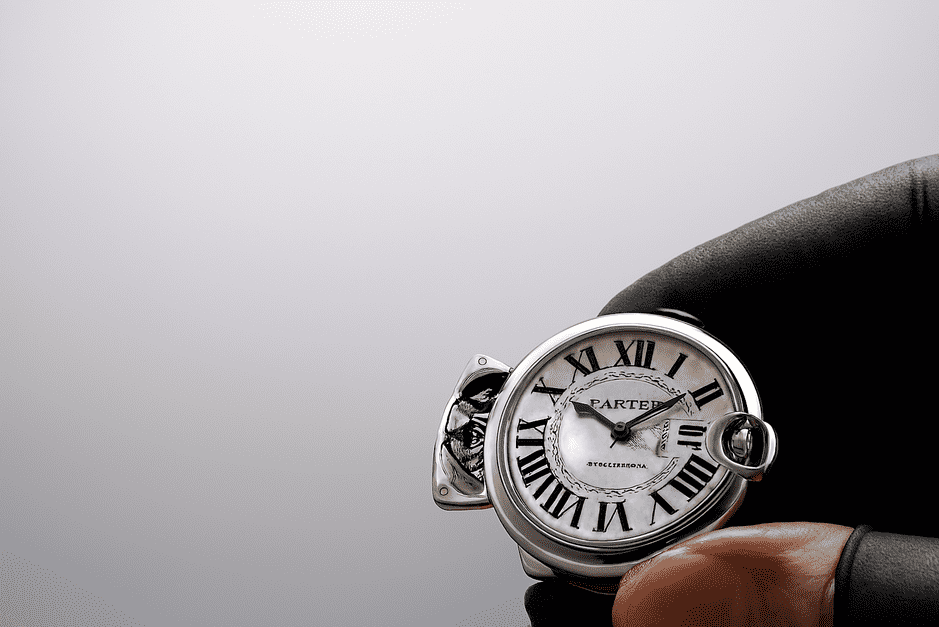
While Swiss giants dominate headlines, MB&F and enameller Gabriel Colliard recently showed how collaboration creates magic. Their Legacy Machine 101 features three miniature jungle scenes with macaws, a monkey, and a crocodile. Moreover, MB&F limited each design to eight pieces. Since Maximilian Büsser founded MB&F in 2005, it has invited external specialists onto each project. Meanwhile, its core team leads engineering. Therefore, Indian independent watchmaking should study this model. By linking independent artisans and engineers, Indian studios can craft collectible watches with authentic cultural voice. However, India must not copy Switzerland. Instead, it must build its own identity.
Why Indian Independent Watchmaking Needs Networks
Collaboration Opens New Doors
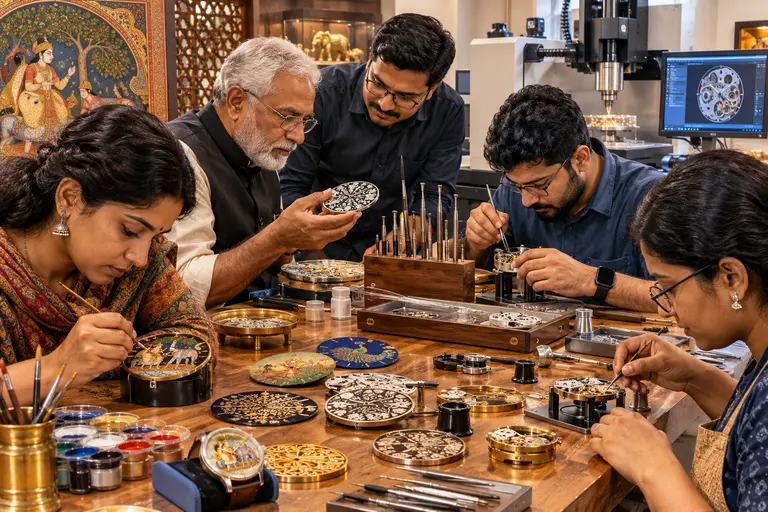
Indeed, MB&F proves that creative houses do not need huge factories. Instead, they unite independent specialists. As a result, small workshops join luxury production while keeping their identity. India already boasts miniature painters, jewellers, metalworkers, and precision engineers. However, these experts work in separate industries. Therefore, an Indian house could connect a Rajasthan painter with a Bengaluru engineer and Karnataka metalworker. Meanwhile, the house would oversee design, quality, and collector outreach. Consequently, family workshops could reach global collectors and inspire young Indian talent. Read more about MB&F’s collaborative watchmaking model.
Foundations of Indian Independent Watchmaking
Titan Shows What India Can Build
First, India has already shown real capability. For instance, Titan’s Nebula Jalsa Majestic Tourbillon pairs an in-house flying tourbillon with red agate bridges. It also features a hand-painted marble dial by Padma Shri artist Shakir Ali. Moreover, Titan built just ten pieces at ₹40.5 lakh each and entered the 2025 GPHG. However, entering never equals winning. Still, Titan is a corporate giant, whereas India needs agile independent studios. Yet corporate scale differs sharply from nimble, founder-led horology.
Independent Indian Watchmaking Brands Tell Fresh Stories
Meanwhile, smaller brands already prove storytelling builds value. For example, Jaipur Watch Company uses vintage coins, stamps, and miniature paintings. Similarly, Bangalore Watch Company celebrates Indian aviation and space milestones. Thus, Indian studios can look beyond royal themes toward engineering, architecture, and daily culture. Authentic local themes resonate deeply with both domestic and international collectors. Explore our guide to Indian Independent Watchmaking and Its Future.
Turning Regional Diversity into Watchmaking Strength
Every Indian Region Offers Distinct Craft
Above all, India’s 28 states and 8 union territories hold living craft traditions. For instance, Rajasthan offers miniature painting and Thewa, while Karnataka brings Bidriware. Likewise, Keralam contributes Aranmula Kannadi, Odisha adds Pattachitra, and Tamil Nadu offers Tanjore painting. Read more in our article on Indian Craft Traditions. Indeed, each craft carries generational knowledge. Imagine 28 state editions followed by eight union territory pieces. Each dial becomes a signed miniature tribute to living regional craft. However, brands must never paste art onto generic dials merely to hike prices. Instead, they should give artisans creative freedom, fair pay, and public credit. Consequently, collectors meet real makers, turning diversity into a global narrative.
Indian Engineering Must Match Watchmaking Art
Build on Indian Precision Skills
Admittedly, watchmaking demands intense mechanical precision. For example, the NITI Aayog Surat Economic Master Plan notes Surat processes roughly 90% of global diamonds. Thus, India already organises precision work at scale. Nevertheless, diamond cutting differs from crafting gear trains, escapements, and balance springs. Accordingly, independent watch studios can partner with aerospace, medical-device, and CNC specialists. Aerospace tolerances and medical-grade machining already prove local engineers can hit microscopic accuracy. Moreover, technical education matters. The Rolex Training Centre in Mumbai proves India can teach watch servicing locally. However, India must also teach movement design, component fabrication, and fine finishing.
Reliability Comes First in Indian Watchmaking
Certainly, Indian painters, gem cutters, and metalworkers demonstrate remarkable patience. Still, artistic charm never excuses poor timekeeping. Collectors celebrate hand-painted dials, yet they reject unreliable movements. Therefore, brands must pair handmade craft with strict testing and transparent accuracy standards. Publishing clear testing metrics builds lasting confidence among serious international buyers.
A Roadmap for Indian Independent Watchmaking
Start Small, Then Scale
First, an Indian studio can buy proven Swiss or Japanese movements. Meanwhile, it can design original cases, dials, and artisan collaborations. As a result, founders test collector demand without massive capital. Next, the company can invest in micromachining, finishing, and specialist workshops led by foreign-trained Indian watchmakers. Eventually, ambitious houses can build original complications inspired by the Panchang calendar, Nakshatras, or Jantar Mantar. However, these concepts demand rigorous engineering for legibility and reliability. Notably, this roadmap outlines a strategic possibility, not a guaranteed forecast.
Conclusion
Overall, MB&F shows that creative vision attracts exceptional talent. Likewise, Indian independent watchmaking can unite artisans, engineers, designers, and collectors through genuine collaboration. Therefore, India does not need another Geneva. Instead, it needs a confident horological identity. Ultimately, the goal is not to become Swiss, but to move forward as unmistakably Indian. That path rewards patience, craft, and engineering equally.
Frequently Asked Questions
Can Indian independent watchmaking rival MB&F?
Yes, because India already holds independent brands, master artisans, and strong engineering talent. However, global respect requires sustained investment, specialist training, and dependable suppliers.
Does Indian watchmaking need to copy Switzerland?
No, because originality beats imitation. Instead, India should adopt Swiss reliability standards while expressing its own culture.
Can all 28 states and 8 union territories join?
Potentially, yes, since every region preserves distinct crafts and heritage. Therefore, a curated series can turn regional diversity into global storytelling.
How long will this horological journey take?
No firm timetable exists. Still, stronger collaborations can emerge within years, while original movements and deep collector trust may span 15 to 20 years.
Disclaimer
This article separates established developments from proposed strategies. Therefore, the roadmap reflects an independent assessment, not a guaranteed forecast of India’s horological progress. The author has no financial affiliation with the brands or organizations mentioned.