Introduction
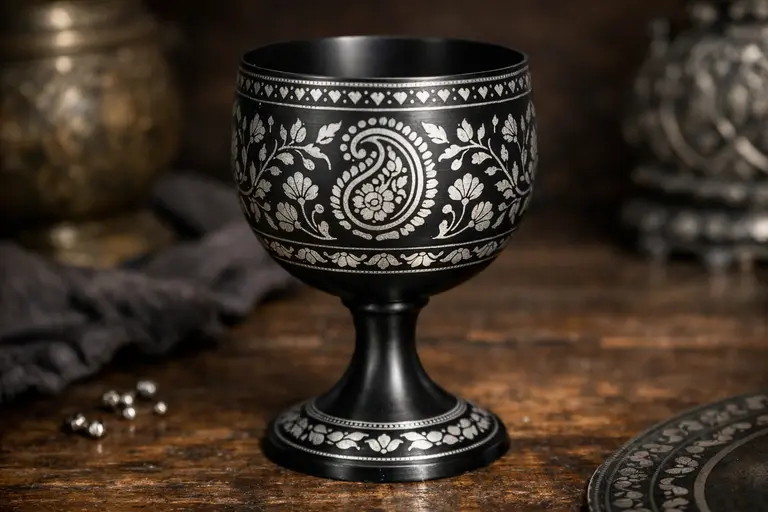
Have you ever seen a black metal object with shining silver patterns running across its surface? If so, you may have already encountered an Authentic Bidriware Craft piece—one of India’s most beautiful and oldest metal traditions. Artisans in Bidar, Karnataka, have been perfecting this art for over 600 years. Specifically, they inlay pure silver into a dark zinc-copper alloy base, creating a striking contrast that looks both royal and surprisingly modern. Because this craft carries a Geographical Indication (GI) tag, only pieces made in Bidar using the traditional process qualify as genuine. In this guide, you will learn where this craft comes from, how artisans create it, and how to spot fakes. You should also read our guide on gemstone buying mistakes to understand how quality standards apply to all handcrafted luxury goods.
Where Does Authentic Bidriware Craft Come From?
Authentic Bidriware Craft began in the Deccan region during the 14th century under the rule of the Bahmani Sultans. According to historical accounts, Sultan Ahmed Shah Bahmani invited an Iranian craftsman named Abdullah bin Kaiser to Bidar to decorate royal palaces. Consequently, Kaiser worked alongside local craftsmen to establish this distinctive metal inlay tradition. Over time, local artisans blended Persian, Turkish, and Arabic design ideas with Deccani styles. Therefore, Bidriware grew into a uniquely Indian craft with deep cultural roots.
Today, Bidar remains the undisputed heart of production, though some artisans also work in Hyderabad and Lucknow. Furthermore, the GI registration, awarded in 2006, formally protects this craft and links it directly to the Bidar region. If you enjoy collecting heritage items, this art belongs on your list alongside Aranmula mirrors and Banarasi sarees. For more on the history of Indian metallurgy, you can visit the CSIR-National Metallurgical Laboratory (CSIR-NML) official portal.
How Artisans Make Authentic Bidriware Craft
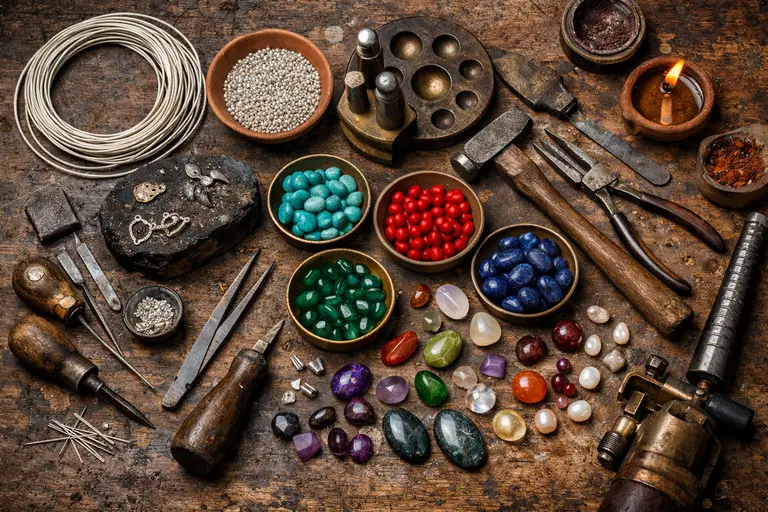
The making of this art is one of its most fascinating qualities. First, artisans melt zinc and copper together in a ratio of about 16:1 and pour the mixture into sand molds. After the metal cools, they apply a copper sulphate solution to darken the surface temporarily. This step helps them see their hand-drawn designs more clearly.
Next, they chisel fine grooves into the metal by hand and carefully hammer in thin silver wire or sheet. After that comes the most iconic step of the Authentic Bidriware Craft. Artisans rub a hot paste onto the heated piece. They make this paste using soil from the Bidar Fort mixed with ammonium chloride and water. This special fort soil is rich in potassium nitrate and has been shielded from sunlight for centuries. Consequently, the nitrate oxidizes the copper in the alloy to form copper oxide, which gives the surface its deep, permanent black color. Importantly, this is a chemical change within the metal—not paint—so it cannot chip or peel. Finally, artisans polish the silver and rub it with coconut oil to enrich the matte black finish. To understand the chemical properties of such alloys, refer to Wikipedia.
Main Techniques Used in Authentic Bidriware Craft
Artisans use four primary techniques to achieve different visual effects. Understanding these helps you appreciate the skill involved in each piece.
Tarkashi and Tainishan
- Tarkashi: In this style, artisans use thin silver wire to form stars, floral creepers, and delicate patterns.
- Tainishan: Here, thicker silver sheet sits flush with the surface, creating bold, solid forms.
Aftabi and Zarbuland
- Aftabi (Mehtabi): The silver sheet covers the entire background so that the design appears in black against a silver field.
- Zarbuland: This is high-relief work where the silver stands out in three dimensions. By contrast, Zarnishan produces a lower, recessed relief.
Traditional motifs include Mughal poppies, Persian roses, and geometric patterns inspired by Bidar Fort. In addition, many artisans now create earrings, pendants, and cufflinks that suit modern lifestyles.
How to Identify a Genuine Piece
When you hold a piece of Authentic Bidriware Craft, you notice three things right away: weight, finish, and inlay quality. First, the base is a dense zinc-copper alloy, so genuine pieces feel noticeably heavy in your hand. Second, the silver sits inside the metal rather than on top like a coating. Third, because the black surface is a permanent chemical patina, it does not flake.
Run your finger gently over the surface. In most styles, you should not feel sharp edges or loose bits of silver. Moreover, whenever possible, you should look for the GI label or an artisan signature. These details confirm that your piece is the real thing. Common fakes often use machine-printed patterns or painted black surfaces that chip away near the edges. If a piece feels very light, it is a strong warning sign that the base is a cheap imitation.
Where to Buy and How to Care for Your Art
For first-time buyers, the safest approach is to purchase from government-recognized sources. For example, Cauvery Handicrafts (Karnataka) and Lepakshi Handicrafts (Telangana) are trusted state emporiums. Additionally, platforms like GiTAGGED focus specifically on certified Indian products.
Caring for Authentic Bidriware Craft is simple. Specifically, you should dust it regularly with a soft, dry cloth. If needed, wipe it gently with a slightly damp cloth and dry it immediately. However, avoid soaps and harsh chemicals, as these damage the patina over time. Instead, occasionally rub the piece with a few drops of coconut oil to revive its deep black luster. Furthermore, keep your pieces away from high humidity to prevent oxidation of the silver inlay.
FAQ: Authentic Bidriware Craft
What makes the black color permanent?
The black color results from a chemical reaction between the zinc alloy and the potassium nitrate found in Bidar Fort soil. It is a form of copper oxide that bonds permanently to the metal.
Is Authentic Bidriware Craft made of pure silver?
The inlay is typically 99.9% pure silver. However, the base is an alloy consisting mostly of zinc with a small percentage of copper.
Can I wear Bidriware as jewelry?
Absolutely. Many artisans now create contemporary earrings, bangles, and pendants. These pieces are lightweight and hypoallergenic, making them perfect for daily wear.
Why is Bidar Fort soil so important?
The soil inside the fort has a specific chemical composition that creates the perfect black patina. Artisans believe that soil from outside the fort does not produce the same rich, deep color.
Where is the best place to buy authentic pieces?
You should always choose government-owned emporiums or GI-certified platforms to ensure that you are supporting traditional artisans and receiving a genuine product.
Disclaimer
This article provides general educational information about Bidriware based on sources available as of April 2026. It does not constitute legal, certification, or valuation advice. Always verify GI status, pricing, and food-safety claims with sellers, artisans, or relevant authorities before purchasing or using any Bidriware product.