Disclosure: This post contains Blue Nile coloured gemstones and affiliate links for our jewellery retail guide. If you make a purchase through these links, I may earn a small commission at no extra cost to you
Introduction
Diamonds often dominate online jewellery shopping, yet coloured gemstones—such as sapphires, emeralds, and rubies—offer rich, vibrant beauty and deep cultural meaning that many American families have treasured for generations. Although Blue Nile built its global reputation on diamond sales, the retailer now also sells a wide variety of fine coloured gemstones. Therefore, shoppers can compare many exquisite designs without visiting a single physical store. Nevertheless, coloured gemstones behave differently from diamonds; specifically, you must learn a few essential basics regarding quality, treatment, and durability before you commit your funds. This guide explains exactly what you should check to ensure you purchase the right piece, and it keeps the advice simple for everyday buyers. By understanding these materials, you shop with clarity and confidence. If you want to learn more, read our guide on blue sapphire colour, quality, and value.
What Makes Blue Nile Different for Coloured Gemstones
Blue Nile combines online convenience with dedicated buyer education. Moreover, several features help first-time shoppers make smarter decisions.
Quality Checks for Coloured Gemstones
Blue Nile inspects its jewellery thoroughly before dispatch. As a result, buyers gain an extra layer of internal quality control. Nevertheless, an internal inspection does not replace an independent laboratory report. Therefore, ask whether your chosen stone comes with an official report from a recognised laboratory before you pay for the piece.
Coloured Gemstones Education
Blue Nile publishes helpful guides on gemstone traits, treatments, and care. For example, heat treatment often improves the colour of many sapphires and rubies, while oil or resin filling improves the clarity of emeralds. However, treatment does not automatically signal poor quality, because the trade widely accepts many enhancements. Still, the type and extent of the treatment directly affect the stone’s value. Consequently, you must read the treatment details for every stone you consider.
Design and Customisation
First, Blue Nile sells ready-made rings, earrings, and necklaces. In addition, it offers custom design options that let you explore combinations of gemstones and settings. However, availability varies by stone and product category. Therefore, confirm that your preferred gemstone suits your chosen setting before you plan a custom piece. Keep in mind, too, that Blue Nile excludes its personalised jewellery collection from standard returns.
Responsible Sourcing for Coloured Gemstones
Blue Nile discusses its commitment to responsible metal sourcing. However, responsible gold sourcing does not necessarily reveal where a specific sapphire, emerald, or ruby originated. So, request specific documents if provenance matters to you. Blue Nile also lists physical showrooms in select locations. Before you travel, confirm on its website that a showroom stocks the specific piece you want to see.
Understanding Coloured Gemstones Quality
Each of these three major coloured gemstones has unique strengths. Consequently, you should weigh durability, colour, clarity, cut, and treatment together when you evaluate a potential purchase.
Quality Factors for Sapphire
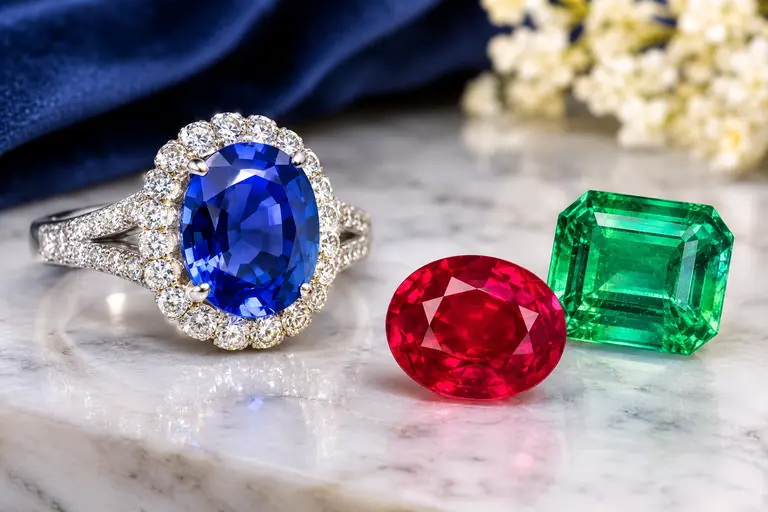
Sapphire belongs to the corundum family and scores 9 on the Mohs hardness scale. Blue is its best-known colour, although sapphires also occur in pink, yellow, and green. Because sapphires resist scratches well, they suit engagement rings and daily wear. Still, check the colour, transparency, and cut quality personally. Furthermore, GIA’s gemstone education pages offer helpful details on identification and quality standards.
Quality Factors for Emerald
Emerald belongs to the beryl family and scores 7.5 to 8 on the Mohs scale. Its natural internal inclusions, called jardin, give each stone its unique character. However, those inclusions also make emeralds more fragile than sapphires or rubies. Many sellers fill emeralds with oil or resin, so ask about the treatment history. Additionally, choose a protective setting for everyday wear. Finally, never clean emerald jewellery in an ultrasonic or steam cleaner.
Quality Factors for Ruby
Ruby is the red variety of corundum, so it shares sapphire’s hardness of 9. Heat treatment is common and widely accepted for rubies. In contrast, lead-glass filling can reduce durability and long-term value significantly. Thus, always separate ordinary heat-treated rubies from heavily filled ones.
Questions to Ask Before Buying Coloured Gemstones
Price alone never proves quality. Instead, ask whether the stone is natural or laboratory-grown, which treatments it has received, and whether an independent report supports the sale. Respected laboratories include GIA, Gübelin, and SSEF. Note, however, that an identification report differs from an insurance appraisal. The report describes identity and treatments, whereas the appraisal estimates monetary value. Additionally, request the carat weight and millimetre dimensions. Because different gemstones have different densities, equal carat weights do not look equally large. Our guide to reading gemstone certificates explains these documents further.
Lighting and Online Shopping
Coloured gemstones look different under varied light sources. Therefore, a sapphire, emerald, or ruby may appear different in photographs, showroom lighting, and natural daylight. Consequently, study every photograph and video the retailer provides. Furthermore, remember that screen brightness and colour settings change how gemstones appear to you. For expensive purchases, inspect the stone in person whenever possible.
Returns, Warranty, and Insurance
Blue Nile offers a 30-day return window, which starts on the shipment date. However, the item must remain unworn and in original condition, and the personalised collection, engraved items, and clearance items do not qualify. Therefore, read the Blue Nile return policy before you order. Buyers in India should take extra care; check whether your chosen piece ships to your location, and expect to pay duties, taxes, and import fees. Blue Nile also offers a limited lifetime warranty on qualifying jewellery, but terms may differ for international orders. Consequently, consider separate jewellery insurance and compare coverage for accidental damage, loss, and replacement. Finally, the jewellery insurance tips can help you choose the right policy.
Frequently Asked Questions
Does Blue Nile provide an independent certificate for every coloured gemstone?
Not necessarily. Check each product page to see whether a laboratory report accompanies the stone, as an internal inspection cannot replace independent certification.
Can I wear sapphires, emeralds, and rubies every day?
Sapphires and rubies handle daily wear well. Emeralds, however, need gentler care because their inclusions and fillers make them more vulnerable.
Can I clean emerald jewellery in an ultrasonic cleaner?
No. Instead, use mild soap, lukewarm water, and a soft brush. Ultrasonic cleaners can damage fracture-filled emeralds.
Does the warranty cover chipped or lost gemstones?
Read the warranty terms carefully, because warranties typically exclude loss, theft, and accidental damage. Buy separate insurance for that protection.
Should I get an independent appraisal?
For higher-value pieces, yes. An appraisal establishes a replacement value. Check return conditions before you alter the jewellery.
Disclaimer
This article offers general education. It does not constitute gemological certification or financial advice. Verify all terms with the retailer before purchasing.