Disclosure: This post contains Blue Nile affiliate links to help you find the perfect pearl. If you make a purchase through them, I may earn a small commission at no extra cost to you.
Introduction
Buying pearls should feel exciting, not stressful. However, first-time buyers often struggle with terms such as Akoya, nacre, lustre, and AAA. In addition, social media adds confusion through filtered photographs and conflicting advice. The Blue Nile pearl education guide offers a helpful starting point because it explains pearl types in plain language. Nevertheless, no single retailer answers every question. Therefore, you should read the independent GIA pearl guide as well. For cultural context, our article on pearls in Keralam jewellery traditions adds useful background. Once you master the jewellery industry basics, you’ll have the confidence to identify true quality at any price point or store.
Why the Blue Nile Pearl Guide Works for Beginners
Plain Explanations for Blue Nile Pearl Buyers
Blue Nile describes size, shape, colour, lustre, and surface in practical terms. Consequently, beginners understand why two similar pearls carry different prices. For example, lustre measures how sharply a pearl reflects light. However, photographs can distort lustre, so you should always check pearls under good lighting. Similarly, small surface marks rarely ruin a pearl because natural variations appear often. Still, you must separate minor blemishes from serious damage such as peeling or cracks.
Separate Pages for Each Blue Nile Pearl Type
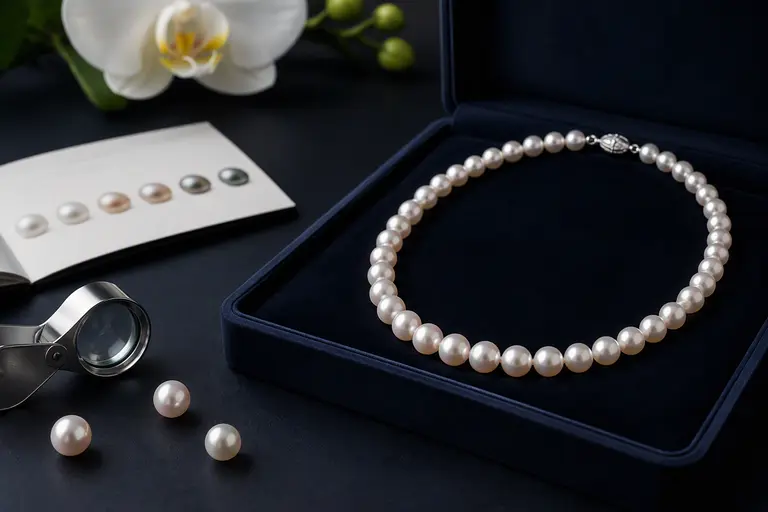
Blue Nile publishes dedicated pages on Akoya pearls, South Sea pearls, Tahitian pearls, and freshwater pearls. Akoya pearls attract buyers who want classic white strands. Meanwhile, South Sea pearls grow exceptionally large and smooth, typically in white. Tahitian pearls show naturally dark colours, while freshwater pearls provide many shapes and prices. As a result, you choose a style before you compare individual pieces. Our guide to buying jewellery on a modest budget helps you set your limit first.
Questions Every Blue Nile Pearl Buyer Should Ask
What Type of Blue Nile Pearl Am I Buying?
First, ask whether the pearl is freshwater, Akoya, South Sea, or Tahitian. Next, ask whether the colour is natural or treated, because some pearls undergo colour treatments. Since treatments affect value, request clear disclosure instead of trusting colour alone.
How Good Are the Blue Nile Pearl Lustre and Surface?
Examine the pearls in bright, natural light. Look for sharp reflections, pleasing colour, and a clean surface. Although strong reflections usually signal good lustre, no single test proves quality. Therefore, compare several pearls side by side. Personal taste also matters. For instance, a unique baroque pearl may suit you better than a perfectly round one.
Will Blue Nile Pearl Jewellery Last?
Ask about nacre, construction, and care. Nacre is the layered coating that gives a pearl its glow, and thick nacre usually supports durability. For necklaces, inspect the stringing and clasp. Knotted strands usually reduce friction and limit losses if the strand breaks. However, knots cannot prevent every accident, so restring your pearls regularly. Finally, ask about cleaning, storage, warranty, and returns before you pay. Our jewellery care tips explain daily habits that protect pearls.
Pearl Grading and Laboratory Reports Explained
Sellers use different grading systems. For example, one shop’s AAA pearl may not match another shop’s AAA pearl. Consequently, ask every seller to explain its criteria. Fortunately, recognised frameworks exist. The GIA evaluates pearls through seven Pearl Value Factors: size, shape, colour, lustre, surface, nacre, and matching. These factors describe quality clearly, but they do not create one universal sales scale. Laboratories also issue pearl reports. Depending on the report, testing shows whether a pearl is natural, cultured, or imitation. It may also note treatments. Therefore, independent verification helps most with costly pearls. For everyday purchases, a detailed invoice and accurate description work well. Nevertheless, a shop’s own certificate does not equal an independent laboratory report.
Social Media Lessons for Blue Nile Pearl Buyers
Social media inspires styling ideas, but filters and dramatic lighting create unrealistic expectations. Therefore, compare photographs with product specifications and ask for extra images. Likewise, popularity does not prove quality or long-term value. Baroque pearls and layered necklaces let you express your style without a large budget. Jewellers can respond in a simple way. Instead of burying customers in jargon, they demonstrate lustre, disclose treatments, and explain care. This approach builds trust and helps customers shop within their budgets. Above all, choose pearl jewellery you will enjoy wearing often. Comfort and confidence matter more than passing trends.
Is a Blue Nile Pearl Purchase Right for You?
Blue Nile suits shoppers who prefer online buying and clear education. It’s fine jewellery range also includes classic pearl earrings, necklaces, and gifts. However, verify current stock, shipping, and return policies before you order. Specialist pearl dealers may also offer wider choices or even rare varieties. Ultimately, the best seller answers questions honestly and states its terms clearly.
Frequently Asked Questions
Are cultured pearls real pearls?
Yes. Cultured pearls form inside molluscs after humans start the process. They are genuine pearls, unlike glass or plastic imitations.
Do beginners need expensive pearls?
No. Set a comfortable budget first. Then compare appearance, construction, care requirements, and seller transparency.
Do all pearls need laboratory reports?
No. The need depends on the price and the seller’s claims. However, independent verification helps most with costly or natural pearls.
What matters most when buying pearls?
Lustre strongly shapes visual appeal. Nevertheless, size, shape, colour, surface, nacre, matching, and personal taste also matter.
Disclaimer
This article offers general consumer education, not an appraisal or guarantee of pearl identity, quality, or value. Prices, availability, and retailer policies may change. Therefore, verify current claims and purchasing terms directly with retailers before you buy.