Disclosure: This post contains affiliate links for our computer and jewellery buying guide. As an Amazon Associate, I earn from qualifying purchases. If you click through and buy something, I may earn a small commission at no extra cost to you.
Introduction
A sparkling diamond, a pearl necklace, and a fast computer seem unrelated. However, each product combines raw materials, technical knowledge, and human skill. Most buyers focus on looks, performance, and price. Meanwhile, skilled workers complete dozens of careful steps behind the scenes. For example, a lapidary studies a rough stone, a setter secures the finished gem, and an assembler tests every part. Therefore, comparing gemstone craftsmanship with computer assembly reveals the hidden effort behind our favourite goods. Most importantly, it helps the 99% value the people behind their purchases. By appreciating these technical paths, you make better buying decisions and gain respect for the artisans who build the world around you. Check out our guide to gemstone basics.
Precision in Gemstone Craftsmanship and Jewellery Setting
How Gemstone Craftsmanship Faceting Creates Beauty
A rough gemstone rarely resembles the polished stone buyers admire. Therefore, a lapidary first examines its colour, shape, inclusions, and weak points. Next, the cutter chooses a design that balances beauty, durability, and weight. Then, the cutter grinds and polishes each facet with specialised equipment. Cut matters greatly in diamonds. According to the GIA guide to diamond cut, proportions, symmetry, and polish all contribute to quality. Other gemstones, however, have different optical and physical properties. Consequently, cutters adapt their methods to each material instead of following one formula. Moreover, cutting removes material permanently, so a cutter cannot undo a poor decision.
Why Jewellery Setting Demands Gemstone Craftsmanship
After cutting, the setter prepares a secure mounting. First, the setter examines the stone. Then, they position it and secure it with prongs, a bezel, or another suitable design. However, too much pressure chips or cracks some gemstones. The risk depends on toughness, cleavage, inclusions, and setting style. For this reason, setters must understand every stone they handle. In addition, pavé settings demand extra precision because many tiny stones must fit tightly together. Likewise, our jewellery care tips explain how to protect settings at home.
What Gem Craftspeople and Computer Assemblers Share
Planning and Quality Checks in Gemstone Craftsmanship
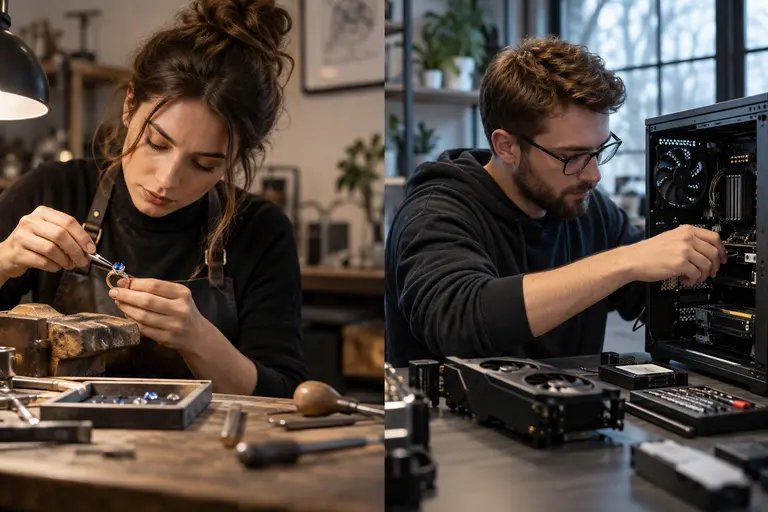
Computer builders also plan carefully. Before assembly, they check that the processor, motherboard, memory, storage, power supply, and cooling system work together. Then they install each part, check the connections, and test the system for faults. Similarly, jewellers check stone alignment, mounting size, and setting security before finishing a piece. In both trades, the order of work matters. Furthermore, inspections at each stage catch problems before they become expensive. Nevertheless, the two crafts differ. Electronics sometimes demand extremely fine tolerances, while many connections follow standard designs. Likewise, gemstone craftsmanship varies with material and design. For practical guidance, read Intel’s guide to building a gaming PC.
Lessons Gemstone Craftsmanship Shares with Technology
Jewellery workshops borrow systematic inspection and record-keeping from computer assembly. For example, a setter checks prong security at several stages instead of waiting until final polishing. Conversely, gem craftspeople show how to adapt to individual materials. Although computer parts follow set specifications, technicians still spot damaged connectors and unusual behaviour. As a result, both trades benefit when standard procedures meet informed human judgement.
Why Buyers Often Overlook Gemstone Craftsmanship Work
The Finished Product Hides Gemstone Craftsmanship
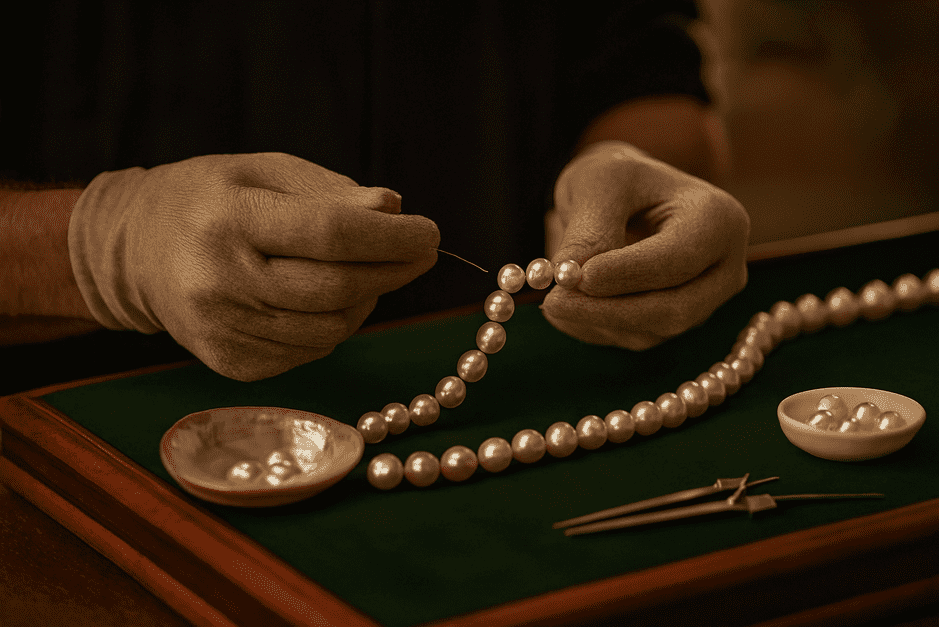
Buyers judge products by appearance, usefulness, performance, and price. For instance, a customer sees a brilliant diamond or a computer that starts quickly. However, the work behind that result stays invisible. This does not mean buyers lack intelligence; rather, most people simply lack specialist knowledge. For example, cultured pearls begin with human intervention, whereas natural pearls form without it. Similarly, factories build processors through complex industrial processes, while home builders only install them. Therefore, understanding these differences helps buyers respect both traditional craft and modern technology. For more detail, see our pearl buying basics.
Why This Knowledge Matters to the 99%
Buyers do not need to become gemologists or engineers. Nevertheless, basic knowledge helps them ask better questions. When buying jewellery, shoppers ask about gemstone identity, treatments, grading reports, setting quality, and repair options. Likewise, computer buyers check compatibility, specifications, warranties, and upgrade paths. Furthermore, price alone never tells the full story. Materials, labour, design, branding, and after-sales support all shape the final price. Therefore, smart buyers judge the whole product. A high price does not guarantee better workmanship, and a low price does not always mean poor quality. Ultimately, informed buyers shop with confidence and give skilled workers the credit they deserve.
Frequently Asked Questions
Is gemstone setting as complex as assembling a computer?
Both crafts need specialised knowledge, careful handling, and quality checks. However, setting focuses on securing stones without damage, while assembly focuses on compatibility, cooling, and performance.
Why should ordinary buyers understand craftsmanship?
Understanding craftsmanship helps buyers judge quality, durability, and heritage value. As a result, they make smarter choices when buying jewellery, furniture, or homes.
Does a higher price mean better craftsmanship?
No. Rather, price reflects materials, labour, design, and branding. Therefore, buyers should also examine workmanship, documentation, and after-sales support before they decide.
Disclaimer
This article offers general educational information about gemstone cutting, jewellery setting, and computer assembly. However, techniques and quality standards vary with materials, designs, and manufacturing methods. Therefore, buyers should consult qualified professionals when they evaluate valuable gemstones, jewellery, or specialised computer components.