Introduction
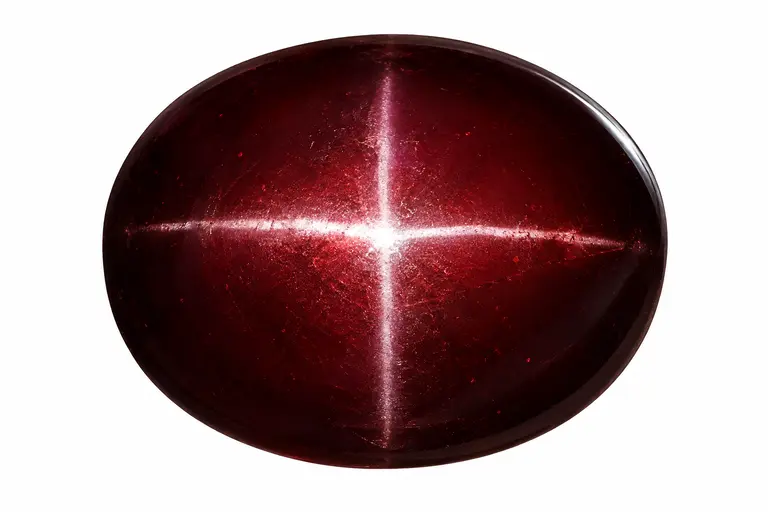
Star garnets are catching the attention of jewelry lovers everywhere, and for good reason. These remarkable gems combine natural beauty, genuine rarity, and a rare optical trick that sets them apart from ordinary stones. Unlike typical garnets, certain star garnets show a glowing star that seems to glide across the surface as the stone or the light shifts. This phenomenon is known as asterism, and understanding the specific star garnet benefits can help you make a more informed choice for your next jewelry purchase.
For decades, this effect fascinated gemologists and collectors, but now star garnets are reaching a wider audience. This is partly thanks to a widely shared New York Times feature titled “Idaho’s Love Affair With Star Garnets.” Meanwhile, more shoppers are looking for past conventional diamonds and rubies for gemstones with personality and a story. Consequently, star garnets fit naturally into the growing appetite for unusual, phenomenal gems. In this article, we will explore why these stones are special, where they originate, and how you can identify high-quality specimens.
Understanding Asterism and Star Garnet Benefits
The primary answer to what makes this gem special starts with asterism. This is an optical effect in which a star-shaped pattern of light appears on or just beneath a gemstone’s surface. According to the Gemological Institute of America (GIA), star garnet counts among the few phenomenal gems capable of showing a four-ray or six-ray star. Therefore, the visual impact is far more dynamic than that of a static, faceted stone.
Microscopic, oriented inclusions inside the stone create this beautiful effect. Rutile needles often play a key role, although different stones contain different inclusion combinations. Consequently, cutters typically shape star garnets as smooth, rounded cabochons rather than faceted gems. This is because the curved dome lets inclusions interact with light more effectively. As a result, the stone reveals a star that seems to travel gracefully as the light source moves. This interactive nature is one of the most celebrated star garnet benefits.
Why Phenomenal Gems Appeal to Current Shoppers
Several factors drive this renewed interest in star garnets among modern buyers. First of all, media coverage has introduced these gems to a much broader audience. Furthermore, buyers increasingly crave gemstones that look different from familiar, mass-market choices. Therefore, phenomenal gems such as star sapphire, star ruby, and star garnet naturally appeal to anyone seeking individuality.
In addition to their unique look, star garnets offer a natural optical phenomenon without the steep price tag often attached to fine star rubies. Consequently, everyday buyers can enjoy something rare and unusual without stretching their budget. If you are just starting your journey, you might find our guide to buying colored gemstones particularly helpful. Notably, the durability of garnet makes it suitable for everyday wear, which is another practical addition to the list of star garnet benefits.
Global Sources: Idaho vs India
When discussing the origin of these stones, two locations dominate the conversation. Each region offers a different story and a different type of crystal.
The Idaho Experience
Idaho remains one of the world’s most famous sources of star garnet. In fact, it is the official state gem of Idaho. The Emerald Creek Garnet Area offers a truly memorable experience for enthusiasts. The U.S. Forest Service manages this as a public collecting site. Because it requires an advance ticket, the site remains preserved and sustainable. Visitors can sluice through garnet-bearing gravel themselves, hoping to find their own “star.”
The Indian Connection
India also produces significant quantities of garnet capable of displaying asterism. While India lacks a centralized public dig site like Idaho, it possesses a deep heritage of gemstone cutting and trading. Travelers in India should instead explore established gem markets in cities like Jaipur or Mumbai. Reputable dealers there can offer stones with sharp, well-defined stars. Because India processes so many stones, buyers often find a wider variety of purplish and deep red hues here.
Identification and Star Garnet Benefits for Collectors
A visible star offers an encouraging clue, but it does not, by itself, confirm that a stone is a natural garnet. Therefore, you must follow a few verification steps. Genuine asterism should shift naturally and smoothly as the stone or light source moves. If the star stays fixed in one spot regardless of the angle, the stone may be a synthetic or a clever imitation.
Microscopic Analysis
A gemological microscope can reveal the oriented, needle-like inclusions found in natural star garnets. These “silk” needles must be present for the star to form. Even so, buyers should never authenticate a valuable stone from online photos alone. Instead, a trained gemologist should perform a professional examination. One of the greatest star garnet benefits is that most of these stones are untreated. Unlike rubies, which are often heated, star garnets usually appear in their natural state.
Furthermore, while synthetic star garnets exist, they have not yet become significant in mainstream jewelry. The more realistic risk involves a seller mislabeling a different phenomenal gemstone as a star garnet. Therefore, you should always confirm a stone’s true identity through a reputable laboratory report rather than fixating on the word “star” alone.
Selection Criteria: What to Buy
When you are ready to purchase, you should prioritize the quality of the star. Ideally, the rays should look sharp, straight, and well-centered on the cabochon. They should respond immediately as you tilt the stone under a single light source.
Body color matters too, as star garnets commonly range from dark reddish to purplish and brownish-red tones. Some collectors prefer the deep “almandine” red, while others seek out the rare purplish hues. Finally, a well-shaped cabochon displays asterism more clearly than a poorly cut one. Consequently, you should judge each stone on its overall beauty and the clarity of its star rather than simply chasing carat size.
FAQ: Star Garnet Benefits and Identification
What is the most important star garnet benefit?
The most significant benefit is the combination of rarity and affordability. You get a natural optical phenomenon that is rarer than most diamonds at a fraction of the cost.
Can I wear a star garnet every day?
Yes. Garnets have a hardness of 6.5 to 7.5 on the Mohs scale. While they are not as hard as diamonds, they are durable enough for rings and pendants if handled with reasonable care.
Why does my star garnet look blurry?
Asterism requires a single, strong light source to appear sharp. If you are under diffuse office lighting, the star may look faint. However, under direct sunlight or a flashlight, the star should pop clearly.
Is a six-ray star better than a four-ray star?
This is largely a matter of personal preference. Most Idaho garnets show four rays, while some Indian garnets can show six. A sharp four-ray star is often more valuable than a blurry six-ray one.
Are star garnets treated with heat?
In general, no. The inclusions that create the star would often be destroyed or altered by high heat. Therefore, most star garnets on the market are completely natural and untreated.
Disclaimer
This article serves general educational and consumer-awareness purposes only. Gemstone prices, availability, and treatments can change over time, and individual stones vary substantially. Buyers should seek independent gemological advice or laboratory testing before a significant purchase, since a visual examination or a seller’s description alone cannot confirm a gemstone’s identity, origin, or value. The author has no financial affiliation with the labs, brands, or organizations mentioned.