Introduction
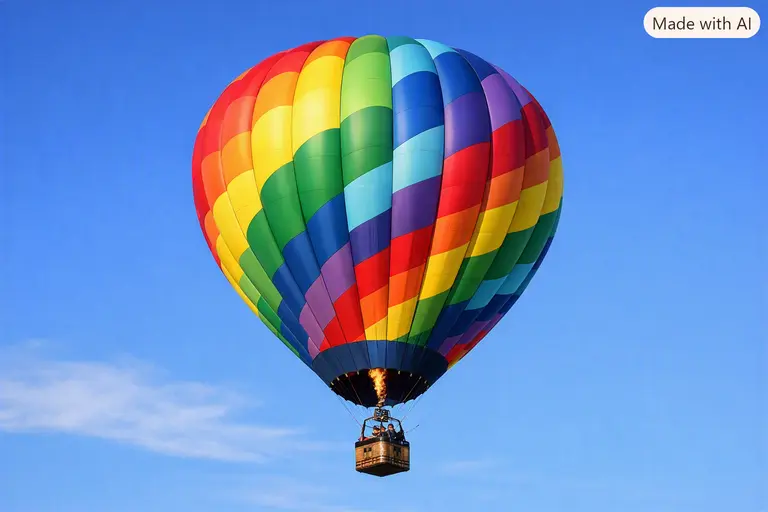
Hot air balloons rank among the most colorful sights in the sky. During a massive balloon festival, red, blue, yellow, green, and multicolored envelopes drift overhead like giant, floating gemstones. However, most people do not realize that Balloon Color Science serves a much more significant purpose than simple decoration. Indeed, color helps pilots maintain visibility, assists spectators in identifying specific balloons, and offers companies an unmatched branding tool.
Meanwhile, the specific fabric and pigment of an envelope also affect how the aircraft interacts with heat and sunlight. Most importantly, color alone does not create the primary lift that makes a balloon fly. Instead, a powerful burner heats the air inside the envelope. As that internal air becomes lighter than the cooler surrounding atmosphere, the balloon rises. Consequently, manufacturers combine aviation regulation, engineering, and visual design to create these masterpieces. This article explores the depth of Balloon Color Science and why those bright shades are mandatory.
Visibility and Aviation Safety Regulations
First and foremost, color plays an essential role in aviation safety. Under the U.S. Federal Aviation Administration (FAA) airworthiness standards for crewed free balloons (14 CFR Section 31.83), the exterior surface of an envelope must use contrasting colors. Specifically, the regulation ensures the aircraft remains conspicuous during operation to avoid mid-air collisions. Therefore, a bright envelope is not merely a style choice; it is a legal requirement for flight safety.
In addition, bold color patterns help pilots and ground crews tell individual balloons apart. When twenty or thirty balloons fly in a tight group, for instance, a distinctive pattern of red and yellow or blue and white makes a specific balloon easier to track. Still, color represents only one part of modern aviation safety. Pilots must also rely on accurate weather reports and thorough equipment checks. For more on the fundamentals of flight preparation, read our guide on balloon safety basics.
Thermodynamics and the Science of Lift
At this point, a common misconception regarding Balloon Color Science deserves close attention. Some enthusiasts assume that manufacturers choose dark colors because dark fabric absorbs more sunlight and therefore lifts the balloon higher. While this sounds logical, it misses the bigger picture of how flight actually works.
In reality, the pilot controls altitude by manually heating or cooling the air inside the envelope using the burner. To climb, for example, the pilot increases the internal temperature. To descend, the pilot either lets the air cool naturally or releases hot air through the “parachute vent” at the top. Nevertheless, color can play a secondary thermodynamic role. Darker fabrics generally possess a lower “albedo,” meaning they absorb more solar heat than lighter fabrics.
This is a principle that solar balloons—which do not use burners—rely on entirely to gain buoyancy. Therefore, color can influence how much fuel a pilot consumes on a sunny day, but the burner remains the true source of lift in a conventional hot air balloon.
Material Engineering and Fabric Choice
Beyond the visual aspects of Balloon Color Science, designers must choose fabrics that stay lightweight while withstanding extreme heat and UV radiation. Most modern envelopes consist of high-tenacity nylon or polyester. Furthermore, manufacturers coat these fabrics with silicone or polyurethane to prevent air from leaking through the pores of the material.
Because hot air naturally attempts to escape through microscopic gaps in the fabric, pilots must continuously supply heat throughout the flight. As a result, the construction of a balloon involve far more engineering than the casual observer might guess. Specifically, the pigment used to dye the fabric must be “colorfast” so that it does not fade and weaken the structural integrity of the nylon over time.
Branding and the Flying Billboard Effect
Color also provides operators with a massive branding opportunity. For example, a commercial balloon can display corporate colors and logos, turning a seven-story envelope into a highly visible, moving advertisement. Consequently, custom-designed balloons often become the centerpieces of regional tourism campaigns and product launches. In fact, many successful tourism campaigns in Keralam use hot air balloons to attract global visitors. In short, a hot air balloon functions simultaneously as a regulated aircraft, a massive billboard, and a piece of moving art.
The Gemstone Metaphor in Balloon Color Science
Interestingly, colorful balloons often resemble polished gemstones drifting through the atmosphere. While this comparison stays purely artistic rather than scientific, it offers a simple way to connect Balloon Color Science with familiar objects of beauty. For instance, a vivid red balloon naturally suggests a pigeon-blood ruby, while a deep blue envelope recalls a fine Kashmir sapphire.
Similarly, a bright green balloon evokes the essence of an emerald, and purple shades suggest high-quality amethyst. However, these remain color comparisons only. Indeed, a balloon does not share the chemical composition or crystal structure of a mineral. Even so, the metaphor works remarkably well: a gemstone represents the solid, enduring weight of the Earth, while a balloon represents the buoyancy and freedom of the air. Ultimately, that contrast makes the visual experience of a balloon festival unforgettable.
FAQ: Understanding Balloon Color Science
Why do hot air balloons need contrasting colors?
Manufacturers use contrasting colors because FAA standards (14 CFR 31.83) require the envelope to be conspicuous to other aircraft. This visibility is vital for preventing collisions in shared airspace.
Does the color of a balloon affect its fuel efficiency?
Yes, slightly. Darker colors absorb more solar radiation, which can help maintain internal temperatures on sunny days. Consequently, a dark balloon might use marginally less propane than a bright white one.
Are some colors more durable than others?
Generally, yes. Some pigments resist UV degradation better than others. Specifically, ultra-bright “fluorescent” colors tend to fade faster, which can shorten the lifespan of the expensive nylon fabric.
Can a hot air balloon be a solid, single color?
While it is possible, it is rare. Most pilots prefer patterns because they make the balloon easier to identify from the ground and improve the perception of depth and movement for other pilots.
Is Balloon Color Science related to gemstone grading?
Only metaphorically. While both fields study the saturation and hue of color, Balloon Color Science focuses on visibility and thermodynamics, whereas gemstone color grading focuses on rarity and market value.
Disclaimer
This article uses hot air balloon colors and gemstones purely as a visual and educational comparison. It does not claim that color determines flight performance in all conditions or gemstone identity. Aviation rules vary by country. Readers should always consult the current regulations issued by their national civil aviation authority, such as 14 CFR Part 31 in the United States, before attempting flight operations. The author has no financial affiliation with the brands or organizations mentioned.