Introduction to Gemstone Identification Challenges
Today, the jewelry market faces significant gemstone identification challenges because high-tech fakes often look identical to natural stones. While manufacturers now produce convincing synthetic versions of nearly every popular gem, trained gemologists must rely on more than just a quick glance. As a result, the industry depends on advanced laboratory science to distinguish between earth-mined treasures and laboratory-grown twins. Therefore, understanding these complexities is essential for anyone buying valuable jewelry in 2026. Consequently, a professional lab report remains the most reliable way to ensure authenticity in a crowded market.
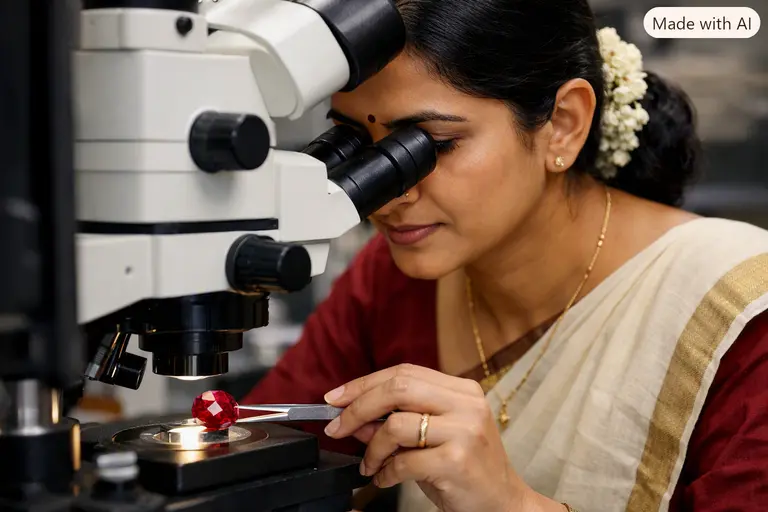
Skilled gemologists, armed with modern laboratory equipment, identify natural and laboratory-grown stones correctly in the vast majority of cases. However, a small handful of exceptional specimens still create significant gemstone identification challenges for even the world’s top laboratories. Therefore, identification never relies on a quick glance through a 10x loupe. Instead, it successfully blends careful physics, advanced chemical technology, and years of hands-on experience.
Modern instruments generate impressive data, yet they never make the final call alone. Rather, experienced gemologists read that data and translate it into plain language that buyers can trust. Consequently, a responsible lab sometimes spends extra days studying an unusual stone before issuing a final report. Readers who want to learn the basics should read our guide on how professional gemologists identify stones. Meanwhile, the Gemological Institute of America (GIA) offers excellent resources for those starting to learn the science.
Market Twins and Gemstone Identification Challenges
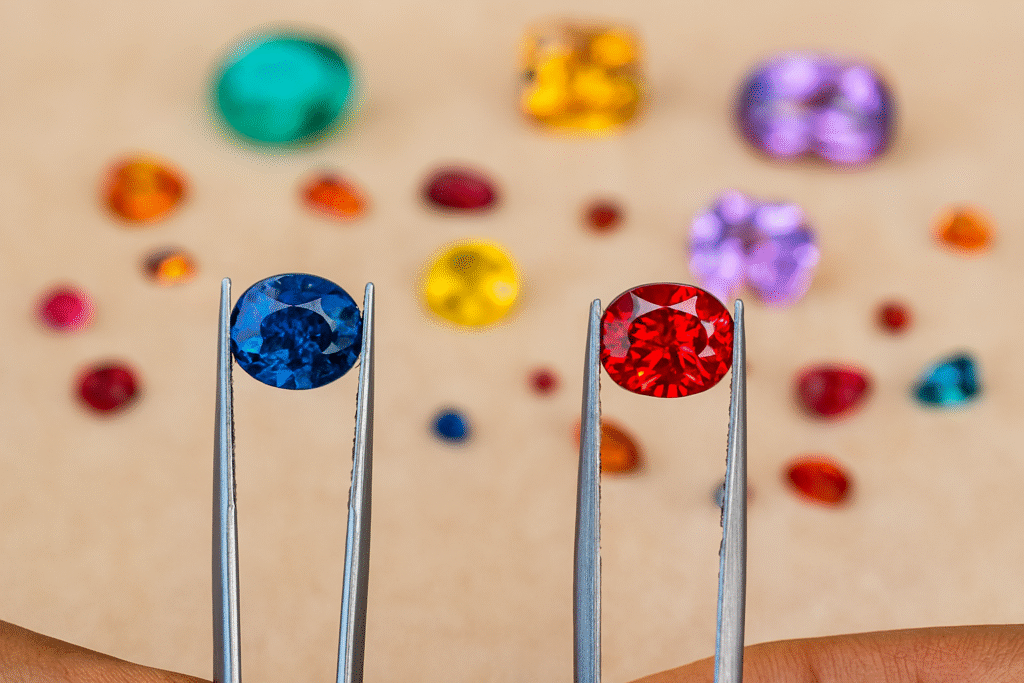
Technology has completely reshaped global trade over the last decade. As a result, nearly every popular gemstone now has at least one convincing alternative available for purchase. For instance, diamonds face constant competition from lab-grown diamonds and simulants such as synthetic cubic zirconia and synthetic moissanite.
Similarly, industrial labs now grow rubies, sapphires, and emeralds that share the same chemistry as their natural counterparts. In addition, assembled stones—often called doublets or triplets—circulate widely among unsuspecting sellers. Many natural gemstones also undergo treatments that drastically improve their appearance. Heating, fracture filling with lead glass, and beryllium diffusion have become standard industry practices. While these are acceptable when disclosed, they represent ongoing challenges in gemstone identification for retailers. If you want to understand how these materials are managed, you can read our guide on industry sheepdogs in tech and jewelry.
Why Loupes Fail in Gemstone Identification Challenges
Many shoppers mistakenly assume that an experienced jeweler can name any gemstone just by eyeing it through a magnifying glass. However, seasoned gemologists know that visual inspection only marks the beginning of a long process. High-quality synthetic stones often share the same chemical makeup and optical behavior as natural ones.
Consequently, they look identical to the naked eye. Some advanced manufacturers even build in features that mimic natural inclusions, which makes quick identification nearly impossible. For example, flame-fusion synthetic corundum often shows curved growth lines, while glass imitations frequently trap rounded gas bubbles. Still, not every stone follows a textbook pattern. Therefore, professionals must gather several types of independent evidence before they draw a conclusion. This focus on verifiable data is a key lesson from building India’s global brands in the luxury sector.
Scientific Tools for Gemstone Identification Challenges
Modern gem labs rely on serious scientific firepower to overcome gemstone identification challenges. Depending on the specific stone, specialists reach for advanced tools such as:
Spectroscopy vs. Gemstone Identification Challenges
Specialists use Raman spectroscopy and FTIR spectroscopy to identify the molecular “fingerprint” of a material. Furthermore, UV-Vis-NIR spectroscopy helps determine the cause of color in a stone, which is essential for detecting treatments.
Chemical Tests for Gemstone Identification Challenges
In some cases, labs use laser-based chemical analysis (LA-ICP-MS) to detect trace elements that link a stone to a specific geographic mine. Each of these tools adds a vital piece to the puzzle. Yet, these instruments only measure physical properties; they never announce a verdict on their own. Instead, trained gemologists compare the results against reference collections and databases built over several decades. Thus, human judgment still sits at the heart of every credible lab report. This rigorous process mirrors the grading standards for juice and gemstones, where scientific consistency is the top priority.
Expert Limits in Gemstone Identification Challenges
Gemological science has advanced enormously, yet a small group of gemstones continues to cause genuine trouble for identification. Specifically, premium lab-grown diamonds sometimes demand highly specialized testing to separate them from natural stones. Similarly, top-tier synthetic rubies can resemble natural material so closely that routine checks fail to catch them.
Padparadscha sapphires add another layer of difficulty because labs must separate rare natural color from sophisticated diffusion treatments. Emeralds also present unique gemstone identification challenges because advanced hydrothermal and flux-grown synthetics display remarkably natural-looking inclusions. Even pearls demand special care; since they form inside living organisms, labs often turn to real-time X-ray imaging to confirm their origin. Fortunately, these especially tricky cases make up only a tiny percentage of the stones that reach reputable laboratories like IGI (International Gemological Institute).
FAQ About Gemstone Identification Challenges
Can high-quality synthetic stones fool a master gemologist?
Yes, in rare cases where the synthetic stone lacks any diagnostic inclusions. In these instances, the gemologist must rely on advanced spectroscopy and trace-element analysis to find the truth.
Is a lab-grown diamond technically a “fake”?
No. A lab-grown diamond is chemically and physically identical to a mined diamond. It is a “synthetic” diamond, not a “simulant” like glass or cubic zirconia.
Why do some lab reports take several weeks?
Unusual stones often require peer review or specialized testing with expensive equipment. As a result, longer wait times usually signal a commitment to careful science rather than a problem with your stone.
Does an “inconclusive” report mean my stone is worthless?
Not at all. “Inconclusive” simply means the current scientific evidence does not support a firm origin or treatment claim. It reflects the honesty and integrity of the laboratory.
How do I choose the best lab for my gemstones?
You should look for laboratories with international reputations, such as GIA, SSEF, or Gübelin. These institutions invest most heavily in the research required to solve gemstone identification challenges.
Disclaimer
This article serves educational and consumer-awareness purposes only. The author has no financial affiliation with the laboratories or equipment manufacturers mentioned. Gemstone identification depends on scientific testing combined with professional judgment. Always consult an independent, recognized gemological laboratory for significant purchases, legal matters, or insurance valuations. Data reflects the industry status as of August 2026.