Introduction to Grading Standards for Juice and Gemstones
Fruit juice and colored gemstones sit in completely different industries; however, both depend on rigorous science, standard terminology, and honest labeling to protect buyers. Whether you pick up a bottle of orange juice or select a natural sapphire, you deserve accurate facts before you spend your hard-earned money. Understanding the grading standards for juice and gemstones is the first step toward avoiding fraud and ensuring value.
Although Europe, the United States, and India each run their own regulatory systems, these systems share core principles: authenticity, quality, and clear disclosure. Additionally, both industries lean heavily on laboratory analysis to catch adulteration and confirm chemical composition. As a result, buyers can make significantly smarter purchasing decisions in either market. For further reading on international food standards, visit the Codex Alimentarius Commission. You can also explore our related guide on colored gemstone grading standards.
How Officials Use Grading Standards for Juice
Fruit juice grading successfully blends quality assessment, lab testing, and strict legal labeling rules. Therefore, regulators judge far more than simple taste alone. In the United States, the USDA runs a voluntary quality grading program for certain processed fruit juices.
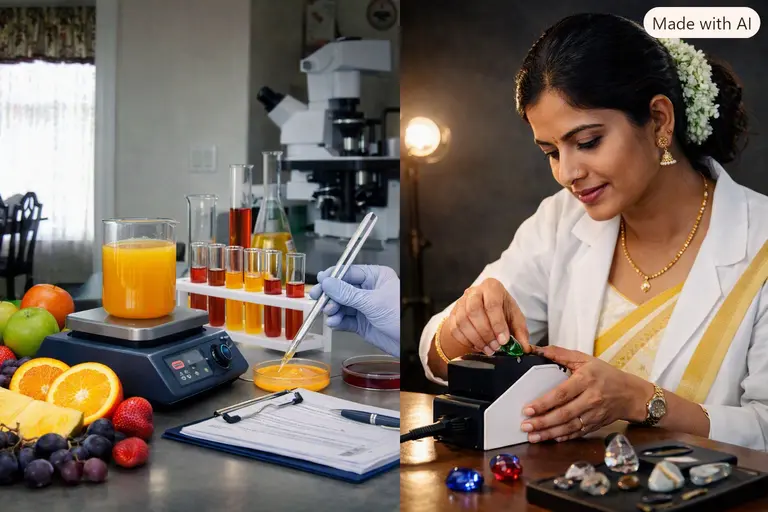
Specifically, inspectors assign Grade A (Fancy), Grade B (Choice), or Substandard based on color, flavor, and the absence of defects. However, these grades primarily measure aesthetic quality rather than safety. Meanwhile, laboratories measure sugar concentration using the Brix (°Brix) scale. This scale shows the percentage of dissolved solids in the juice. Consequently, Brix readings help confirm fruit maturity and ensure that reconstituted juice meets the required density. Furthermore, trained tasters judge appearance, aroma, and mouthfeel to ensure the product matches its labeled identity. This level of oversight acts as an “industry sheepdog,” a concept we explore in our guide on industry sheepdogs in tech and jewelry.
Global Rules for Grading Standards for Juice
Although grading systems differ slightly by region, most nations sort fruit beverages into similar legal categories. Pure fruit juice contains only the liquid extracted from the fruit. Whether directly extracted or reconstituted from concentrate, manufacturers must meet strict composition rules.
In contrast, fruit nectar blends juice or pulp with water and approved sweeteners. The minimum fruit content typically ranges from 20% to 50%, depending on the fruit type. Meanwhile, ready-to-serve fruit drinks contain a much smaller share of real fruit; therefore, manufacturers must place them in a separate, clearly labeled category. This standardisation is a key part of building India’s global brands in the food sector.
FSSAI and Grading Standards for Juice in India
India has built a thorough regulatory framework for packaged fruit beverages. Under the Food Products Standards and Food Additives Regulations, the FSSAI classifies beverages by fruit content and product type. Specifically, the FSSAI sets composition rules for juice made from concentrate and requires proper declarations for added sweeteners.
Notably, the FSSAI tightened enforcement in 2024. They directed food businesses to remove “100% fruit juice” claims from reconstituted juice because it contains added water and concentrate rather than pure, direct extract. As a result, consumers receive much clearer information about what they are buying. This move toward transparency is similar to the Chow Tai Fook business model, which prioritizes supply chain honesty to maintain consumer trust.
Why Grading Standards for Gemstones Mirror Food
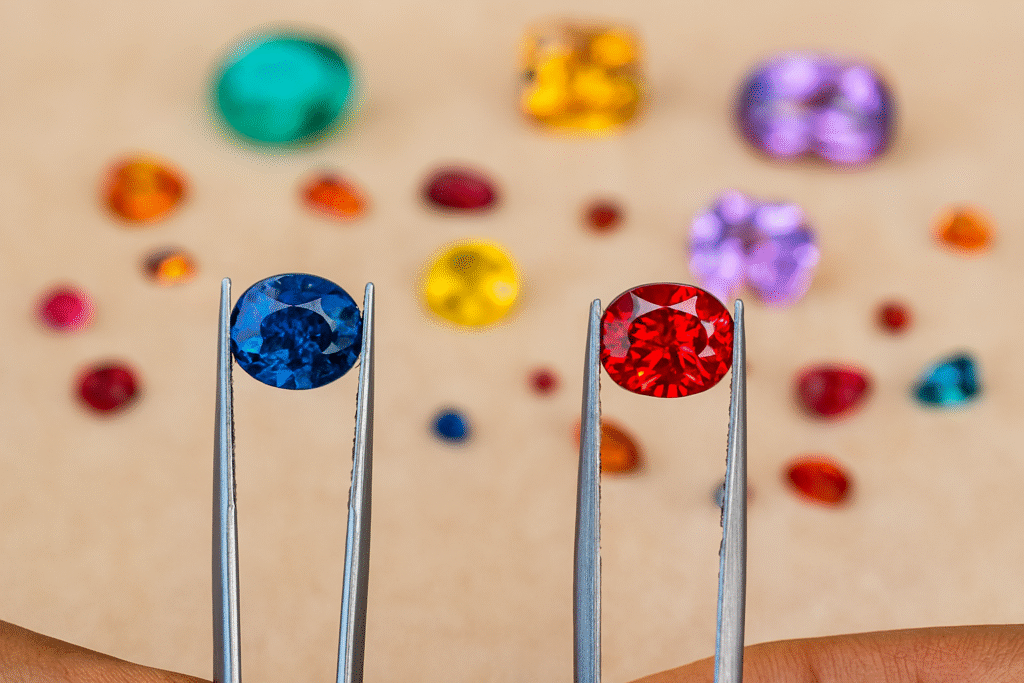
Interestingly, the gemstone trade follows many of the same consumer protection principles seen in food science. Unlike diamonds, colored gemstones lack one single universal grading scale. Nevertheless, major gemological laboratories apply comparable scientific methods to identify stones and detect treatments.
Specifically, labs use microscopy, spectroscopy, and chemical analysis to distinguish natural stones from synthetic or imitation materials. Most importantly, the grading standards for juice and gemstones prioritize the disclosure of enhancements. Heating, fracture filling, and dyeing can significantly change a gemstone’s appearance and durability. Therefore, reputable labs disclose detectable treatments whenever they find them. This focus on natural authenticity is why Indian designers choose raw diamond and Polki jewelry.
Benefits of Grading Standards for Juice and Gemstones
Although fruit juice and gemstones belong to entirely different worlds, both regulatory systems chase the same goal: protecting the end-user. While fruit juice rules focus on preventing adulteration, gemstone standards emphasize authenticity and treatment disclosure. Even so, both industries trust scientific testing over marketing claims alone.
For ordinary shoppers, this shared approach offers real protection. It cuts down on fraud and boosts transparency by requiring sellers to disclose important details clearly. Furthermore, standardized terms help you read labels more easily. Consequently, you can shop with confidence, whether you are grabbing juice at the supermarket or choosing a sapphire from a trusted jeweler. This level of critical thinking is essential, as discussed in our guide on critical thinking in modern gemology.
FAQ About Grading Standards for Juice and Gemstones
Does the Brix scale apply to gemstones?
No. The Brix scale is exclusive to the food industry for measuring sugar content. Gemologists use the Refractive Index (RI) to measure how light bends in a stone, which is their equivalent of a density test.
Is “Grade A” juice safer to drink?
Grade A refers to the quality and flavor profile, not the safety. All juice sold in India must meet FSSAI safety standards regardless of its quality grade.
Why do colored gemstones lack a universal scale?
Colored stones have thousands of varieties with different chemical properties. Creating one single scale for everything from an emerald to a garnet is far more complex than the diamond 4Cs system.
What is the most important part of a gem report?
The “Identification” and “Treatment” sections are the most vital. They tell you exactly what the stone is and whether humans have chemically or physically altered it to improve its look.
Can AI help in grading juice and gemstones?
Yes. AI now assists in analyzing Brix data for juice consistency and helps gemologists identify inclusions. You can learn more in our article on how AI helps everyday buyers discover gemstones.
Disclaimer
This article serves general educational purposes only. The author has no financial affiliation with the food or jewelry companies mentioned. Regulations and grading practices change frequently; therefore, always check the latest rules from the FSSAI or the GIA before making major purchases. Data reflects standards as of August 2026.