Introduction to Ladakhi Textile Designers and Heritage
While Ladakh captivates travelers with its dramatic mountain landscapes, the local Ladakhi textile designers and heritage experts are currently bringing international attention to the region’s ancient weaving traditions. For centuries, these artisans have perfected durable fabrics that do far more than simply shield the body from bitter Himalayan winters. Consequently, these textiles now carry stories of sustainable craft and artistic identity into the modern fashion world. Furthermore, the recent Geographical Indication (GI) registration of several fabrics underscores their immense cultural value. Therefore, understanding this heritage helps travelers and fashion lovers appreciate the beauty of India’s high-altitude craftsmanship.
Today, a new generation of Ladakhi textile designers and heritage advocates actively preserves this legacy while introducing it to audiences across India and beyond. In fact, several traditional Ladakhi textiles have recently earned Geographical Indication (GI) registration, a recognition that underscores their cultural value. Whether you love handmade fabrics or ethical fashion, Ladakh offers some of India’s most distinctive craftsmanship. To see how other high-end industries manage quality, you can read our guide on industry sheepdogs in tech and jewelry.
Ancient Roots of Ladakhi Textile Designers and Heritage
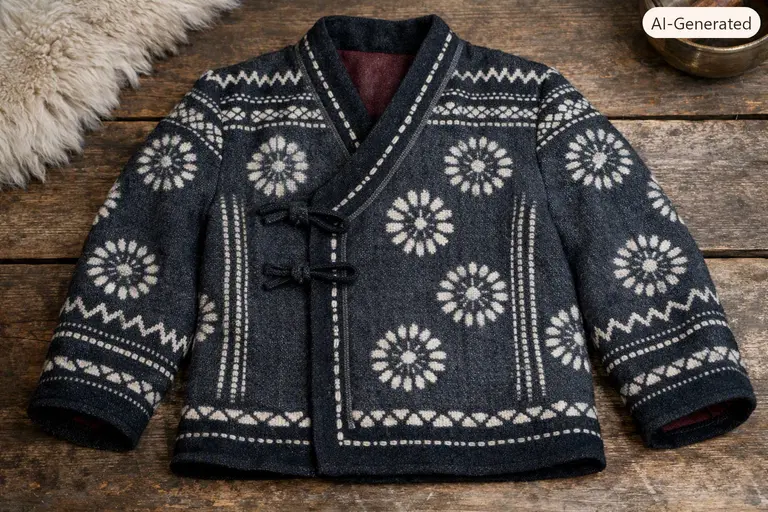
For generations, the harsh climate of the “Land of High Passes” has shaped the way local communities weave. Because winters last long and temperatures drop severely, artisans developed fabrics that deliver exceptional warmth. Specifically, Nambu, a dense hand-woven sheep wool fabric, remains the region’s best-known textile. Similarly, Spu-ruks, a brushed wool fabric, offers excellent insulation, though producing it demands considerable time and skill.
Elsewhere, nomadic communities on the Changthang Plateau weave Ray-bo, a coarse yet remarkably durable yak-hair fabric used for weather-resistant tents. In addition, artisans practice Thigma, a traditional tie-dyeing technique. They carefully tie sections of fabric before dyeing to create striking geometric patterns. Furthermore, Challi remains a vital woven wool textile used for wraps. Collectively, people admire these fabrics because each piece reflects generations of accumulated skill. This focus on material purity is a lesson we can also learn from the silver supply chain from mine to jewelry where origin defines value.
Modern Ladakhi Textile Designers and Heritage Brands
Fortunately, several contemporary Ladakhi textile designers and heritage experts now protect this legacy by sharing it with wider audiences. These creators bridge the gap between rural looms and urban wardrobes.
Top Ladakhi Textile Designers and Heritage Experts
Jigmat Norbu and Jigmat Wangmo founded Jigmat Couture to combine handwoven pashmina and yak wool with high-end tailoring. They also support preservation efforts by establishing a textile museum in Leh. Likewise, Stanzin Palmo founded Zilzom, creating contemporary home furnishings and fashion using locally handspun Nambu wool. Both brands emphasize sustainable methods that respect the fragile Himalayan ecosystem.
Eco-Friendly Ladakhi Textile Designers and Heritage
At the same time, Sonam Angmo and Stanzin Minglak founded Lena Ladakh. They collaborate closely with local women artisans to produce naturally dyed textiles using botanical extracts from walnut and marigold. In a similar vein, Padma Saldon, founder of 2112 Saldon, blends traditional wool with modern silhouettes. These designers prove that indigenous materials can thrive in the 2026 fashion market. Their work follows the “Honeybee” model of value transformation, which we discuss in our guide to the three business models: ants, spiders, and honeybees.
GI Protection for Ladakhi Textile Designers and Heritage
One major development for Ladakhi textile designers and heritage has been the Geographical Indication (GI) registration. This status was recently awarded to products including Ladakh Pashmina, Ladakh Nambu, and Ladakh Thigma. Specifically, these registrations formally recognize the textiles’ unique regional identity and help safeguard production methods from cheap imitations.
However, buyers should remember that GI status protects the product category rather than every individual item sold. Therefore, it remains wise to purchase from reputable cooperatives or recognized designers. You can verify official registrations at the Geographical Indications Registry of India. This level of legal protection is essential for building India’s global brands in the luxury sector.
Identifying Ladakhi Textile Designers and Heritage Weaves
Finding genuine textiles can feel tricky because machine-made imitations have become common. Fortunately, authentic handwoven fabrics usually show slight variations in weave and texture. These irregularities actually confirm genuine craftsmanship rather than signal poor quality. Because traditional looms produce narrow fabric widths, weavers often join several panels to complete a garment.
Additionally, authentic wool feels dense and provides strong, natural insulation. By contrast, factory copies tend to feel overly smooth and unusually light. Therefore, you should always ask sellers about the fiber source and the specific artisan behind the piece. Reputable Ladakhi textile designers and heritage practitioners will always share this information happily. For more on verifying quality, see our guide on how to buy natural gemstones safely.
Jewelry Pairings for Ladakhi Textile Designers and Heritage
Ladakhi textiles pair beautifully with jewelry from across India. Naturally, they complement traditional Ladakhi pieces featuring turquoise and silver. In turn, the rich texture of handwoven wool balances the brilliance of North Indian Polki sets.
Similarly, South Indian temple jewelry creates a striking contrast with Ladakhi weaves. This combination blends northern and southern traditions into one sophisticated look. As Ladakhi textile designers and heritage experts continue to innovate, they often incorporate gold accents that match the aesthetic of raw diamond and Polki jewelry in India. By mixing these textures, you celebrate the diversity of Indian art.
FAQ About Ladakhi Textile Designers and Heritage
Why is Ladakh Pashmina so expensive?
It is expensive because the wool is harvested by hand from Changthangi goats living at altitudes above 14,000 feet. The extreme cold makes the fiber incredibly fine and soft, and the hand-spinning process takes weeks to complete.
Can I wear Nambu wool in the monsoon?
While Nambu is water-resistant to a degree, it is primarily designed for dry, cold climates. If it gets wet, you should dry it flat in the shade to prevent the wool from shrinking or losing its shape.
Where can I find Ladakhi textile designers and heritage brands in Delhi?
Many of these designers participate in high-end craft exhibitions such as Dastkar or Akaaro. You can also find their collections in specialized luxury boutiques in the Chanakyapuri or Mehrauli districts.
Is Thigma dyeing similar to Bandhani?
Yes, they both use tie-resist techniques. However, Thigma usually creates larger, more circular geometric patterns and is performed on heavy wool, whereas Bandhani is typically done on fine silk or cotton.
How do I support Ladakhi weavers directly?
You can support them by purchasing from cooperatives like Looms of Ladakh. These organizations ensure that the profits go directly back to the village women who do the actual weaving.
Disclaimer
This article serves educational and informational purposes only. The author has no financial affiliation with the designers or organizations mentioned. Textile traditions and GI registrations may change over time; therefore, readers should verify authenticity with official sources before purchasing. Data reflects the situation as of August 2026.