Introduction to Kathak and Kathakali Dance
India has given the world two extraordinary classical traditions: Kathak and Kathakali dance. Both forms have survived for several centuries by doing what great art always does—telling stories that people feel in their bones. Specifically, Kathak grew in the royal courts and temples of northern India, spanning regions such as Uttar Pradesh and Rajasthan. In contrast, Kathakali took root in the lush landscape of Keralam and evolved into a dramatic dance-theater unlike anything else on Earth.
Today, in 2026, performers and educators are finding a fresh and creative use for both traditions. They utilize the storytelling power of these dance forms to explain modern subjects, including gemology, jewelry making, diamond grading, and watchmaking. As a result, these ancient art forms now shed light on very modern industrial ideas. You should also read our guide on gemstone buying mistakes to understand how the clarity and precision found in dance apply to your jewelry purchases.
Rhythmic Traditions of Kathak and Kathakali Dance
Kathak derives its name from the Sanskrit word Katha, which means “story.” Traditionally, traveling performers known as Kathakars moved from village to village and narrated religious tales through dance and music. Over time, the form absorbed influences from Mughal courts and cultural exchanges across northern India.
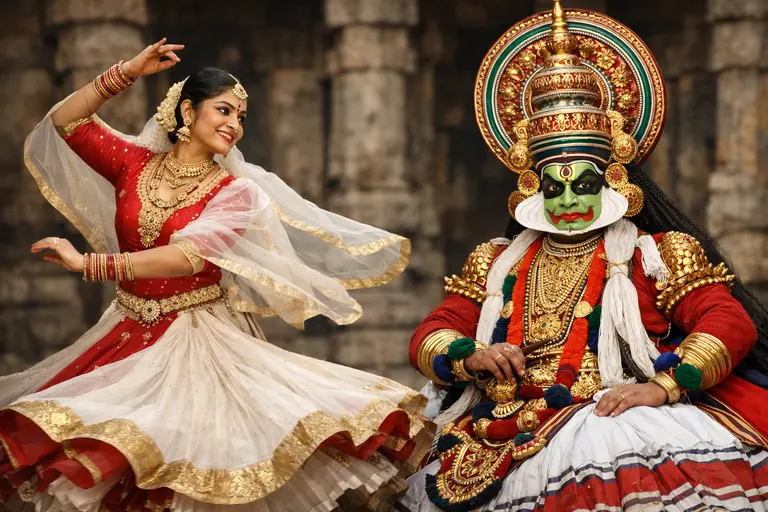
Today, Kathak dancers wear hundreds of ankle bells called ghungroos and strike the floor with precision footwork known as Tatkar. Furthermore, they perform rapid, mesmerizing spins called Chakkars and communicate deep emotion through Abhinaya, or expressive storytelling. Notably, Kathak developed through three major schools, or Gharanas. The Lucknow Gharana prizes elegance and grace. The Jaipur Gharana emphasizes powerful rhythm and speed. Finally, the Benaras Gharana brings its own distinctive performance style. You can explore more about India’s classical arts through the Sangeet Natak Akademi.
Visual Intensity in Kathak and Kathakali Dance
While Kathak flows with understated grace, Kathakali dance strikes the viewer with immense visual power. Performers wear towering headdresses, layered costumes, and elaborate face paint that audiences can read from a great distance. Specifically, each color combination tells the viewer exactly who the character is—whether they are a hero, a villain, or a divine being.
Kathakali emerged in Keralam and draws on ancient performance theories found in the Natya Shastra, the foundational text for Indian performing arts. Unlike most other forms, Kathakali magnifies emotion rather than suggesting it subtly. Performers use deep stances, expansive gestures, and exaggerated facial expressions to drive the narrative forward. Consequently, the audience experiences a world of myth and legend through the performer’s body. For more information on training and tradition, visit Kerala Kalamandalam, the state’s premier institution for classical arts.
Explaining Diamonds via Kathak and Kathakali Dance
Educators are now using the structured storytelling of Kathak and Kathakali dance to explain gemological concepts to general audiences. Although artisans never originally designed Kathak for this purpose, its visual language maps naturally onto ideas that are otherwise difficult to describe.
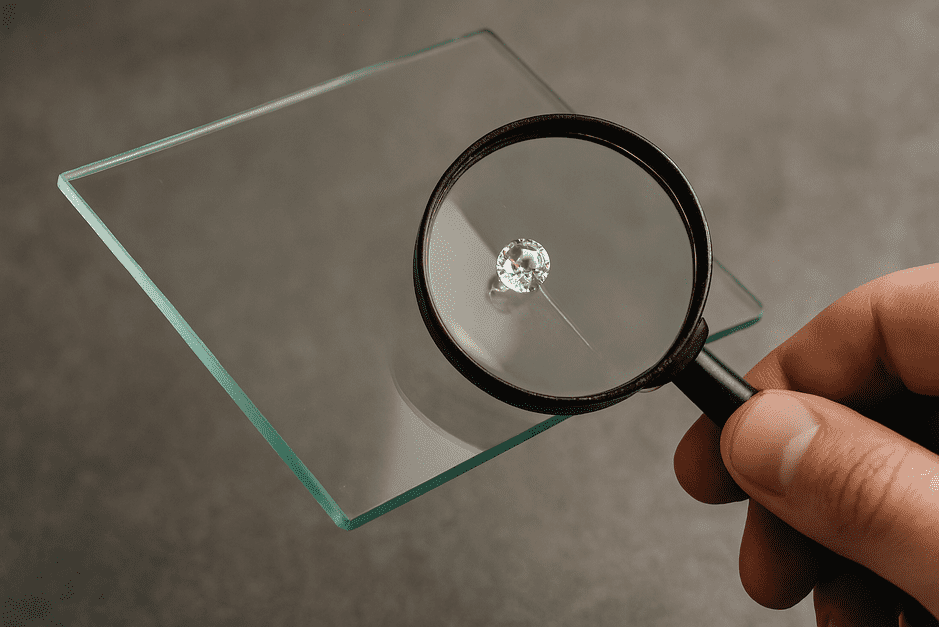
For instance, a dancer can represent the difference between a natural gemstone and a laboratory-grown stone through movement contrast. An organic, flowing sequence suggests a gem formed over millions of years beneath the Earth’s crust. In contrast, a perfectly uniform and repeating sequence suggests a stone grown under controlled conditions in a lab. Consequently, the audience grasps the scientific difference immediately. Similarly, the “Four Cs” of diamond grading—carat, color, clarity, and cut—translate beautifully into rhythm, intensity, and geometric body position. You may also read our article on Understanding BIS Hallmark to see how certification ensures the purity of the jewelry worn by these dancers.
Jewelry Artistry in Kathak and Kathakali Dance
The dramatic visual style of Kathakali connects especially well to jewelry craftsmanship and the story of raw materials. Because Kathakali utilizes large, symbolic movements and rich visual codes, it works as a perfect metaphor for the transformation of metal into art.
For example, a performer can portray gold being shaped and refined through the physical journey of a character. Similarly, gemstone identification—distinguishing a treated stone from an untreated one—can appear through a character’s shifting persona and mask. As a result, the audience experiences the concept rather than simply hearing it described in a lecture. Moreover, watchmaking finds a natural partner in both dance forms. The steady, repeating beat of a mechanical watch resembles the precise footwork of a Kathak dancer. Rhythmic cycles suggest rotating watch components like balance wheels and tourbillons. To learn more about jewelry industry standards, you can visit the Gem & Jewellery Export Promotion Council (GJEPC).
Learning Kathak and Kathakali Dance
Almost anyone can begin to learn Kathak today. Children often start between the ages of five and seven to build a strong foundation. However, many adults take up the form later for fitness or personal expression. Furthermore, teachers adjust the training to suit each student’s physical condition.
Kathakali has historically been more exclusive and rigorous. For several centuries, men performed all roles, including female characters. Nevertheless, in 2026, women artists have successfully broken through those barriers. Today, women train and perform professionally on major stages across India and around the world. These artists often wear culturally traditional jewelry—often crafted by specialized regional artisans—that prioritizes historical authenticity, storytelling, and stage durability.
FAQ: Kathak and Kathakali Dance
What is the main difference between Kathak and Kathakali?
Kathak originated in North India and focuses on grace and footwork. Kathakali originated in Keralam and is a dramatic dance-theater featuring elaborate costumes and masks.
Can these dances really help me understand gemology?
Yes. Modern educators use the visual metaphors in Kathak and Kathakali dance to represent abstract concepts like crystal structures and light dispersion.
Which jewelry is most common in these dances?
Kathakali dancers wear heavy “Temple Jewelry” made of gold-plated silver and stones. Kathak dancers typically wear lighter gold or silver ornaments that allow for rapid spinning.
How long does it take to become a professional?
Both forms require years of dedicated practice. Specifically, it can take 7 to 10 years of consistent training to master the complex rhythms and expressions.
Are there schools for these dances outside of India?
Yes, both Kathak and Kathakali dance have a massive global following, with reputable schools located in the United Kingdom, USA, and United Arab Emirates.
Disclaimer
This article is intended for educational purposes only. The connections between dance and gemology represent creative educational methods. Always consult a certified gemologist for professional gemstone evaluation. The author holds no financial affiliation with the institutions mentioned.