Introduction to Carbon Data in Diamond Buying
The jewelry giant Pandora has recently introduced a revolutionary element to its digital product listings: transparent environmental metrics. For several decades, consumers have utilized the traditional “Four Cs” to evaluate their purchases: cut, color, clarity, and carat weight. However, as we move through 2026, Carbon Data in Diamond Buying has emerged as a critical “Fifth C.” Pandora now reports that its lab-grown diamonds are grown, cut, and polished using 100% renewable energy. Furthermore, the company utilizes 100% recycled silver and gold for its settings. As a result, these stones reportedly produce 90% less CO₂e than their mined counterparts. Consequently, we must ask: do everyday shoppers actually prioritize this data? You should also read our guide on gemstone buying mistakes to understand how quality and ethics intersect in the modern market.
Defining the “Fifth C” in Carbon Data in Diamond Buying
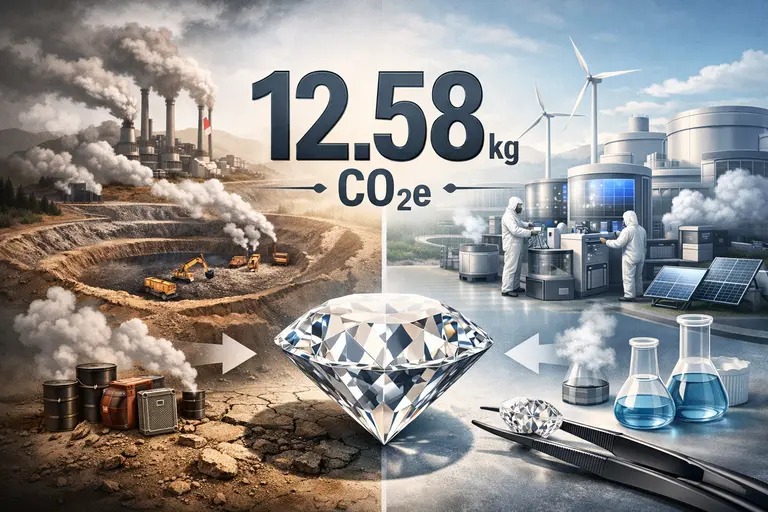
The traditional Four Cs have guided buyers for generations by measuring a stone’s physical perfection. In contrast, Carbon Data in Diamond Buying measures the environmental cost of that perfection. Specifically, Pandora now displays precise carbon footprint figures directly on its lab-grown diamond pages. For example, a one-carat stone carries a footprint of approximately 12.58 kg of CO₂e.
Interestingly, this is roughly equivalent to the carbon cost of manufacturing a single pair of denim jeans. Therefore, shoppers now possess a concrete number for comparison rather than a vague marketing promise. This move positions the brand among a growing group of retailers that treat radical transparency as a primary selling point. In addition, this shift forces competitors to reconsider their own disclosure policies. To see how these standards are verified, you can explore the Natural Diamond Council’s research.
Western Trends in Diamond Carbon Data
In the United States, the United Kingdom, and Australia, sustainability has become a decisive factor in retail—especially among Gen Z and Millennial buyers. These younger consumers do not just desire a beautiful aesthetic; they also want to feel ethically aligned with their purchases. For these shoppers, Carbon Data in Diamond Buying provides the “social license” to enjoy luxury guilt-free.
Furthermore, lab-grown diamonds already appeal to budget-conscious buyers because they typically cost significantly less than mined stones while looking identical. Therefore, the addition of lower environmental impact creates a “double win” for the consumer. However, most people still make their final decisions based on design and emotion. Even so, carbon data acts as a powerful tiebreaker. When two rings sit at the same price point, the more responsible option often wins the sale. Consequently, the Fifth C is evolving into a strong secondary driver for global brands.
Indian Perspectives on Carbon Data in Diamond Buying
The Indian jewelry market operates on a distinct set of cultural and financial values. For the majority of Indian families, jewelry represents a form of long-term financial security and ancestral tradition. As a result, buyers typically prioritize gold purity, resale value, and social prestige.
Currently, these factors carry far more weight than environmental metrics in most household purchase decisions. Additionally, price sensitivity remains exceptionally high across India’s mainstream market. Therefore, many shoppers compare the price per carat rather than the carbon per carat. While sustainability awareness is growing in metropolitan areas, affordability still dictates the vast majority of transactions. You may also read our article on Understanding BIS Hallmark to see how certification remains the gold standard for trust in the Indian market.
Urban India and Diamond Sustainability Metrics
Despite traditional preferences, young professionals in cities like Mumbai, Bengaluru, and Delhi present a real opportunity for Carbon Data in Diamond Buying. These buyers engage heavily with global fashion conversations. They often connect their personal style with their moral values in a way that previous generations did not.
For this reason, Pandora’s strategy could strengthen brand loyalty among this specific urban segment. A product that combines modern design with ethical transparency hits several high-priority targets at once. Nevertheless, even in these cities, the design must resonate with local tastes. Carbon data may add credibility, but it will never replace the visual appeal of a well-crafted piece. Therefore, brands must pair their sustainability story with extensive consumer education. For professional mineral standards, you can refer to the Gemological Institute of America.
Impact of Carbon Data on Diamond Sales
Across all major global markets, people buy jewelry for emotional reasons first. A ring marks a life-long commitment, while a necklace might celebrate a milestone birthday. In other words, the heart leads the decision before the head begins to analyze data. Because of this, most buyers prioritize appearance and affordability before they even consider environmental metrics.
Still, this does not mean that Carbon Data in Diamond Buying does not influence at all. Behavior shifts most noticeably when buyers compare two nearly identical options. If two bracelets look equally stunning and carry the same price tag, the one with a verified “clean” story usually wins. In this scenario, carbon transparency becomes a deciding factor at the very end of the customer journey. Moreover, this strategy builds long-term brand equity, positioning a company as a leader for the next generation of shoppers.
The Future of Environmental Data in Diamond Buying
For the average shopper, the Fifth C will likely remain a background detail for the next few years. However, its presence will quietly shape brand perception over time. Transparency inherently builds trust. When a brand openly displays its environmental numbers, it signals that the company has nothing to hide from the public.
In fact, this level of honesty resonates even with shoppers who do not actively track their own carbon footprints. A buyer might not care about the specific CO₂e figure, but they will certainly notice that the brand is being upfront while others remain secretive. In conclusion, the most successful jewelers in 2026 will be those who combine competitive pricing with honest, human-centric transparency. By making sustainability feel relevant to real life, brands can turn data into a powerful emotional connection.
FAQ: Carbon Data in Diamond Buying
What exactly is the “Fifth C” in diamond buying?
It refers to the carbon footprint or environmental impact of a diamond, adding a sustainability metric to the traditional cut, color, clarity, and carat weight.
How does Pandora calculate its carbon data?
Pandora utilizes lifecycle assessments verified by independent firms, such as EY. They factor in the use of renewable energy and recycled precious metals to reach their figures.
Is carbon data more important than price for Indian buyers?
For the majority of the market, price and resale value remain the top priorities. However, carbon data is gaining importance among younger, eco-conscious urban professionals.
Do mined diamonds have a higher carbon footprint?
Studies generally show that mined diamonds have a higher carbon footprint due to the heavy machinery and energy required for deep-earth extraction.
Can I trust the carbon data provided by jewelry brands?
You should always look for third-party verification. Reputable brands will provide data based on recognized international standards and independent audits.
Disclaimer
This article is for informational purposes only. Consumer preferences fluctuate based on region and economic conditions. Sustainability claims may vary based on the specific methodology used by the manufacturer. Always evaluate product quality and certifications independently before making a purchase. The author has no financial affiliation with Pandora.