Introduction
The Painite Gemstone ranks as one of the rarest minerals on Earth. It originates exclusively from the legendary mines of Myanmar and displays a deep reddish-brown color that captures the attention of collectors immediately. For several decades, only three confirmed crystals existed in the entire world. Although miners discovered more material in the early 2000s, fine, transparent specimens remain incredibly scarce today. If you feel curious about this gem—whether to collect it, wear it, or simply learn its history—this guide covers everything you need to know. Specifically, you should read our guide on gemstone buying mistakes to ensure you avoid financial pitfalls when hunting for rare treasures.
Where Does the Painite Gemstone Come From?
Every confirmed deposit of the Painite Gemstone sits within the borders of Myanmar. Specifically, miners locate these crystals in the Mogok Stone Tract and certain areas of Kachin State. These regions already hold international fame for producing the world’s finest rubies and spinels. Deep within these geological zones, hot mineral-rich fluids react with limestone during an intense process called metamorphism.
This rare reaction brings together four specific elements: calcium, zirconium, boron, and aluminium. In nature, these elements rarely meet in the concentrations required to form a crystal. Consequently, this unusual combination produces the unique chemical makeup and striking color of the stone. British mineralogist Arthur C. D. Pain first donated a specimen to the Natural History Museum in London in the 1950s. At that time, scientists confirmed the stones as a completely new mineral species. Today, while several thousand fragments exist, gem-quality material remains extremely limited.
How Experts Identify the Painite Gemstone
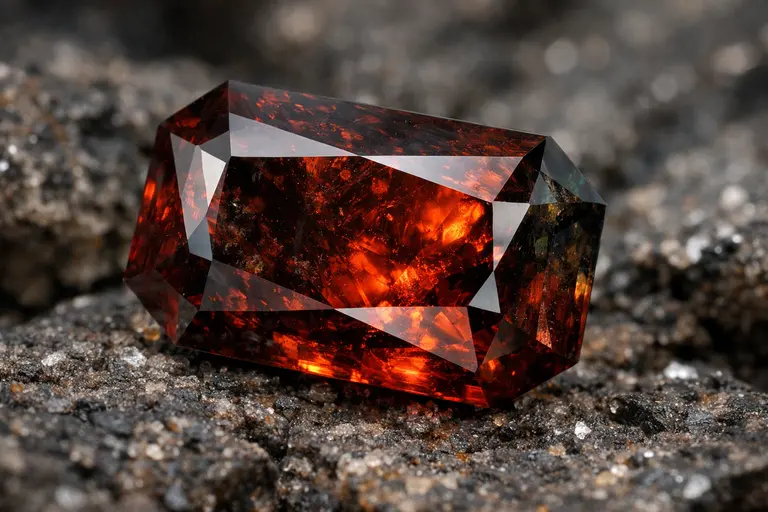
Gemologists identify the Painite Gemstone through a sophisticated combination of color analysis and optical testing. Typically, the stone appears deep reddish-brown or orange-red. However, as you rotate the stone, the color shifts noticeably due to a phenomenon known as pleochroism. Furthermore, a high-quality cut brings out this effect beautifully, making each stone look slightly different from every angle.
Technical Specifications and Hardness
On the Mohs hardness scale, the stone scores an 8. This rating makes it reasonably scratch-resistant for jewelry use. Nevertheless, many crystals carry internal fractures, meaning they can chip under a heavy impact. In addition, the refractive index runs from 1.787 to 1.816. Because these tests require professional equipment, you must always ask for a report from a trusted laboratory like the Gemological Institute of America (GIA).
The Rarity and Market Cost of Painite
The Painite Gemstone once held the Guinness World Record as the rarest gemstone in existence. While scientists now recognize kyawthuite as technically rarer, painite remains the scarcest gem mineral that a private buyer can realistically acquire. Therefore, the market prices reflect this extreme scarcity.
Prices vary enormously based on the transparency of the crystal. On one hand, dark or opaque fragments sell for hundreds of dollars because they are more common. On the other hand, fine, transparent, well-cut stones can fetch tens of thousands of dollars per carat. In fact, some exceptional specimens reportedly reach 60,000 USD per carat in elite auctions. As a result, you should treat a high-quality painite more like a financial asset than a standard jewelry purchase.
Spotting Fakes and Imitations in the Market
Because the Painite Gemstone shares its reddish-brown tones with several common minerals, imitations are widespread in online marketplaces. For instance, dishonest sellers frequently pass off almandine garnet or red tourmaline as genuine painite. Moreover, some listings use lab-created materials with misleading labels to trick novice buyers.
Consequently, an unusually low price is always your first red flag. At present, no standard heat treatments or irradiation processes apply to this stone. Most reputable sellers, therefore, offer it in its completely natural state. To stay safe, you should always check our article on Understanding BIS Hallmark to learn how certification protects you in the wider luxury market.
Using the Painite Gemstone in Fine Jewelry
Mainstream jewelry stores almost never carry the Painite Gemstone because so little facetable material exists for mass production. When independent designers work with it, they typically choose protective settings. Bezel settings or sturdy earring frames shield the gem from direct impact and reduce the risk of chipping along existing internal fractures.
Additionally, warm gold tones complement the brownish-red color particularly well. While the stone handles occasional wear, it is not the best choice for a daily engagement ring. Instead, most owners save these pieces for special occasions or display them as showcase items. Cutters usually favor simple oval or cushion shapes to maximize the color while retaining as much weight as possible from the limited rough rough material.
Practical Advice for Rare Gemstone Buyers
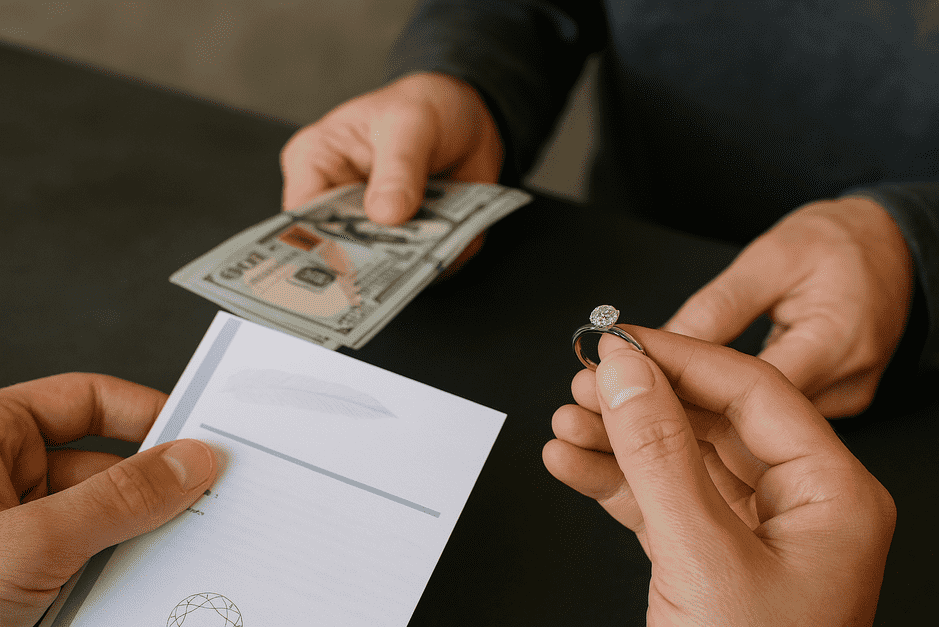
Before you finalize a purchase, you should follow these practical steps. First, request a laboratory report that clearly states the mineral name and lists Myanmar as the origin. Second, set realistic expectations for your budget. For example, a small rough fragment allows you to own a piece of history without spending a fortune. However, if you want a faceted jewel, prepare for significant competition among collectors. Finally, clean your stone using only lukewarm water and mild soap. Specifically, you must avoid ultrasonic cleaners, as the vibrations can worsen internal fractures.
FAQ: Painite Gemstone
Is the Painite Gemstone still the rarest mineral on Earth?
Technically, no. Kyawthuite currently holds that title. However, painite remains one of the rarest gemstones available for commercial purchase.
Can I find this stone outside of Myanmar?
No. All currently confirmed deposits exist in Myanmar. Any stone sold from another origin is likely a misidentified garnet or zircon.
Is the Painite Gemstone durable enough for a ring?
It has a hardness of 8, but its internal fractures make it brittle. Therefore, you should only wear it in protective settings for occasional use.
How can I tell a fake from a real stone at home?
You cannot easily distinguish it from garnet without professional tools. Consequently, you must rely on a certified gemological lab report.
Why is it so expensive?
The high price stems from the combination of extreme geological rarity and the intense demand from global mineral collectors.
Disclaimer
This article serves general educational purposes only and does not replace professional gemological advice or independent valuation. Gemstone prices and market conditions change regularly. Always obtain a current laboratory report and seek expert guidance before making any significant gemstone purchase.