Introduction
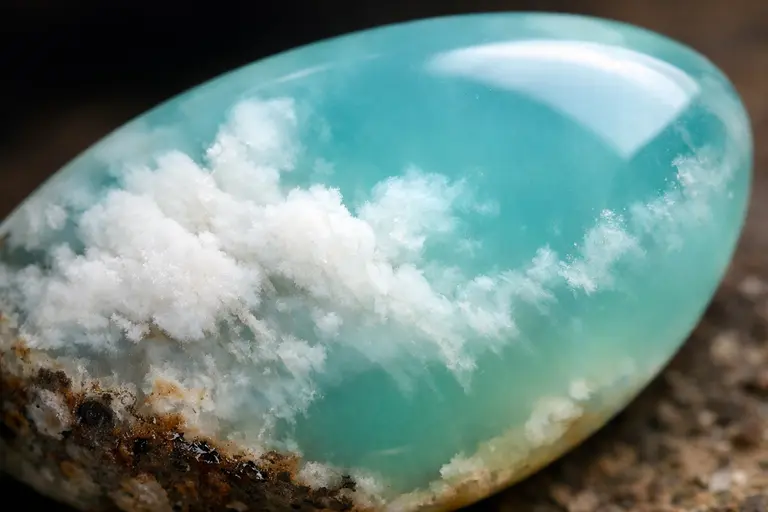
Have you ever seen a gemstone that looks exactly like a slice of the tropical ocean? That is precisely what the Aquaprase Gem offers to the jewelry world. It carries a soft, dreamy blue-green color that instantly reminds you of shallow Caribbean water on a sunny day. Yet, despite its stunning appearance, most people have never heard of it before. This is simply because the stone is brand new to the gem world. Gemologists only discovered it about ten years ago. Since then, the Aquaprase Gem has been quietly winning over jewelry lovers and designers who want something genuinely rare. Whether you are buying your first colored stone or adding to a collection, this guide tells you everything you need to know. Specifically, you should read our guide on gemstone buying mistakes to ensure you spend your money wisely.
Where Does the Aquaprase Gem Come From?
The Aquaprase Gem comes from a single, remote mine located somewhere in Africa. Notably, the exact location remains a well-kept secret. The people behind the discovery deliberately keep it that way to protect the site from illegal digging and environmental damage. In other words, the secrecy is intentional and responsible rather than mysterious for the sake of it.
The mine itself covers roughly one square kilometer, which is relatively small for a commercial operation. Local workers run the day-to-day business on the ground. Furthermore, the partnership pays about 40% of its profits directly to the local government as royalties. That money goes directly back into the community. As a result, buying an Aquaprase Gem supports an ethical, community-based mining model. This is a factor that genuinely matters in today’s global gem market. Although some trade sources mention Namibia as the likely location, the partners have never officially confirmed this. Consequently, “somewhere in Africa” remains the honest answer for now.
Who Discovered the Aquaprase Gem?
A Greek-American gemologist named Yianni Melas discovered the Aquaprase Gem around 2013–2014. After identifying it as something completely new, he partnered with Avant Chordia, an emerald dealer based in Jaipur, India. Together, they registered the trademark AQUAPRASE™ and built a sustainable business around it.
Chordia’s company handles the cutting, polishing, and global distribution of the rough stones. Therefore, every genuine piece of the Aquaprase Gem on the market today flows through this one partnership. This tight control is actually good news for buyers. Specifically, it makes the stone easier to authenticate and much harder to fake at scale. For further details on how branding affects value, you can read the article on jewelry trends.
Physical Characteristics of the Aquaprase Gem
The Aquaprase Gem is a member of the chalcedony family. In everyday terms, chalcedony is a smooth, fine-grained form of quartz. However, this specific variety has its own unique personality. Its blue-green color comes mainly from chromium. This is the same metallic element that gives emeralds their famous deep green hue. Occasionally, nickel also plays a small role in the color, but chromium does most of the heavy lifting.
This chemical profile makes the Aquaprase Gem different from stones that look similar. For instance, chrysoprase gets its color from nickel alone. Gem silica, another lookalike, gets its color from copper. In short, this stone has a distinct chemistry that sets it apart. Furthermore, the stone scores between 6.5 and 7 on the Mohs hardness scale. This makes it hard enough for everyday jewelry with a little common-sense care. One of the most charming features of the Aquaprase Gem is what collectors call “blue clouds.” These are soft, misty patches of deeper blue floating inside the stone. Notably, these internal features are not flaws; they are part of what makes each piece unique. For more on mineral hardness, you can refer to Mindat.
Identification: Is Your Aquaprase Gem Real?
Fortunately, the Aquaprase Gem typically reaches the market without any treatments or artificial enhancements. Unlike many popular gemstones that go through heat treatment or dyeing, this stone comes to you exactly as nature made it. Its color is completely natural and stable. Consequently, it will not fade, shift, or wash out over time.
However, because the stone is still relatively unknown, some sellers unknowingly pass off similar-looking stones as the real thing. Dyed chalcedony and chrysocolla can all look similar at first glance. Therefore, it always pays to ask for proof of authenticity before spending serious money. You may refer to our guide on Understanding BIS Hallmark to see how certification protects jewelry buyers.
Jewelry Styling for the Aquaprase Gem
Jewelers love working with the Aquaprase Gem because it is both beautiful and versatile. The most common cut is a cabochon—a smooth, polished dome shape. This style works especially well because it shows off the stone’s internal clouds and color patterns.
Faceted and Fashionable
For stones with a very clear, even color, jewelers sometimes facet the stone instead. Resultantly, faceted cuts add sparkle and brilliance, giving the stone a slightly more formal look. In terms of jewelry style, the Aquaprase Gem fits naturally into bohemian and minimalist designs. It looks particularly beautiful set in rose gold or sterling silver. Additionally, the luxury jewelry brand Le Vian sells a variety they call “Peacock Aquaprase.” These pieces combine translucent blue-green color with brown matrix, creating an earthy and elegant look.
Buying and Caring for Your Aquaprase Gem
Before you buy, always look for the trademarked name AQUAPRASE™ or ask for a GIA identification report. The GIA is the world’s most trusted gem lab. A report from them confirms that what you are buying is the real thing. Moreover, you should purchase from reputable dealers who can show you documentation of origin.
Caring for your stone at home is easy. Specifically, wash it gently with warm water and a drop of mild dish soap. Use a soft toothbrush to clean around the setting. In addition, keep it away from perfume and bleach, as these can dull the surface over time. Also, store your piece in its own pouch away from harder stones like diamonds. If you want to wear it in a ring every day, choose a protective bezel setting. With that simple step, you can enjoy your ring for many years.
FAQ: Aquaprase Gem
Is the Aquaprase Gem the same as chrysoprase?
Actually, they are two completely different stones. While both belong to the chalcedony family, chrysoprase gets its color from nickel, whereas the Aquaprase Gem gets its color from chromium.
How do I know if my stone is real?
In short, the safest way is to ask for a GIA identification report. Additionally, always buy from dealers who stock the officially trademarked AQUAPRASE™ stones.
Is the Aquaprase Gem expensive?
Honestly, it depends on the quality. Because it comes from only one mine in the world, supply is naturally limited. However, it is generally more affordable than fine emeralds of the same size.
Can I wear it every day?
Absolutely, with common-sense care. Its hardness makes it suitable for daily wear. Just avoid banging it against hard surfaces and keep it away from harsh chemicals.
Where can I find it for sale?
First, start with jewelers who carry the official trademark. You can also explore reputable online gem dealers and check the GIA website for certified listings.
Disclaimer
This article is written for general information and educational purposes only. It is not professional gemological, legal, or financial advice. Always have gemstones verified by a certified gemologist or an accredited laboratory before making a significant purchase. Prices, availability, and product details can change at any time. Do your own research and buy from trusted, verified sources.