Introduction to the Oregon Sunstone Guide
Oregon sunstones represent some of the most unique gemstones you can find anywhere in the world today. These natural, copper-bearing stones come exclusively from the high desert of southeastern Oregon. Remarkably, miners pull them straight from the earth without any heat treatment or artificial coloring. As a result, every stone you buy carries a one-of-a-kind combination of color, shimmer, and natural character. Whether you are shopping for fine jewelry or planning a gem-hunting trip, this Oregon Sunstone Guide gives you the tools to buy confidently. Specifically, this Oregon Sunstone Guide breaks down why these stones are so rare and how to verify their authenticity. You should also read our guide on gemstone buying mistakes to strengthen your overall understanding of the market.
Geological Origins in our Oregon Sunstone Guide
Oregon sunstones formed roughly 13 to 14 million years ago during intense volcanic activity. Slow-cooling magma created copper-rich feldspar crystals deep underground. Later, lava flows eventually carried these crystals to the surface, depositing them in the dry basins of Lake and Harney Counties. Today, most commercial mining happens around the Rabbit Basin area near the town of Plush, Oregon.
The Legacy of Tiffany & Co.
Interestingly, the history of this gem involves some of the world’s most famous jewelers. Long before commercial miners arrived, Indigenous communities, including the Northern Paiute, collected these stones for ceremonies. Then, in the late 1800s, Tiffany & Co. purchased mining rights near Plush. They marketed the gems as “Plush Diamonds” to attract high-end New York clientele. Tiffany held those claims from 1900 until the early 1950s. Eventually, they gave up the claims because the remote location made the operation too difficult to manage. Later, on August 4, 1987, the Oregon legislature officially named the stone the State Gemstone. For more historical context, visit the official Oregon State website.
Identification Tips: Oregon Sunstone Guide
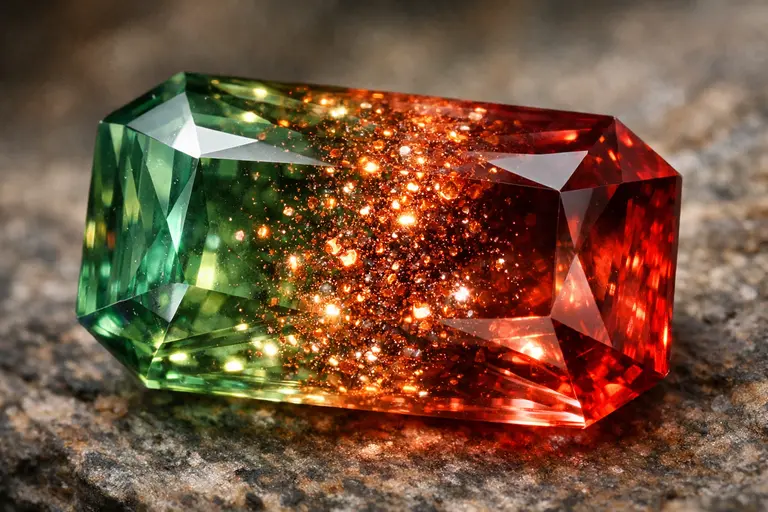
Knowing what makes a genuine stone helps you avoid expensive fakes. Consequently, you must look for specific optical markers. First, examine the gem for tiny copper platelets inside. These create a metallic shimmer that gemologists call “aventurescence” or “schiller.” This effect is the clearest sign you are holding the real thing. Second, tilt the stone slowly under a bright light. A genuine Oregon sunstone often shows “pleochroism.” This means the stone shifts colors, such as from green to red, depending on your viewing angle.
Furthermore, authentic Oregon sunstones reach the market without any treatments. Their vibrant color comes entirely from internal copper rather than laboratory processes. At home, you can use a simple loupe to spot these natural copper platelets. For high-value investments, a professional can confirm the identity using refractive index testing and microscopy. You can learn more about these techniques through the Gemological Institute of America.
Oregon Sunstone Guide: Spotting Fakes and Lab-Treated Stones
As Oregon sunstones have gained popularity, some imitations have entered the market. Therefore, this Oregon Sunstone Guide highlights what to look for to stay protected from lab-grown alternatives. “Goldstone” is a common machine-made glass filled with metallic glitter. Under magnification, its sparkles look perfectly uniform, which differs greatly from the varied, natural copper in a real sunstone.
Moreover, copper-diffused andesine remains a major concern in the industry. Some sellers heat-treat ordinary feldspar with copper to create intense red colors. They then sell these under vague names like “Congo sunstone.” These stones often show color concentrated only near the surface. To stay protected, always ask sellers for written confirmation that the stone is unheated and untreated. You should also refer to gemological standards from the American Gem Society.
Understanding Color, Quality, and Price
Color drives value more than any other factor in this market. The most valuable colors include deep “spinel” red and forest green. Furthermore, dramatic bicolor or tricolor stones that combine these shades are highly prized by collectors. When strong schiller and good clarity appear alongside these rare colors, prices rise significantly.
As of 2026, mid-grade stones remain affordable for most buyers. However, top-quality bicolors can reach high four-figure prices per carat. As a result, you should always compare several stones side-by-side. Ask the seller for descriptions of the clarity and choose the stone you enjoy most rather than just the most expensive option. For care tips, check the GIA.
Oregon Sunstone Guide: Jewelry Use and Care
Designers love Oregon sunstones because the copper inclusions respond beautifully to creative cuts. Fantasy cuts highlight the schiller effect perfectly. On the Mohs hardness scale, this gem rates between 6.5 and 7.2. Therefore, it works exceptionally well in earrings and pendants. While you can set it in rings, you should choose a protective bezel setting.
For routine cleaning, use mild soap and warm water with a soft brush. Specifically, you must avoid ultrasonic or steam cleaners. These can damage stones with internal fractures. Moreover, store your sunstones separately from harder gems like diamonds to prevent scratching. By following the advice in this Oregon Sunstone Guide, you ensure your investment stays beautiful for generations.
FAQ: Oregon Sunstone Guide
Are Oregon sunstones only found in Oregon?
Yes. Oregon is the only documented source of copper-bearing labradorite that combines these specific native copper inclusions and optical effects.
How do I tell sunstone from goldstone glass?
Goldstone shows perfectly even, artificial glitter. Oregon sunstone, conversely, shows natural crystal growth and varied copper platelets under a loupe.
Do all Oregon sunstones have the schiller effect?
No. Some genuine stones appear clear or have only a subtle sheen. They are still authentic, but stones with strong schiller often command higher prices.
Can I collect these stones myself?
Absolutely. The BLM Oregon Sunstone Public Collection Area near Plush allows the public to search for stones for free using basic hand tools.
Why are some stones green and others red?
The amount and size of copper atoms within the crystal lattice determine the color. Specifically, different oxidation states and light-scattering effects create the red and green hues.
Disclaimer
This article provides general educational and consumer guidance only. It is not a substitute for advice from a qualified gemologist, appraiser, or legal authority. Market prices, mining access, and regulations change over time. Therefore, always confirm current details with reputable dealers, laboratories, and official agencies before purchasing stones or visiting mining areas.