
Introduction
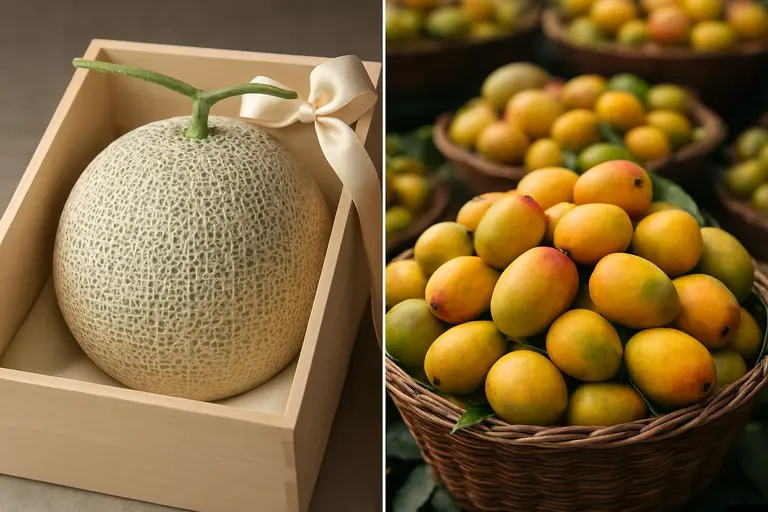
In the world of gifting, culture dictates value. The comparison of Japan Luxury Fruits vs India reveals two completely different philosophies about nature’s bounty. In Japan, high-end fruits are treated like precious gems—flawless, luxurious gifts symbolizing deep respect and social obligation. In contrast, India views fruits mainly as everyday nutritious staples, symbols of abundance and hospitality.
For instance, just as you might gift fine gemstone jewelry in India for a wedding, a Japanese businessman might gift a single, perfect strawberry to seal a deal. As a Gemologist who appreciates “Flawless” grading, I find the Japanese obsession with fruit perfection fascinating. They grade melons like diamonds. In this article, we will explore these differences, drawing parallels to jewelry’s cultural role. By the end, you will understand why a melon can cost as much as a gold ring.
Perfection in Japan Luxury Fruits vs India
First, consider Japan’s unique approach. Here, premium fruits transcend mere food; they become edible masterpieces. Farmers cultivate them with jewelry-level precision, much like polishing a rare Kashmir Sapphire.
The Cultivation Process
Unlike mass agriculture, Japanese luxury farming is an art. For example, for the famous Crown Melons, farmers practice the “One Tree, One Fruit” method. They prune all other fruits off the vine so that all the nutrients go into just one melon. Additionally, they even massage the melons to ensure the netting pattern is perfectly symmetrical. Consequently, blemishes are unacceptable. A spot on a fruit is treated like a carbon inclusion in a diamond—it lowers the value.
The Gift Culture (Ochugen/Oseibo)
Moreover, gifting plays a central role. During O-chūgen (mid-year) and O-seibo (year-end) traditions, people exchange these fruits to express gratitude to superiors. Therefore, the packaging rivals fine jewelry boxes—think velvet linings, wooden crates, and silk ribbons. Senbikiya, the oldest fruit parlor in Tokyo, operates exactly like a Van Cleef & Arpels boutique. You don’t just buy fruit; you buy prestige.
Abundance in Japan Luxury Fruits vs India
On the other hand, India embraces fruits as accessible daily essentials. Shifting from the polished, extravagant style of Japan, Indian tradition emphasizes wholesome nutrition and generous, abundant portions rather than visual perfection. Families enjoy them fresh from markets, supporting health and rituals.
The Market Vibe
In India, we buy by the kilogram, not the piece. Furthermore, standards are practical. Imperfections like varied shapes or spots are accepted in bustling Mandis (wholesale markets). Prices stay affordable; seasonal mangoes might cost ₹100-500/kg ($1-6), making them accessible across incomes. However, we do have our own “Kings.” The Alphonso Mango commands respect for its creamy sweetness and aroma, even if it isn’t perfectly round.
The Spiritual Offering
Crucially, in India, fruit is often Prasad (Offering to God). Unlike the Japanese fruit, which is an offering to a Boss, Indian fruit is an offering to the Divine. A coconut, a banana, or a pomegranate is essential for Pooja. Thus, the value lies in the purity of intent, not the symmetry of the skin. Read more about cultural offerings in my Payyannur Pavithra Ring article.
Key Differences: Japan Luxury Fruits vs India
To highlight contrasts clearly, let’s compare core features side-by-side.
- Perception: Japan sees fruits as Art and Status. India treats them as Daily Nutrition.
- Appearance: Japanese demand flawless uniformity (Gem Grade). Indians accept natural variations (Organic Grade).
- Gifting: Japan favors high-stakes occasions (Business/Apology). India uses them for hospitality (Hospital visits/Guests).
- Packaging: Ornate boxes in Japan vs. Simple bags or baskets in India.
- Pricing: Extreme highs ($27,000 for Yubari Melons) vs. Moderate affordable rates.
These differences stem from cultural priorities—Japan’s pursuit of Perfection (Zen) versus India’s embrace of Life (Ayurveda). If you are interested in healthy eating, check my Healthy Living and Diet page.
Gemstone Connection: Japan Luxury Fruits vs India
Interestingly, both cultures use fruit metaphors for gems.
- In India: We compare gems to fruit seeds (Pomegranate seeds for Rubies).
- In Japan: They compare fruit to gems (Ruby Roman Grapes).
As a Gemologist, I see the Japanese fruit market as a form of “Bio-Gemology.” They are trying to create the “Flawless Diamond” using biology. Meanwhile, India is happy with the “Rough Gem”—the fruit that tastes amazing even if it looks rugged. You can compare this to the De Beers GemFair Artisanal Diamonds (Rough) vs. the Polished ideal.
Conclusion on Japan Luxury Fruits vs India
Ultimately, the battle of Japan Luxury Fruits vs India is a draw. One wins on aesthetics, the other wins on flavor and soul. In summary, if you want to impress a CEO, buy a Japanese Melon. If you want to feed your family with love, buy an Indian Mango basket.
FAQ: Japan Luxury Fruits vs India
Why are Japanese fruits so expensive?
Primarily because of the labor intensity. Farmers hand-pollinate, use individual “hats” for apples to prevent sunburn, and cull 90% of the crop to ensure the remaining 10% are perfect. It is artisanal farming.
Do Indians gift premium fruits?
Yes, but seasonally. Gifting a box of Ratnagiri Alphonso Mangoes or Kashmiri Apples is a high-status gesture during the season. However, it is about the taste, not just the look.
What is the most prized fruit in Japan?
The Yubari King Melon. A pair once sold for $27,000 at auction. It is grown only in Yubari, Hokkaido, in volcanic ash soil.
Can I buy Japanese luxury fruits in India?
Yes, in limited quantities. High-end gourmet stores like Nature’s Basket or FoodSquare in Mumbai/Delhi import Japanese strawberries and melons, but they come with a hefty price tag.
How does fruit gifting tie to jewelry?
Both symbolize Respect and Value. In Japan, giving some fruit is like giving a jewel—it says, “You are worth this perfection.” In India, giving fruit is like giving gold—it says, “I wish you prosperity and health.”