Introduction
The launch of the De Beers GemFair Artisanal Diamonds collection marks a revolutionary shift in the world of high jewelry, where perfection has always been the standard.
The De Beers GemFair Artisanal Diamonds debut marks a pivotal moment in 2026. For the first time, the world’s largest diamond company is selling diamonds that were dug by hand, not by massive machines. Specifically, the “GemFair x DBL” capsule collection highlights artisanal stones from Sierra Leone. As a Gemologist who appreciates the “Rough Beauty” of nature (much like the Mississippi Pearls I discussed earlier), I find this fascinating. In this article, I will explore why De Beers is embracing the “Rough” look and how this connects to our own Indian Polki traditions.
What is the De Beers GemFair Artisanal Diamonds Collection?
To begin with, let’s look at the product. For instance, the collection features 12 exquisite pieces. Specifically, each one spotlights White and Fancy Yellow diamonds from Sierra Leone. Crucially, miners hand-selected these stones for their unique character.
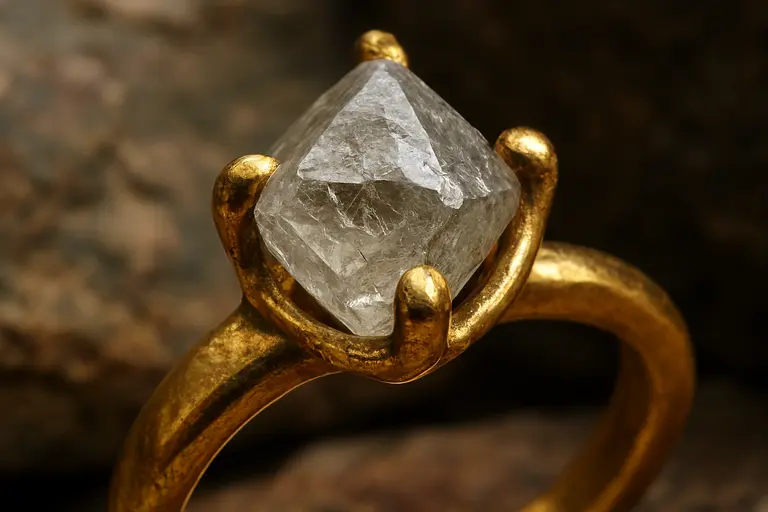
- The Aesthetic: Typically, some diamonds are polished, but many remain Rough. They retain their natural octahedral crystal shape, just as nature created them billions of years ago.
- The Design: For instance, the “Toi & Moi” (You and Me) rings blend polished and rough elements side-by-side.
- The Price: Unquestionably, starting at $25,000, these are serious luxury investments.
De Beers calls the rough stones a “tribute to Earth’s raw beauty.” For my Indian readers, this will sound familiar. We have valued Uncut Diamonds Polki for centuries. Actually, it seems the West is finally catching up to our taste for the “Raw.” You can read more about Indian styles in my North vs South Indian Jewelry guide.
Technology in De Beers GemFair Artisanal Diamonds
What makes De Beers GemFair Artisanal Diamonds different from any other rough diamond? Specifically, the answer is Traceability. Originally, GemFair launched in 2018 as a pilot program. Crucially, it uses digital technology (tablets and GPS) to track every single stone from the moment it is pulled from the mud to the moment it is sold.
Globally, artisanal miners supply about 10% of global diamonds by value. However, they often face unfair prices and unsafe conditions. GemFair fixes this by offering:
- Fair Value: Buying at transparent prices.
- Training: Teaching miners safety standards.
- Market Access: Creating a formal route to De Beers.
Today, it covers over 500 mining sites and supports 7,000 jobs. Consequently, when you buy a GemFair piece, you aren’t just buying a stone; you are validating a legal, safe supply chain.
Sierra Leone and De Beers GemFair Artisanal Diamonds
Furthermore, the location matters. Sierra Leone was once infamous for “Blood Diamonds” in the 1990s. By launching this specific collection specifically from this region, De Beers is rewriting history.
Indeed, they are proving that diamonds from Sierra Leone can be a force for good. Additionally, GemFair has launched a Reclamation Program. Remarkably, they take old, abandoned mine pits (which are dangerous) and convert them into farmland. Almost 160 sites have been turned into vegetable gardens for the local community. As a result, the diamond industry is feeding people, literally. Fittingly, Steve Allan, Head of GemFair, calls this a “full circle moment.” This aligns with the ethical concerns I highlight in Gemstone Buying Mistakes.
The “Rough” Trend: Why Now?
Why are consumers suddenly interested in rough stones? Psychologically, it is a rebellion against the “Lab-Grown” wave.
- Lab-Grown Diamonds are perfect, uniform, and factory-made.
- Natural Rough Diamonds are imperfect, unique, and earth-born.
Therefore, by leaving the diamond rough, De Beers is emphasizing its Natural Origin. After all, you cannot fake a natural crystal surface easily. Moreover, it connects to the Japanese concept of Wabi-Sabi (finding beauty in imperfection), or the Kerala concept of Appuppanthadi and Horsetail Demantoid—loving the natural flaws.
Indian Views on De Beers GemFair Artisanal Diamonds
As an expert, I must draw a parallel to India. While the West calls this “Avant-Garde,” we call it Tradition. In Rajasthan and Hyderabad, royalty has worn Uncut Diamonds Polki/Vilandi for 400 years. We understood long ago that a diamond doesn’t need to be faceted to be beautiful. Its soft, watery glow is enough.
However, there is a difference. Typically, Indian Polki is usually flat cut. These unique stones are often 3D crystals. Nevertheless, this collection validates the Indian eye for gems. It bridges the gap between the ancient courts of Jaipur and the modern boutiques of London. Read about our traditions in Traditional Rajasthani Jewellery.
Conclusion on De Beers GemFair Artisanal Diamonds
Ultimately, this collection is not about “Sparkle” (Refraction). It is about “Story” (Provenance). This initiative offers a way to wear a diamond that supports a family in Sierra Leone, protects the environment, and celebrates nature’s raw form.
In summary, if you are a collector who values Ethics as much as Aesthetics, this is the collection for you. It proves that luxury and conscience can coexist beautifully.
FAQ: De Beers GemFair Artisanal Diamonds
What are De Beers GemFair Artisanal Diamonds?
They are a specific collection of 12 jewelry pieces featuring rough and polished diamonds sourced ethically from small-scale miners in Sierra Leone, backed by De Beers’ traceability tech.
How does GemFair help miners?
GemFair provides Fair Prices, safety training, and a guaranteed buyer (De Beers). It bypasses exploitative middlemen, ensuring the money goes back to the mining community.
Are the diamonds polished or rough?
Both. Actually, the collection is unique because it mixes traditional polished diamonds with raw, unpolished crystals in the same piece of jewelry.
Why are rough diamonds becoming popular?
They serve as proof of Natural Origin. In a market flooded with synthetic stones, a rough crystal structure is a visual guarantee that the stone came from the Earth.
What is the starting price?
The pieces retail for $25,000, positioning them as high-end luxury items. Essentially, you are paying for the rarity of the provenance as much as the diamond itself. Thus, it proves that luxury and conscience can coexist beautifully.
Author Bio
P.J. Joseph, also known as Saju Elizamma, Gemstone & Gold Consultant serving Kerala, Tamil Nadu, and Karnataka.
Credits
This article draws on reporting originally published by De Beers Group.
Credit to De Beers Group for first sharing GemFair and De Beers London launch capsule jewellery collection featuring ethically sourced artisanal diamonds.
This story is adapted from De Beers Group News. De Beers Group is the world’s leading diamond company, involved in the entire diamond pipeline from discovery and mining to retail and technology, owning brands like De Beers Jewellers and Forevermark, and focusing on responsible sourcing, marketing, and innovation in natural and synthetic diamonds, with additional SEO and contextual research by Saju Elizamma.