
Introduction
India’s Panna district in Madhya Pradesh stands as one of the world’s few active sources of alluvial diamonds. Here, Panna Diamond Mining is not just an industry; it is a tradition where small-scale miners chase elusive gems through grit and hope.
For centuries, these deposits have lured hopeful diggers. Unlike the massive commercial mines in Africa, Panna offers a unique model where everyday individuals can lease plots, dig by hand, and sift for fortune. In this article, we explore the “Indian Diamond Lottery”—how locals navigate government regulations to strike it rich. Moreover, we highlight the immense perseverance required in this high-stakes pursuit.
The Reality of Panna Diamond Mining
In the heart of Madhya Pradesh lies Panna, renowned for its alluvial deposits. Unlike deep-shaft kimberlite mines (like the nearby NMDC Majhgawan mine), Panna’s diamonds hide in shallow river gravels. They were carried by ancient rivers over millennia.
Small-scale miners, often families or cooperatives, turn this into an opportunity. However, success demands patience. Consequently, the process combines luck, skill, and strict government rules. It is a rare pathway for ordinary people to legally find a gemstone worth Lakhs or Crores.
If you are interested in how diamonds are valued after mining, read my guide on Diamond Carat Weight: Why Bigger Isn’t Better
Leasing Land for Panna Diamond Mining
First, aspiring miners must secure access through a structured leasing system. Individuals or small groups apply to lease modest plots—typically around 8 meters by 8 meters—from the Panna Diamond Office. For instance, these leases come at nominal fees (often just a few hundred rupees), making entry accessible to locals without vast capital. Once approved, the “Patta” (lease) allows them to operate for a set period.
This step democratizes mining. Leases rotate to prevent monopolies. As a result, thousands participate annually. Yet, applicants must commit to regulations, including environmental safeguards. Transitioning from paperwork to fieldwork, miners then gear up for the physical toil.
Digging Shallow Pits in Alluvial Deposits
With land secured, the core work begins. Miners use basic tools like picks, shovels, and baskets to dig shallow pits, rarely exceeding a few meters deep. Unlike commercial setups, no heavy machinery is allowed in these small plots.
Moreover, digging proceeds layer by layer. The goal is to reach the diamond-bearing gravel layer (often called “Kakra”). For example, ancient river systems concentrated these heavy stones in specific strata. Experienced miners can “read” the soil to know when they are close.
This labor-intensive phase underscores the miners’ resilience. Each basket of earth hauled to the surface holds potential treasure.
Processing Gravel: The Washing Technique
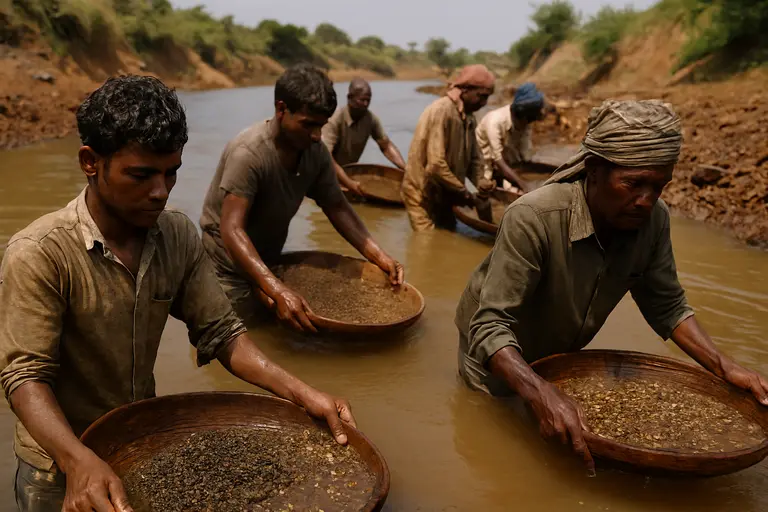
Next, the extracted material undergoes meticulous cleaning. Miners wash gravel in nearby streams or man-made tubs to remove clay. Then, they dry it under the sun before sieving through progressively finer meshes.
Additionally, the sifting process is where the magic happens.
- The Science: Diamonds are dense (Specific Gravity 3.52).
- The Method: By swirling the gravel in water, the heavy diamonds sink to the center of the basket.
This stage tests endurance. However, experienced eyes can spot the unique “adamantine” luster of a rough diamond instantly amidst the pebbles. Once processed, any finds must be handed over to the authorities.
To understand the difference between these rough stones and what you buy in a shop, check my post on Colored Stone Grading.
Reporting Findings to the Panna Diamond Office
Upon discovery, miners must report diamonds immediately to the Panna District Diamond Officer. This is mandatory. Officials verify the authenticity, weigh, and grade the stones. Subsequently, the gems enter official government auctions.
- The Auction: These auctions attract traders from Mumbai, Surat, and Antwerp.
- The Payout: Miners receive the proceeds after deductions—typically roughly 12-15% for Royalty and Taxes.
This system promotes transparency. We often hear news stories of a laborer finding a 10-carat stone and becoming a millionaire overnight. Nevertheless, delays in payouts can occur. For official updates on auctions, you can check the Madhya Pradesh Mineral Resources Department.
Challenges in Panna Diamond Mining
Despite the allure, challenges abound. Yields are unpredictable. Most plots yield nothing, fueling illegal “rat-hole” mining nearby. Weather disrupts work, and the physical toll is heavy. Yet, government oversight via leases keeps the industry somewhat sustainable.
Furthermore, recent big finds—like a 16-carat stone or a 20-carat gem—ignite dreams and draw migrants. In essence, Panna’s model offers a rare blend of tradition and regulation. It proves that in India, the dream of unearthing a fortune is still alive.
FAQ
How deep do small-scale miners dig in Panna?
Miners typically dig shallow pits, only 2-5 meters deep. They target the alluvial gravel layers rather than the deep bedrock.
What tools are used in Panna Diamond Mining?
Basic hand tools like shovels, picks, sieves, and baskets suffice. Heavy machinery is generally prohibited on these small lease plots.
Do miners keep all the money?
No. After the government auction, they receive the majority share, but taxes and royalties (approx. 12%) are deducted by the Diamond Office.
Are Panna diamonds good quality?
Yes. Panna produces significant quantities of gem-quality stones with excellent clarity and crystal shape, often comparable to top international sources.
Is diamond mining in Panna profitable for everyone?
Rarely. It relies heavily on luck. While some find life-changing stones, many miners work for months without finding a single diamond.
Author Bio
P.J. Joseph, also known as Saju Elizamma, Gemstone & Gold Consultant serving Kerala, Tamil Nadu, and Karnataka.