Introduction
Temple jewelry in South India captivates hearts across Tamil Nadu, Kerala, Andhra Pradesh, and Karnataka. For centuries, this exquisite adornment has blended spirituality, artistry, and heritage. Originally crafted solely for temple deities, it now graces brides, dancers, and modern fashionistas alike.
However, a common question arises: Why does this ancient style remain so popular in a modern, tech-driven world? In this guide, we will explore its historical roots, its symbolic power, and its contemporary revival. Moreover, as a Gem Expert, I will explain the technical side—how it serves as a cultural treasure, and what you need to know about its “Investment Value” before you buy. This guide explains why temple jewelry in South India remains culturally powerful, socially relevant, and financially significant.
Historical Roots of Temple Jewelry in South India
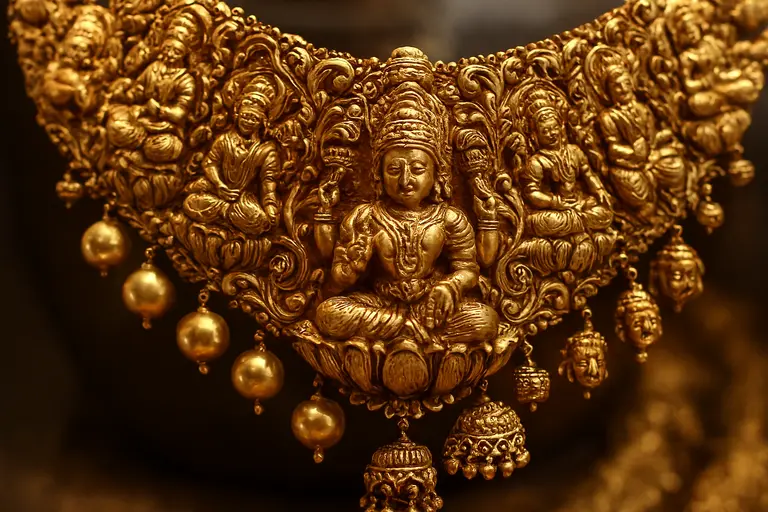
To begin with, Temple Jewelry traces its origins to South India’s golden eras, particularly the Chola and Pandya dynasties (9th to 13th centuries). Kings offered these opulent pieces to adorn the temple idols of gods such as Lakshmi and Shiva. Consequently, these items were viewed not just as decoration, but as sacred treasures charged with divine energy.
Additionally, classical dance forms elevated its status. Performers of Bharatanatyam (Tamil Nadu), Mohiniyattam (Kerala), and Kuchipudi (Andhra) wore replicas to channel that divine energy. Therefore, even today, wearing a “Kempu” necklace or a “Jhumka” isn’t just fashion; it is a way of connecting with thousands of years of tradition. For a deeper look at this history, you can explore the History of South Indian Temples.
Temple Jewelry Craftsmanship in South India: Nakas Work and Vadasery
What truly sets temple jewelry apart is its breathtaking craftsmanship, specifically known as Nakas work (repoussé). Artisans employ ancient techniques—hammering gold sheets into intricate designs of Gods, Goddesses, and nature.
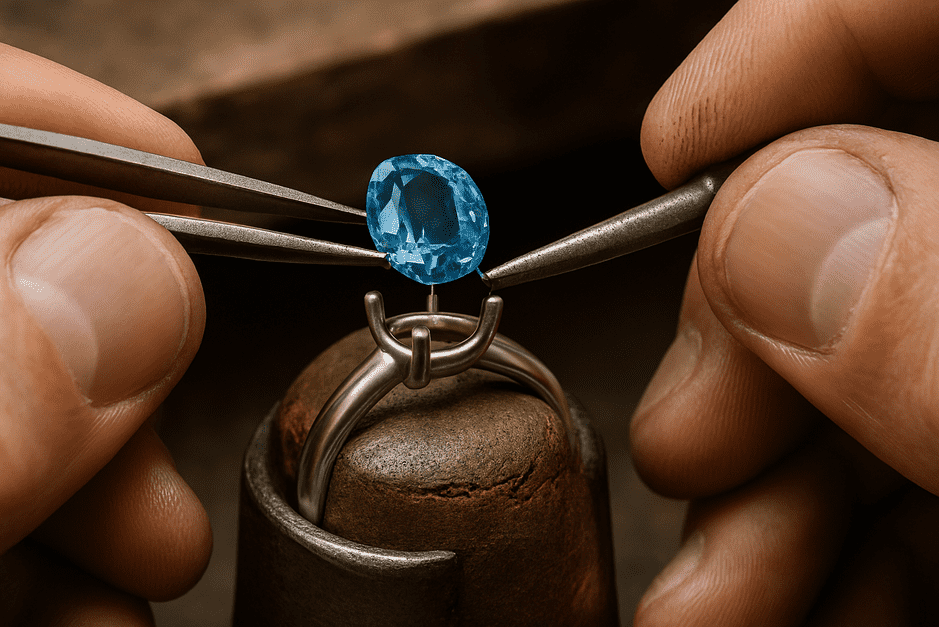
For instance, the famous Vadasery jewelry from the Nagercoil region is unique. It uses a specific technique where red stones (Kempu) and green stones are set with transparent foils to enhance their glow. However, buyers must be aware of the construction. Traditional temple jewelry often uses a core of Lac (wax) to support the gold foil. As a result, the gross weight of the ornament might be high, but the net gold weight is lower. This is critical for smart buying. You can read more about evaluating stones in my guide on Kempu Ruby: Tamil Nadu vs Kerala.
Why Brides Prefer Temple Jewelry in South India
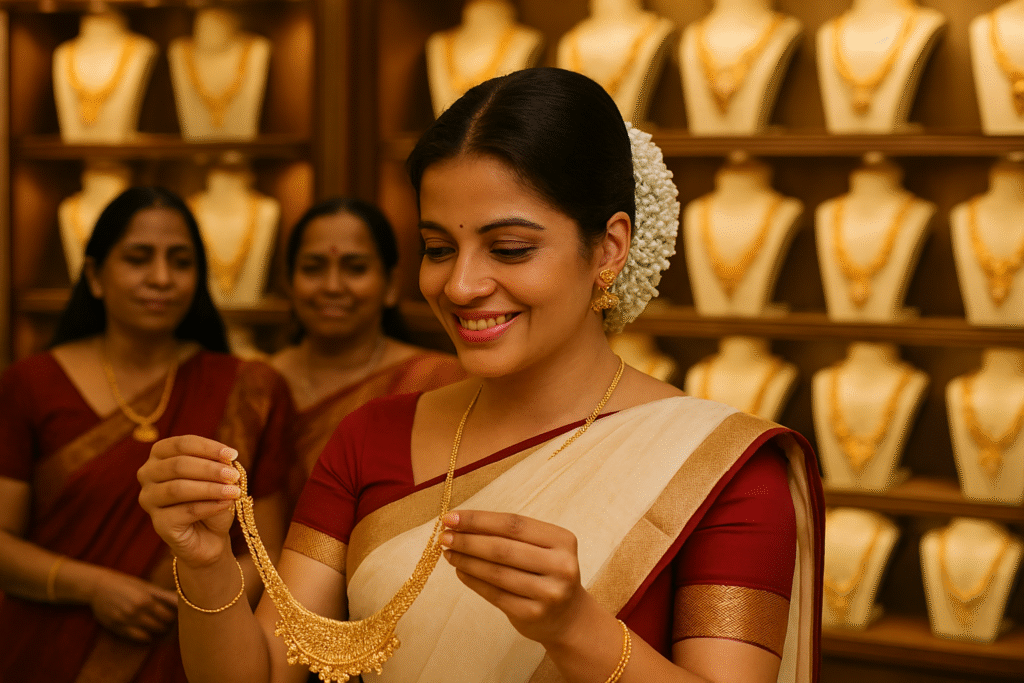
Besides history, the jewelry shines in social settings. South Indian brides consider staples like the Lakshmi Haram (Long Necklace) or Oddiyanam (Waist Belt) essential for weddings. It adds a divine grandeur that modern diamond jewelry cannot match.
Furthermore, its versatility extends beyond ceremonies.
- Festivals: During Pongal or Onam, temple jewelry elevates the look of a Kanchipuram or Kasavu saree.
- Daily Wear: Modern women pair lightweight versions (studs or pendants) with kurtas or even jeans, blending tradition with trend.
Consequently, it fosters social pride. Wearing a piece that looks like it came from a grandmother’s locker is a status symbol in South India. If you are planning a wedding purchase, check my Gold Purity: Kerala vs Tamil Nadu Guide to understand the best place to buy.
Modern Revival: Gen Z and the “Antique” Look
You might think this style is only for the older generation. On the contrary, Temple Jewelry is thriving among Millennials and Gen Z (ages 22-35). According to recent market reports, the demand for “Antique Finish” gold has grown significantly in 2024.
Why is this happening?
- Identity: Young Indians want to reclaim their roots in a globalized world.
- Celebrity Influence: Actresses at international events (like Cannes) sporting temple-inspired chokers have made it “cool.”
- Social Media: Instagram reels showcasing styling hacks—pairing a heavy Temple choker with a white shirt—have revitalized the trend.
Moreover, designers are innovating. They are creating “Lightweight Temple Jewelry” in 22K gold, using hollow techniques to make it affordable for office wear.
The Investment Perspective: A Saju Elizamma Warning
Finally, we must discuss money. Is Temple Jewelry a good investment? The answer is mixed.
- The Pro: It is usually made of 22K gold, which retains value. It acts as an heirloom passed down for generations.
- The Con: Temple Jewelry has very high Making Charges (VA)—often 15% to 30%—because of the intense hand labor.
- Therefore, if you are buying strictly for profit, buy Gold Coins or Bullion. But if you are buying for art, culture, and emotional legacy, Temple Jewelry is worth the extra cost.
For a detailed breakdown of investment logic, refer to my article on Jewelry Sales Secrets.
Final Thoughts on Temple Jewelry
Temple Jewelry is more than just gold; it is a story hammered into metal. Thus, it bridges the sacred past and the stylish present. Whether you are a dancer in Chennai or a bride in Kochi, these pieces connect you to the divine. Just remember my advice: Check the net weight, understand the labor cost, and wear it with pride. That is why temple jewelry in South India continues to dominate weddings, festivals, and heirloom collections.
FAQ
Is temple jewelry still popular in South India?
Absolutely. It is enjoying a massive revival. It is the top choice for weddings in Tamil Nadu and Kerala, and increasingly popular for daily wear among younger women.
Does temple jewelry use pure gold?
Yes, authentic Temple Jewelry is typically made in 22K Gold (916 purity). However, some fashion versions are made in silver with gold leaf (gold-plated). Always check the hallmark.
What is “Kempu” in temple jewelry?
“Kempu” refers to the specific red stones (Rubies or Spinels) used in the designs. In Vadasery jewelry, these stones are cut specifically to fit the gold framework.
Is it a good investment?
It is a great Heirloom Investment (emotional value + gold asset). However, be aware that you pay higher making charges for the craftsmanship compared to plain gold chains.
Author Bio
P.J. Joseph, also known as Saju Elizamma, Gemstone & Gold Consultant serving Kerala, Tamil Nadu, and Karnataka.