Introduction
In the rarefied air of Swiss watchmaking, the Vacheron Constantin Business Model stands as a testament to longevity. Holding the title of ‘The Patriarch,’ Vacheron Constantin is the oldest watch manufacturer in continuous operation. Now, in 2026, the Geneva-based manufacture is leveraging more than 270 years of heritage to cement its place among the world’s most desirable brands.
Following the milestone of its 270th anniversary in 2025, the brand has entered a new chapter defined by strategic innovation and elevated craftsmanship. Understanding the Vacheron Constantin Business Model reveals not just a watch company, but a vertically integrated luxury powerhouse operating under the Richemont Group. As a Gemologist who appreciates longevity, I see Vacheron as the “Old Money” of the industry—quiet, confident, and eternal. In this article, I will explore their strategy, from the “Holy Trinity” status to the booming “Overseas” collection.
Product Strategy of the Vacheron Constantin Business Model
At the heart of Vacheron Constantin’s commercial strength is a carefully balanced product strategy. Importantly, it honors deep horological roots while embracing the preferences of a modern collector base.
The Overseas: The Sport-Chic Driver
Undoubtedly, the Overseas collection continues to serve as the brand’s most commercially dynamic line. In 2026, the collection expanded with new references in Titanium and bold colored dials—most notably a striking Burgundy variant. In fact, these models cater directly to the surging demand for integrated-bracelet luxury watches. Consequently, Vacheron is well-positioned to capture high-value customers who want a sport-chic timepiece without compromising on prestige. Currently, this mirrors the trend I discussed in Luxury Watch Collectors India.
The Holy Trinity Status
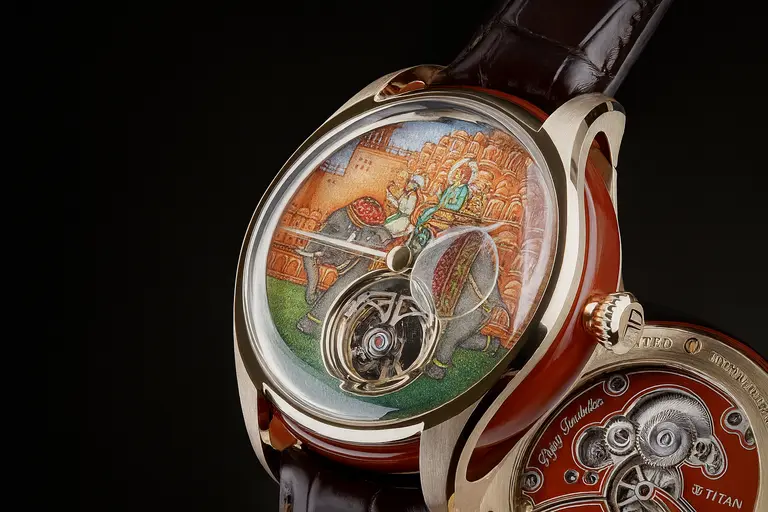
Beyond the Overseas, the brand’s anniversary momentum continues through grand complications. Most notably, the release of a 41-complication masterpiece reinforced its standing in the “Holy Trinity” alongside Patek Philippe and Audemars Piguet. In fact, these extraordinary timepieces are not merely products; they are declarations of technical capability. Additionally, the Métiers d’Art range features hand-engraved dials and intricate gem-setting, targeting connoisseurs willing to pay premiums for artistic mastery.
Distribution in the Vacheron Constantin Business Model
Vacheron Constantin’s distribution strategy in 2026 reflects a broader industry trend toward direct client relationships. Recently, the brand has significantly increased investment in brand-owned boutiques, reducing dependence on third-party dealers. This shift allows the manufacture to control the brand narrative and capture a higher margin on each sale.
Central to its experiential retail push is the newly launched Concours d’Élégance Horlogère. Launched in 2026, this curated competition brings together enthusiasts and collectors. Events like these deepen brand loyalty in ways that no advertising campaign can replicate. Currently, globally, the brand maintains a strong footprint across Europe, Asia, and North America. However, the in-person boutique experience remains central, as the complexity of the watches demands a tactile presentation.
The Secondary Market in the Vacheron Constantin Business Model
One of the more strategically significant moves in the Vacheron Constantin Business Model is its proactive engagement with the secondary market. Rather than allowing resale to happen entirely outside its purview, the brand has extended its Certified Pre-Owned (CPO) program.
Protecting Value
In reality, this strategy accomplishes several goals simultaneously.
- Authentication: First, it allows Vacheron to stand behind pre-owned examples, protecting brand value.
- Revenue: Secondly, it creates a secondary revenue stream.
Curated Vintage
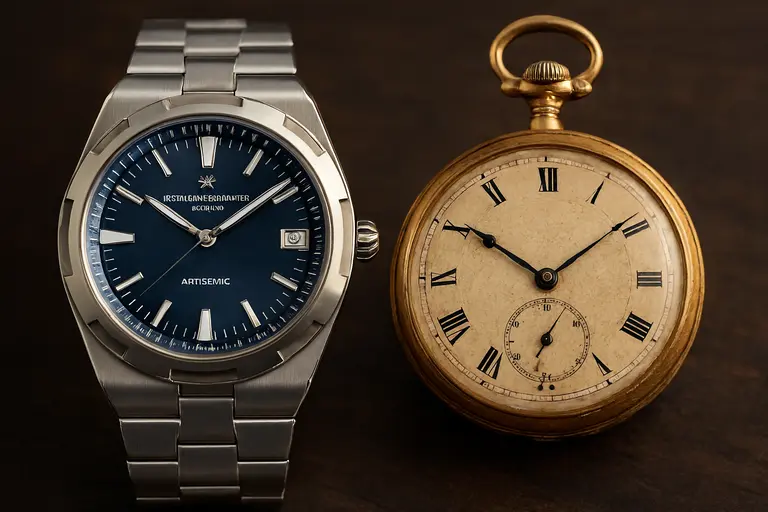
Complementing this is the “Les Collectionneurs” program. Through this, the brand curates and sells authenticated vintage watches directly in its boutiques. This initiative transforms the boutique into a destination for rare historical pieces, reinforcing the narrative that a Vacheron watch holds value over time. Compare this to the strategy of the Jaeger-LeCoultre Business Model.
Manufacturing Excellence of the Vacheron Constantin Business Model
No discussion of the Vacheron Constantin Business Model would be complete without addressing the Geneva Seal (Poinçon de Genève). In fact, nearly all of the brand’s mechanical movements carry this prestigious hallmark. It is one of the most demanding quality certifications in horology, covering everything from movement finishing to durability.
Importantly, this seal is not merely a marketing tool; it represents a rigorous commitment to craft. Furthermore, Vacheron has deepened its vertical integration. Specifically, the in-house production of movements—including complex calibers with 22-karat gold rotors—reduces reliance on suppliers. Therefore, this level of self-sufficiency is a key reason why the brand commands such strong pricing power. If you are interested in gold purity, read my Gold Purity: Kerala vs Tamil Nadu guide.
Market Positioning of the Vacheron Constantin Business Model
Strategically, Vacheron Constantin occupies a specific position in the global market. Typically, entry-level models begin around 13000 (approximately 11 lakhs). However, the brand’s true identity lies in its high complication pieces, where prices exceed 900,000.
Crucially, the target audience in 2026 is dual-pronged.
- The Connoisseur: Values provenance and the Geneva Seal.
- The Young Collector: Drawn to the sport-chic Overseas collection. This balance of continuity and evolution positions Vacheron favorably even as the industry faces headwinds.
Conclusion on the Vacheron Constantin Business Model
In summary, the Vacheron Constantin Business Model proves that age is an asset. By leveraging 270 years of history while adapting to modern trends like CPO and Sport-Chic, they remain relevant. Ultimately, owning a Vacheron is owning a piece of time itself.
FAQ: Vacheron Constantin Business Model
Why is the Vacheron Constantin Business Model part of the “Holy Trinity”?
Experts consider Vacheron Constantin part of the “Holy Trinity” alongside Patek Philippe and Audemars Piguet due to its uninterrupted operation since 1755, mastery of grand complications, and adherence to the Geneva Seal.
What is the Vacheron Constantin Overseas collection?
Essentially, it is the brand’s sport-chic line, featuring integrated metal bracelets and robust movements. Specifically, in 2026, it expanded with titanium cases and burgundy dials to attract younger buyers.
What is the Geneva Seal?
The Poinçon de Genève is a quality certification awarded to watches made in the Canton of Geneva that meet strict criteria for finishing and performance. Notably, Vacheron applies this to nearly all its movements.
Does the Vacheron Constantin Business Model include vintage watches?
Yes. Through the “Les Collectionneurs” program, they restore and sell authenticated vintage pieces in their own boutiques, offering a warranty on antique watches.
Who owns Vacheron Constantin?
It is a key part of the Richemont Group, the same luxury conglomerate that owns Cartier, Jaeger-LeCoultre, and Panerai.