Summary
Buying gemstones while traveling can be risky. Tourist shops often sell treated, synthetic, or common stones as rare gems. Prices can be inflated 400–1000%, leaving buyers with major losses. This guide explains why travelers fall for the vacation gem trap, how to verify gems, and ways to protect your money.
Buying Gems Abroad? Beware the Vacation Gem Trap
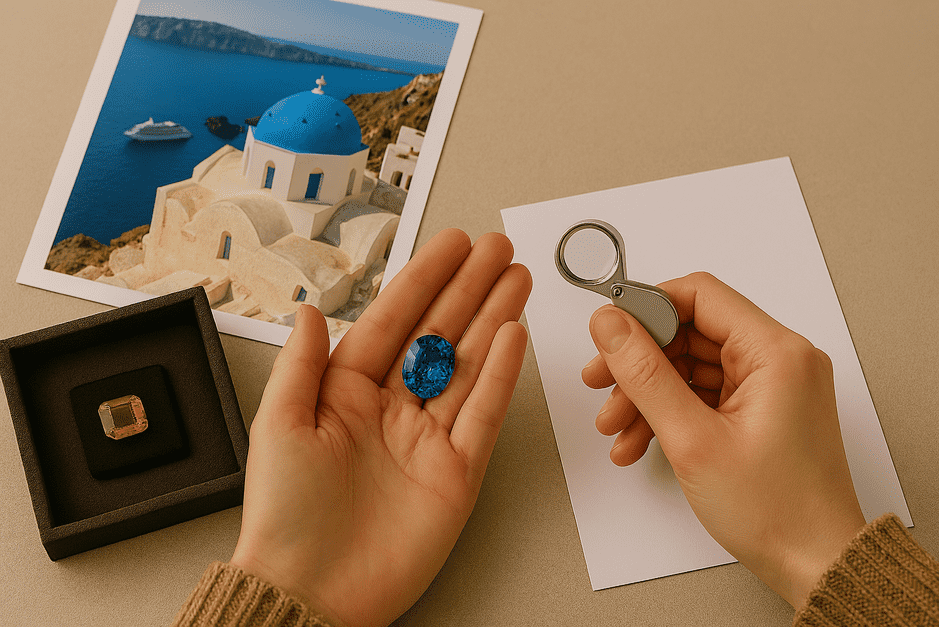
Buying gemstones while traveling can be risky. The vacation gem trap targets tourists with overpriced or fake stones. Sellers promise rare gems, but many tourists return home disappointed.
You may feel relaxed, trust strangers, and spend freely on vacation. Scammers exploit this. They know you won’t check prices, can’t easily return the stone, and want a memorable souvenir.
“Another customer looked at this yesterday.”
“The price goes up tomorrow.”
“You won’t find this quality anywhere else.”
Sound familiar? These are classic vacation gem trap tactics.
Why Smart Travelers Fall for the Vacation Gem Trap
Most vacation gems are:
- Treated stones with enhanced color or clarity
- Synthetic or lab-grown gems
- Common stones sold as rare varieties
- Low-grade stones with fake certificates
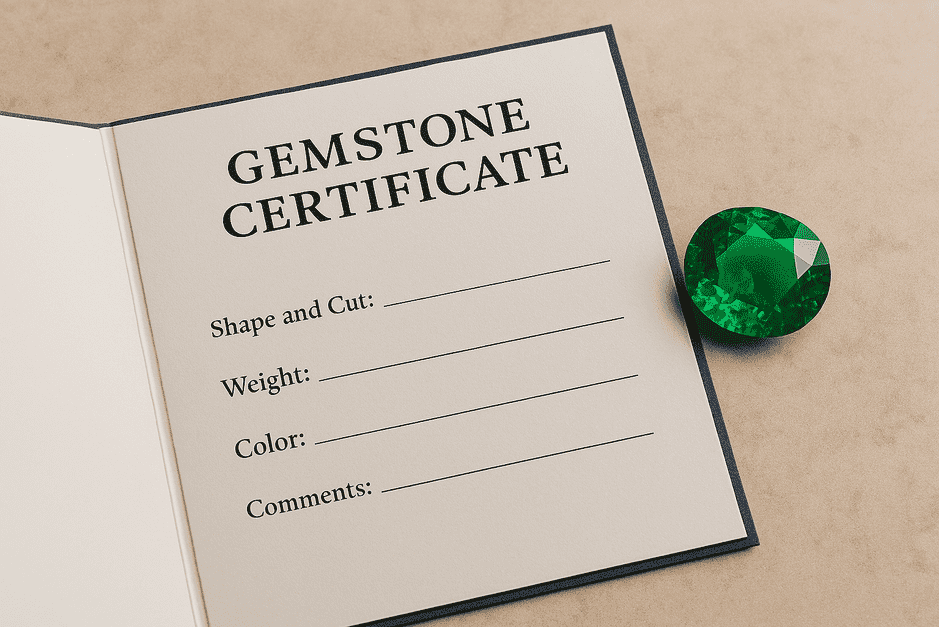
Certificates may look official, but only labs like GIA, SSEF, or IGI issue valid reports. Unknown labs often exist to fool tourists.
The True Cost of Tourist Gems
A genuine 2-carat tanzanite costs $500–800. Tourist shops sell the same stone for $2,000–5,000—a 400–1000% markup. Selling later yields only 20–30% of retail value. Your $2,000 purchase may become a $200 loss.
How to Protect Yourself from the Vacation Gem Trap
- Research gem prices before traveling (Gem Society, Blue Nile)
- Buy only from established jewelers with physical addresses
- Avoid hotel lobbies, cruise ports, beach vendors, and temporary jewelry shows
- Request certificates from recognized labs like GIA, SSEF, IGI, or Gübelin
Ask yourself:
- Would I buy this stone at home?
- Can I afford to lose this money completely?
Treat vacation gem purchases as souvenirs, not investments.
Already Bought a Vacation Gem?
- Contact your credit card company within 60 days for purchase protection
- Get an appraisal from a certified gemologist
- File complaints with consumer protection agencies, tourism boards, and online review platforms
Key Takeaways
- Vacation gems are often overpriced or fake.
- Only trust reputable jewelers and recognized certificates.
- Check prices and credentials before buying.
- Memories are free; overpriced souvenirs are costly.
FAQ
Q1: Are all vacation gems scams?
Not all, but many tourist-focused gems are treated, synthetic, or inflated in price.
Q2: How do I verify a gemstone abroad?
Ask for certificates from labs like GIA, SSEF, IGI, or Gübelin.
Q3: Can I get a refund for a fake gem?
Options are limited. Contact your credit card, get appraisals, and report fraud.