Summary
The Rise of Gemstone Tours shows how travellers visit mines, meet cutters, and gain gem-buying confidence. You follow a gem from source to finished jewellery. These tours combine travel, hands-on learning, and insider access. You understand people, places, and processes behind every stone.
Introduction: Why The Rise of Gemstone Tours Matters
The Rise of Gemstone Tours reflects a shift in both travel and jewellery buying. Indeed, travellers want more than shops; they seek the story behind the stones. On these trips, gems are traced from mine to market. Miners, cutters, dealers, and artisans share their expertise. As a result, visitors learn to judge color, clarity, origin, and value confidently.
Moreover, practical knowledge is gained along the way. You might walk into a sapphire pit in Sri Lanka or explore an opal workshop in Mexico. By doing so, witnessing production firsthand, each step of grading and cutting becomes clear. Purchases become smarter, and a deeper connection with your stones develops.
Why Gemstone Tours Appeal to Modern Luxury Travellers
The growth of gemstone tours mirrors changes in travel patterns. Affluent travellers seek engagement and meaning, not only comfort. Younger travellers with net worth between $100,000 and $1 million prioritize education, personal growth, and unique experiences.
According to McKinsey, experience tourism accounts for roughly $1 trillion of the $9 trillion global travel market. The gemstone tour segment alone is projected to reach $391 billion by 2028.
Consequently, curated gem trips now appear in Sri Lanka, Mexico, Colombia, Thailand, and Brazil. In addition, visitors can explore sapphires, emeralds, rubies, opals, and Paraiba tourmalines through direct field visits.
Gemstone Tours in Sri Lanka: Sapphires, Heritage, and Local Expertise
Sri Lanka has emerged as a hub for gemstone tours. Mines are accessible, trade is transparent, and cutters and dealers welcome visitors.
Hardy & Diamond’s Gemstone Journeys guides travellers through mine visits, heritage talks, hands-on selection, and design sessions. Founded by Jessica Diamond and Joanna Hardy, the tours combine education with immersion.
Additionally, visitors follow the stones through the system, seeing artisanal pits that produce sapphires, tourmalines, citrine, topaz, and aquamarine. Additionally, cultural sites, such as Galle Fort and Geoffrey Bawa’s estate, are part of the experience.
Sri Lanka prioritizes responsible mining and visitor access. Full details are available on the tourism portal: https://www.srilanka.travel.
Learn Sapphire Basics Before Your Trip
A primer on grading and pricing helps make trips productive: Kashmir Sapphire Origin: Why Obsessing Over It Is a Mistake
Understanding heat treatment, origin markers, color zones, and common pitfalls ensures smarter choices during the tour.
Mexico and Opal Discovery: Expanding The Rise of Gemstone Tours
Querétaro, Mexico, hosts vibrant opal fields, attracting increasing numbers of travellers.
The Gem Odyssey, founded by Carlos Torres and Laurent Massi, offers guided visits through mining, cutting, trading, and cultural immersion.
Highlights include:
- Visits to two or three opal mines
- Drilling and breaking rock with miners
- A mine-site lunch hosted by local families
- An opal cutting workshop
- Artisanal obsidian carving demonstrations
- Walks through local markets and villages
In preparation, review the basics. Learning about body tone, fire, pattern, and structural stability ensures informed choices at the mine and workshop.
Study Opal Before Your Trip
Review the basics before visiting Mexico: Black Opal Direct: Your Guide to Lightning Ridge Opals
Learning about body tone, fire, pattern, and structural stability ensures informed choices at the mine and workshop.
Colombia, Thailand, Brazil: The Global Expansion of Gemstone Tours
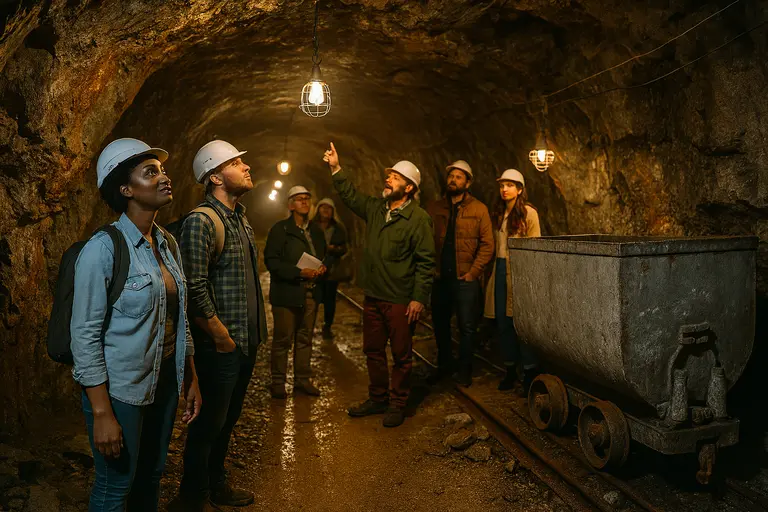
Colombia draws travellers to emeralds from Muzo, Chivor, and Coscuez. Tours allow walks through tunnels, meetings with buyers, and observations in cutting rooms. These experiences highlight why emerald inclusions are critical.
Meanwhile, Thailand demonstrates ruby heat treatment, Bangkok’s gem markets, and Chanthaburi’s trading culture. Visitors observe the fast flow of stones between dealers.
Similarly, Brazil offers Paraiba tourmaline mining experiences. Near-jungle terrain is explored, independent miners are met, and pricing for rare neon-colored stones is understood.
Overall, gemstone tours offer unique access to communities directly involved in the production process.
How Gemstone Tours Transform Your Jewellery Buying Experience
Joining a gemstone tour enhances clarity and confidence.
- Understanding Mining Conditions
- Observe miners digging, washing gravel, and sorting rough stones.
- As a result, you understand what affects production speed and value.
- Watching Cutters at Work
- Angles, polishing stages, and yield decisions are revealed.
- Consequently, craftsmanship behind each stone becomes apparent.
- Comparing Stones at Source
- Evaluate dozens of stones side by side under natural light.
- Then, quality assessment skills improve rapidly.
- Learning Market Behavior
- Meet dealers, compare offers, and understand negotiation culture.
- This way, you identify realistic prices and avoid overpaying.
- Emotional Connection to Your Jewellery
- Build stories with the pieces you select.
- Ultimately, jewellery gains personal meaning beyond material value.
Practical Tips to Prepare for Gemstone Tours
- Check Certification Standards
Request lab reports for selected stones. Reliable references: https://www.gia.edu. Doing so protects your investment. - Research Local Conditions
Understand seasonal access, weather, and travel rules before booking. - Learn Basic Gem Grading Terms
A working knowledge of color, clarity, and treatment is sufficient. - Plan Your Design Early
Bring reference images for creating jewellery. Discuss ideas with your tour host. - Keep an Open Mind
You might travel for sapphires and discover spinel instead. Still, each stone tells a story.
The Cultural Side of Gemstone Tours
Gemstone tours reveal local culture and craftsmanship.
- Sri Lankan miners often work in family teams.
- Mexican opal miners pass skills down through generations.
- Likewise, Brazilian Paraiba miners navigate narrow shafts manually.
By witnessing these practices enhances appreciation of human effort behind every stone. Jewellery is valued not only for quality but also for its story.
FAQ: The Rise of Gemstone Tours
Are gemstone tours safe?
Most itineraries rely on trusted local partners.
Can beginners join?
Yes, learning occurs along the way without prior experience.
Can you buy stones on these tours?
Guides assist with selection and verification.
Do tours include active mines?
Many do, alongside historic or educational sites.
Do you need lab reports?
Always request them. Reliable certification: https://www.gia.edu
Credits
This article draws on reporting originally published by the Financial Times. Credit to journalist Milena Lazazzera for first sharing Rocking up: the rise of gemstone tours. Adapted for Saju Elizamma with SEO structuring and contextual research.