GI Tag India

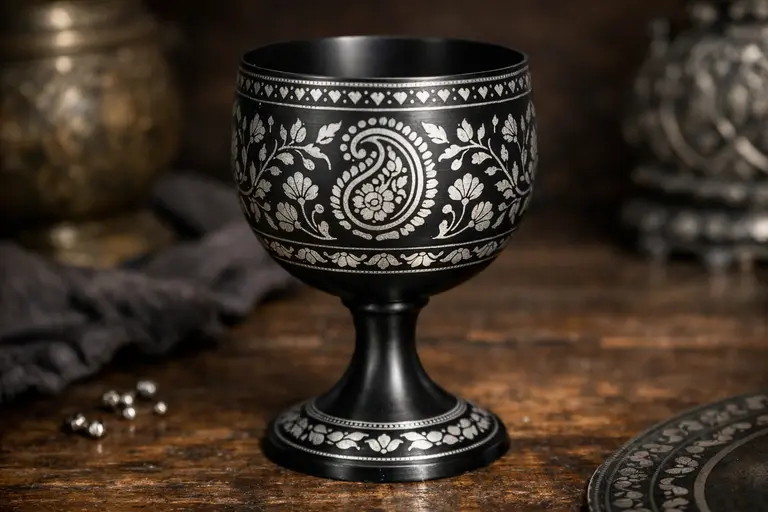
A traditional flower vase showcasing Authentic Bidriware Craft with silver floral patterns.

Authentic Bidriware Craft: India’s Silver and Black Metal Art

Introduction Have you ever seen a black metal object with shining silver patterns running across its surface? If so, you may have already encountered an Authentic Bidriware Craft piece—one of India’s most beautiful and oldest metal traditions. Artisans in Bidar, Karnataka, have been perfecting this art for over 600 years. Specifically, they inlay pure silver into a […]

Authentic Bidriware Craft: India’s Silver and Black Metal Art Read More »
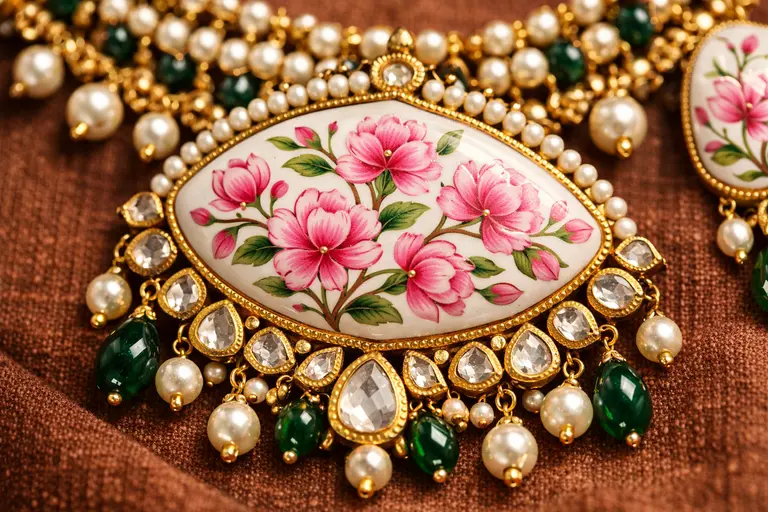
A traditional silver necklace featuring pink Banarasi Gulabi Meenakari enamel work.

Banarasi Gulabi Meenakari: A Buyer’s Complete Guide

Introduction If you love Indian jewelry, you have probably come across the term Meenakari (Enameling). However, not all Meenakari is the same. Banarasi Gulabi Meenakari is a rare and legally protected craft that artisans in Varanasi, Uttar Pradesh, have practiced for over 400 years. The word Gulabi means “Pink” in Hindi, and that soft pink-on-white enamel finish is what makes this

Banarasi Gulabi Meenakari: A Buyer’s Complete Guide Read More »

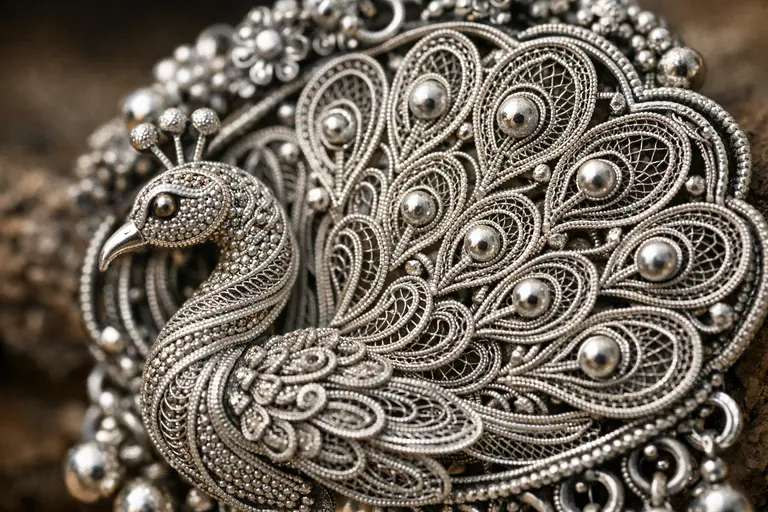
A delicate Cuttack Silver Filigree necklace featuring the Mayurpankhi peacock motif.

Cuttack Silver Filigree: A Complete Buyer’s Guide

Introduction When we think of Indian jewelry, we often picture heavy gold or sparkling diamonds. However, there is a completely different aesthetic thriving on the eastern coast.  Cuttack Silver Filigree from Odisha is arguably one of India’s most breathtaking traditional crafts. Locally known as Rupa Tarakasi, artisans transform pure silver into delicate, lace-like ornaments using techniques passed down

Cuttack Silver Filigree: A Complete Buyer’s Guide Read More »

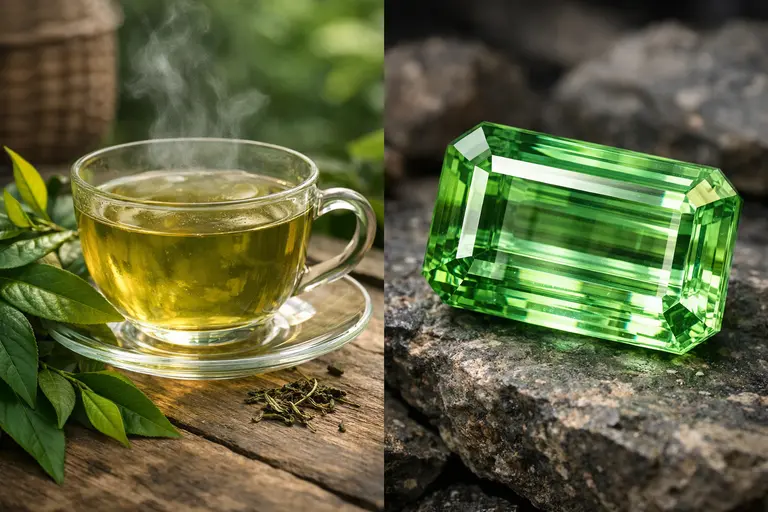
A cup of Kangra Green Tea next to a faceted green Hiddenite gemstone illustrating Kangra Green Tea and Hiddenite.

Kangra Green Tea and Hiddenite: Rare Green Treasures

Introduction In the natural world, origin dictates destiny. Kangra Green Tea and Hiddenite (Green Spodumene) appear to belong to entirely different worlds. One fills a teacup in the Himalayas; the other adorns a jeweler’s showcase in a luxury boutique. Yet both share a striking connection: they owe their rare green identity to the specific geochemistry of

Kangra Green Tea and Hiddenite: Rare Green Treasures Read More »

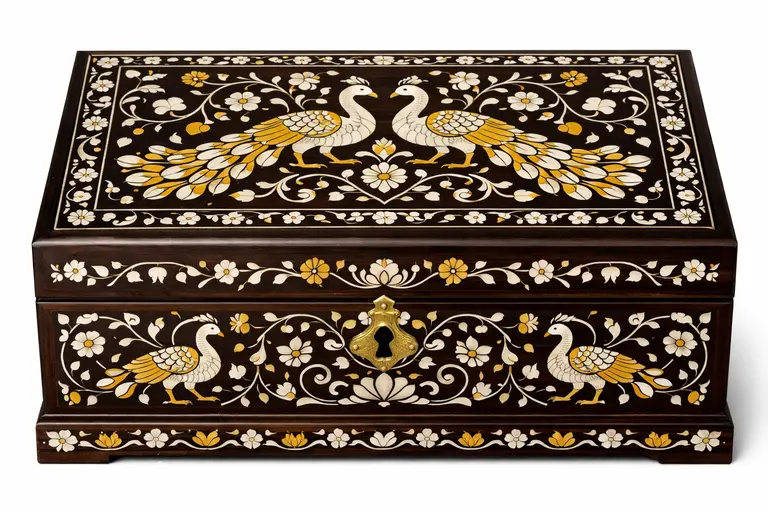
A finely detailed Mysore Rosewood Inlay jewelry box featuring a peacock motif.

Mysore Rosewood Inlay: 400-Year GI-Tagged Art Guide

Introduction Few art forms in the world carry the weight of four centuries of cultural memory. Mysore Rosewood Inlay, a Geographical Indication (GI)-tagged craft from Karnataka, India, does exactly that. Specifically, artisans embed contrasting materials—like white acrylic, mother-of-pearl, and sandalwood—into the dark, richly grained surface of rosewood to produce breathtaking patterns. Furthermore, this technique adorns

Mysore Rosewood Inlay: 400-Year GI-Tagged Art Guide Read More »

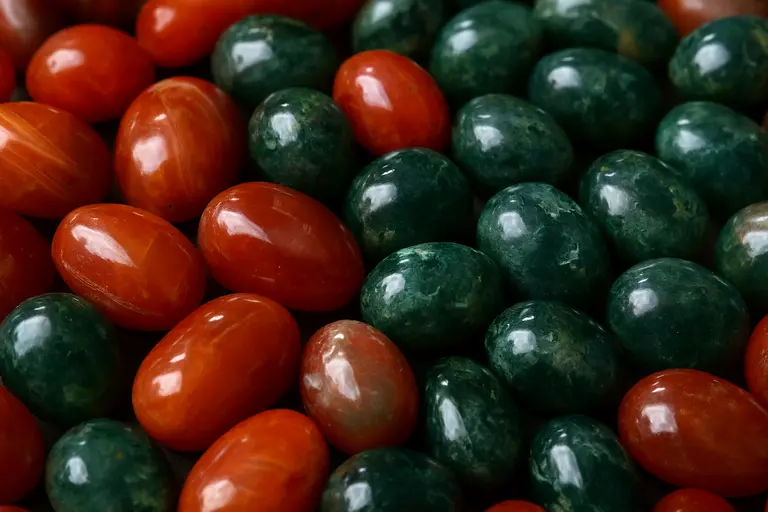
A pile of polished red and orange Agates of Cambay beads.

Agates of Cambay: Khambat’s 4000-Year GI Gem Legacy

Introduction When we talk about Indian gem history, we often think of Golconda diamonds. However, the true ancient backbone of India’s gem trade lies in a small town in Gujarat. Artisans in Khambat meticulously craft the semi-precious Agates of Cambay. Remarkably, for over 4,000 years, this town has stood as a global hub for agate artistry, tracing its

Agates of Cambay: Khambat’s 4000-Year GI Gem Legacy Read More »

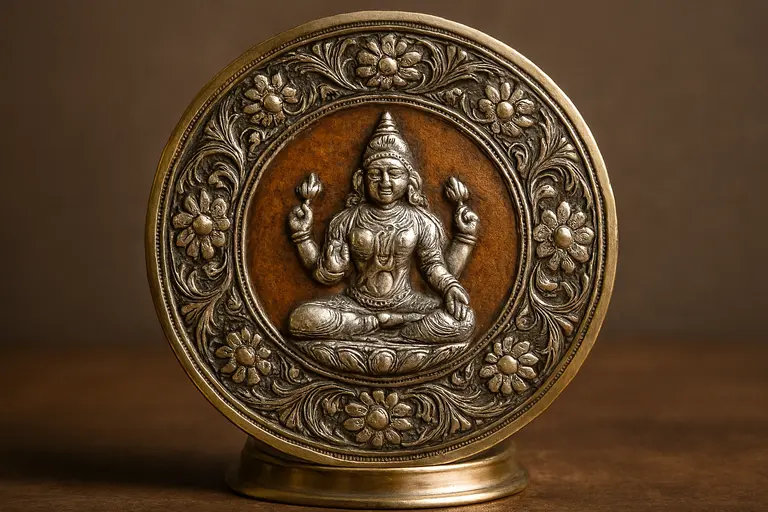
A finely crafted Thanjavur Art Plate featuring Goddess Lakshmi in silver and copper.

Thanjavur Art Plate: Authentic GI-Tagged Craft Guide

Introduction In the cultural heartland of Tamil Nadu, there exists an art form that glitters like jewelry but hangs on a wall. Historically, the Thanjavur Art Plate (Thanjavur Kalai Thattu) is a cherished traditional handicraft that blends artistry, heritage, and metallurgy. Specifically, this masterpiece is a “Tri-Metal” wonder, combining the strength of Brass, the warmth of Copper,

Thanjavur Art Plate: Authentic GI-Tagged Craft Guide Read More »

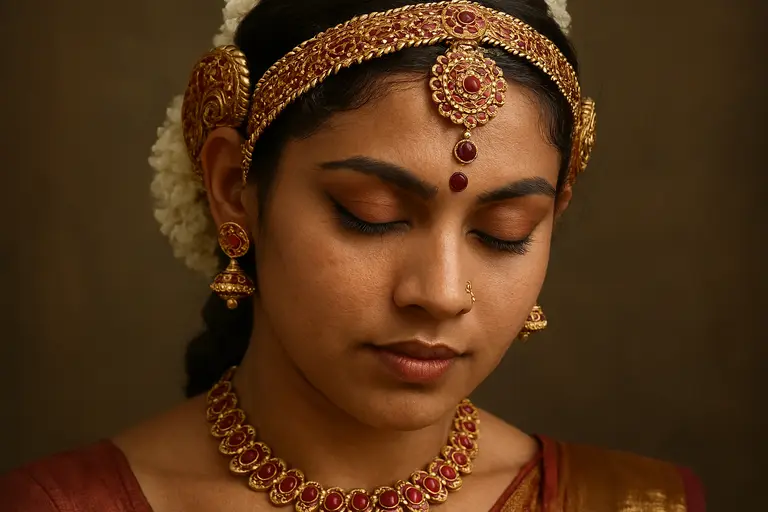
A Bharatanatyam dancer wearing a full set of Nagercoil Temple Jewellery.

Nagercoil Temple Jewellery: Vadasery’s GI Craft Guide

Introduction In the vibrant village of Vadasery near Nagercoil, Tamil Nadu, a centuries-old tradition thrives. Nagercoil Temple Jewellery represents an artistry that captivates with its divine elegance. For generations, artisans here have crafted these pieces to adorn temple idols and graceful Bharatanatyam dancers. Significantly, in 2007, this exquisite craft earned a prestigious Geographical Indication (GI) Tag, safeguarding its authenticity. But what sets

Nagercoil Temple Jewellery: Vadasery’s GI Craft Guide Read More »

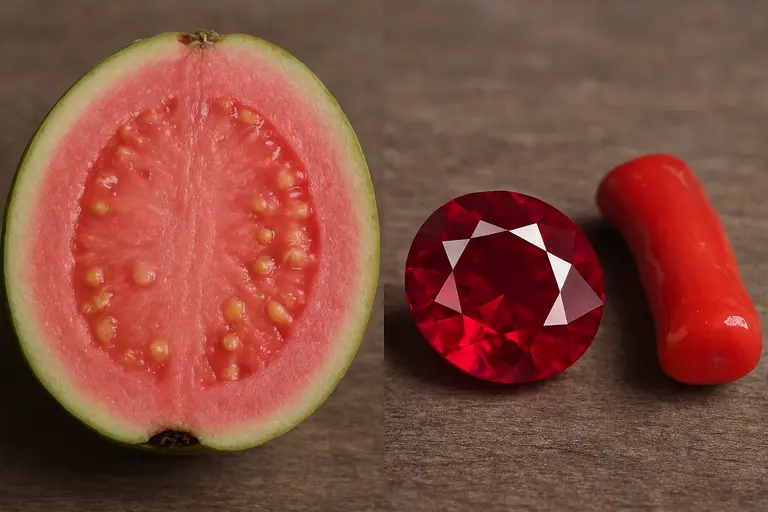
A sliced pink Allahabad Surkha Guava next to a red ruby gemstone.

Allahabad Surkha Guava: A Gemstone in Fruit Form

Introduction Imagine biting into a fruit that looks like a precious gemstone. That is the magic of the Allahabad Surkha Guava. At first glance, this variety stands out with its vibrant apple-red skin. However, the real surprise lies inside: a deep pink-to-maroon pulp that glows like a jewel. For instance, its colors do not just remind us

Allahabad Surkha Guava: A Gemstone in Fruit Form Read More »

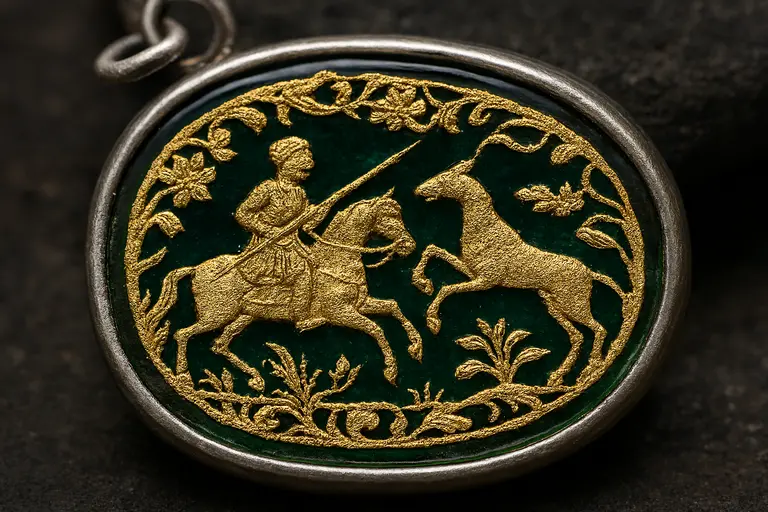
A detailed Thewa Jewelry pendant showing gold hunting scenes on green glass.

Thewa Jewelry: Rajasthan’s Gold-Glass Art – Expert Guide

Introduction In the vast landscape of Indian adornment, Thewa Jewelry stands alone. Unlike the heavy Kundan or Polki of Jaipur, Thewa is delicate, translucent, and shrouded in mystery. Indeed, this traditional art form, hailing exclusively from Pratapgarh, Rajasthan, masterfully blends 23-karat gold with vibrant, multi-colored glass. Moreover, it tells intricate stories through designs so fine they look like lace. As a

Thewa Jewelry: Rajasthan’s Gold-Glass Art – Expert Guide Read More »