
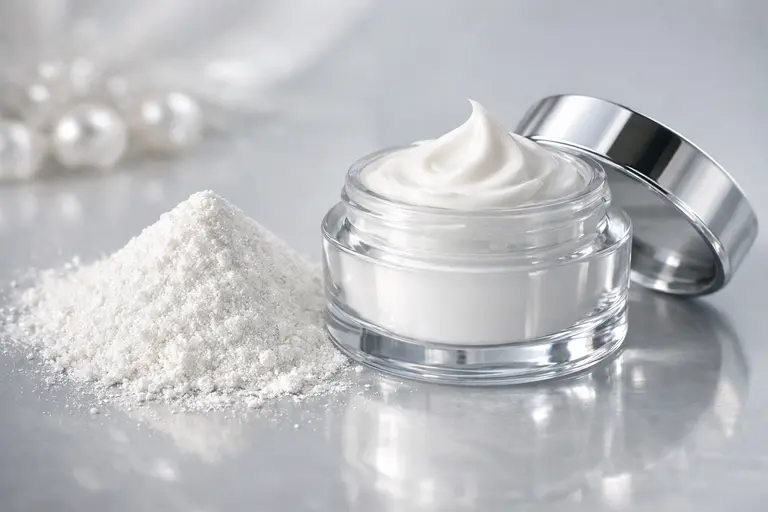
Introduction to Pearls in Cosmetics and Skincare
The integration of Pearls in Cosmetics and Skincare has transformed the modern beauty industry. Today, beauty brands around the world grind, extract, and blend these gems into daily skincare and makeup products. As a result, you will find pearl-based ingredients in everything from brightening serums to luxurious lipsticks. In fact, the international cosmetics industry now utilizes pearls on a massive scale, making them one of the most recognized natural beauty ingredients available in 2026. You should also read our guide on gemstone buying mistakes to understand how the same quality standards apply to luxury products beyond the jewelry counter.
Common Uses of Pearls in Cosmetics and Skincare
Cosmetic manufacturers primarily utilize pearls in two distinct forms: pearl powder and pearl extract. To produce the powder, manufacturers grind cultured pearls into an ultra-fine, microscopic dust. In contrast, they create pearl extract by processing the “nacre”—the iridescent inner layer of the shell—into a liquid concentrate.
Both of these ingredients commonly appear in facial creams, cleansers, and moisturizers. Pearls naturally contain calcium carbonate, essential amino acids, and a structural protein called “conchiolin.” Because of this specific composition, beauty brands promote these ingredients as natural skin-conditioning agents. However, it is worth noting that large-scale clinical studies are still catching up to centuries of anecdotal praise. Beyond skincare, makeup brands also rely on these materials to create a soft, light-reflecting shimmer in highlighters and nail polishes. To learn more about how these ingredients are officially classified, visit the Personal Care Products Council.
Purity of Pearls in Cosmetics and Skincare
Here is a technical detail that most consumers do not realize: cosmetic companies do not use high-end, gem-quality pearls. Instead, they specifically select lower-grade cultured pearls that jewelers would typically reject. For instance, pearls with irregular shapes, dull luster, or surface blemishes enter the cosmetic supply chain rather than the fine jewelry market.
This decision makes practical sense because perfectly round, lustrous pearls are far more valuable as physical ornaments. Additionally, many manufacturers utilize mother-of-pearl (the shell) to keep costs manageable. This inner nacre layer offers similar biochemical properties at a significantly lower price point, making it ideal for mass-market production. Furthermore, this approach reduces environmental waste by finding a useful second life for pearls that cannot meet jewelry standards. For information on gemstone quality, refer to the Gemological Institute of America at gia.edu.
Market Leaders for Pearls in Cosmetics and Skincare
China currently leads the global industry for Pearls in Cosmetics and Skincare. The country benefits from the world’s largest freshwater pearl farming infrastructure and a rapidly growing domestic demand for luxury goods. Consequently, China supplies the majority of cosmetic-grade pearl material to international beauty brands.
Japan also plays a vital role in this sector. Japanese researchers originally developed many of the advanced extraction methods that the industry still uses today. Moreover, Japanese beauty houses helped introduce pearl-based luxury skincare to the Western world. Meanwhile, South Korea continues to push the trend forward through the influential “K-beauty” movement. Specifically, Korean brands emphasize radiance and hydration—values that align perfectly with pearl extracts. In India, these products connect closely with Ayurvedic traditions. Brands like Shahnaz Husain and Lotus Herbals incorporate pearl powder into treatments inspired by ancient beauty rituals.
Identifying Real Pearls in Skincare Products
Reading the ingredient label is the only reliable way to verify the presence of real minerals. Specifically, products that contain genuine material will list names such as “Pearl Powder,” “Pearl Extract,” or “Hydrolyzed Pearl” under international INCI standards. These names follow strict guidelines set by regulatory bodies to ensure consumer transparency.
However, you must be cautious because many makeup products use the word “pearl” only as a marketing term. In these cases, the shimmer often comes from mica or titanium dioxide rather than actual pearls. For example, many budget highlighters rely entirely on mineral pigments to achieve a “pearly” look. This distinction matters because a product might deliver a visual effect without providing any of the biochemical benefits of real pearls. Therefore, you should always scan the full list of ingredients rather than trusting the product name alone. You can also review safety standards through the U.S. Food and Drug Administration.
Safety of Pearls in Cosmetics and Skincare
For the vast majority of people, Pearls in Cosmetics and Skincare are perfectly safe to use. Authentic pearl powder is generally considered biocompatible with human skin, and allergic reactions remain relatively rare in 2026. Nevertheless, you should keep a few safety points in mind.
First, the quality of the grind is essential. If the manufacturer does not grind the powder finely enough, the coarse particles can irritate sensitive skin types. As a result, high-quality pearl powder should always feel smooth rather than gritty. Second, heavy metal testing is a critical step. Because mollusks can absorb pollutants from their water, responsible brands test their pearl ingredients for lead and mercury. Finally, if you have severe marine allergies, you should perform a patch test on your arm before applying a new cream to your face. In short, sticking to established, reputable brands is your best protection as a consumer.
FAQ: Pearls in Cosmetics and Skincare
Do these products contain real crushed pearls?
Yes, many do. If the label lists “Pearl Powder” or “Hydrolyzed Pearl,” the manufacturer has used real cultured pearls or mother-of-pearl in the formula.
Can pearl powder actually brighten my skin?
Traditional medicine has promoted pearls for brightening for centuries. While users often report a more radiant complexion, you should treat these as aesthetic improvements rather than permanent medical changes.
Are pearl cosmetics more expensive than regular ones?
Not necessarily. While luxury brands like Guerlain charge premium prices, many affordable Asian and Indian brands offer pearl-based masks and creams at accessible price points.
Is pearl powder sustainable?
Generally, yes. By using pearls that are unsuitable for jewelry, the industry reduces waste. Furthermore, many pearl farms now prioritize water quality to ensure healthy mollusk growth.
How often can I use pearl-based skincare?
Most people can use these products daily. However, you should monitor how your skin responds and consult a dermatologist if you notice any redness or irritation.
Disclaimer
This article provides educational information only. Cosmetic safety and ingredient quality vary by manufacturer. Always review labels carefully and consult a qualified dermatologist before trying new skincare products, especially if you have sensitive skin or existing allergies. The author has no financial affiliation with the beauty brands mentioned.