Summary
The Oscar Heyman 2025 Holiday Catalog highlights the brand’s mastery in colored gemstone jewelry. Additionally, it features over 100 unique pieces handcrafted in its Madison Avenue workshop. Printed copies were sent to partner retailers across the U.S., and now the digital edition is available on the Oscar Heyman website.
A New Chapter in American Jewelry Craftsmanship
Oscar Heyman, the New York-based color gemstone jewelry brand founded in 1912, has released its 2025 Holiday Catalog.
Furthermore, the limited-edition book showcases never-before-seen images of more than 100 one-of-a-kind pieces, all designed and crafted in the brand’s Madison Avenue atelier.
Printed copies have been shipped to partner retailers across the United States in time for the holiday season.
Meanwhile, the digital version is accessible directly on Oscar Heyman’s official website.
For related insights, see Gemstone Jewelry Trends 2025 and High Jewelry Craftsmanship in New York.
Inside the 2025 Holiday Catalog
Every creation in this collection tells a story of craftsmanship and heritage.
You’ll find:
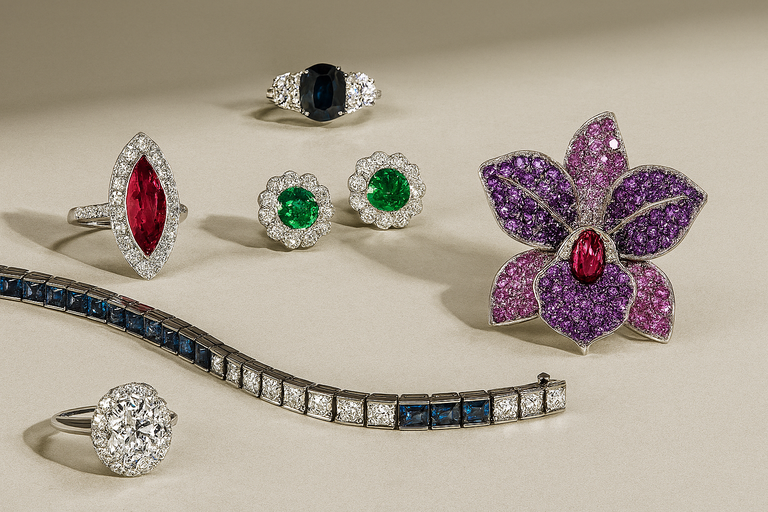
- Classic gemstones — rubies, sapphires, and emeralds.
- Rare treasures — alexandrites, paraibas, and cat’s-eye chrysoberyls.
- Meticulous design — from setting and polishing to hand engraving.
Moreover, each piece takes weeks, months, or even years to complete.
Therefore, the catalog is not just a showcase but a celebration of artistry that bridges generations.
The Brand’s Legacy and Vision
Tom Heyman, President of Oscar Heyman, shared:
“Our team of expert designers, lapidaries, setters, engravers, jewelers, and polishers have been working diligently to transform exceptional stones into luxurious treasures. Producing these requires old-world craft, rigorous training, and modern technology.”
As a result, the Oscar Heyman 2025 Holiday Catalog reaffirms the brand’s goal of being the leading colored gemstone jewelry maker in the world.
Each design showcases refined, timeless aesthetics and enduring quality.
For more about heritage design, read Understanding Fine Jewelry Hallmarks.
Why This Matters to You
If you appreciate fine gemstones or run a jewelry boutique, this catalog is a must-see.
It helps you:
- Understand current design trends in high jewelry.
- Learn how handcrafted pieces maintain value over time.
- Gain insight into the New York jewelry trade and its legacy brands.
In addition, you can explore our guide to Gemstone Buying Guide to deepen your knowledge.
FAQ
Q: What makes the Oscar Heyman 2025 Holiday Catalog special?
A: It features over 100 handcrafted gemstone pieces, each designed in New York and made with rare and traditional stones.
Q: Where can I access the catalog?
A: Visit Oscar Heyman’s official website to view the digital version or visit select partner retailers across the country.
Q: How long does it take to make each piece?
A: Depending on complexity, each creation may take weeks to years from design to final polish.
Q: Which gemstones are included?
A: Rubies, sapphires, emeralds, alexandrites, paraibas, and cat’s-eye chrysoberyls.
Q: Is this catalog available internationally?
A: Yes, the digital catalog is accessible worldwide through the Oscar Heyman website.
This comprehensive gemology FAQ covers everything about studies, specializations, careers, and tools in the field. Whether you’re considering gemology education or exploring career opportunities, this guide answers the most frequently asked questions about becoming a professional gemologist.
1. What is Gemology?
Gemology is comprehensively defined as the scientific study of gemstones. This fascinating field encompasses their intricate identification, precise grading, geographical origins, various treatments, and ultimate valuation. Through dedicated study, individuals learn to meticulously differentiate between natural, synthetic, and imitation stones.
2. Why Should You Study Gemology?
Studying gemology offers a wealth of professional advantages. Crucially, you will acquire essential skills applicable across diverse sectors such as jewelry retail, prestigious auction houses, and specialized laboratories. Furthermore, this expertise empowers you to advise clients with unparalleled authority, thereby fostering trust. Ultimately, a strong gemological foundation serves as a vital safeguard against potential fraud, protecting both yourself and your clientele.
3. Main Areas of Specialization in Gemology
The field of gemology branches into several distinct and vital specializations, allowing for focused expertise.
Diamond Grading
One prominent area is diamond grading, where the focus meticulously centers on the renowned 4Cs: cut, color, clarity, and carat weight. Here, students become adept at understanding the rigorous grading systems employed by leading laboratories, such as the Gemological Institute of America (GIA).
Colored Gemstones
Another significant specialization involves colored gemstones. This area demands extensive study of iconic gems like rubies, sapphires, and emeralds, alongside hundreds of other vibrant stones. Critically, understanding how geographical origins profoundly influence a gem’s ultimate value is a core component.
Pearls
The study of pearls constitutes another specialized path. Students learn to distinguish between natural, cultured, freshwater, and saltwater pearls, each with unique characteristics. Consequently, comprehending how nacre quality directly impacts a pearl’s market price becomes paramount.
Gem Treatments
Detecting gem treatments is a highly technical specialization. This involves identifying various enhancements such as heat, irradiation, oiling, and fracture filling. Moreover, recognizing how these treatments significantly impact a gem’s market value is a crucial skill for any gemologist.
Synthetic and Lab-Grown Stones
The specialization in synthetic and lab-grown stones focuses on differentiating these from their natural counterparts. Therefore, learning to spot subtle indicators like specific growth patterns or distinctive inclusions is essential for accurate identification.
Gem Trade and Valuation
Finally, gem trade and valuation represent a specialization focused on the commercial aspects. Here, students delve into pricing strategies relevant to both local and global markets. Additionally, studying how demand fluctuates over time provides critical insights into market dynamics.
4. Courses and Qualifications That Matter
Pursuing formal education is key to a successful gemological career, with several qualifications holding significant weight.
Global Diplomas
Globally recognized diplomas are particularly impactful. The GIA Graduate Gemologist (GG) certification is highly esteemed, as is the FGA (Fellow of the Gemmological Association of Great Britain).
Advanced Lab Certifications
For those aiming for high-level laboratory work, advanced certifications from institutions like SSEF, Gübelin, and HRD are invaluable. These courses provide specialized, in-depth knowledge crucial for cutting-edge analysis.
Local Courses
While local courses can be helpful for beginners to gain foundational knowledge, it is generally understood that global diplomas carry considerably more professional weight and recognition within the industry.
5. Duration of Gemological Studies
The commitment required for gemological studies varies significantly depending on the chosen program. Short courses, for instance, might only last a few weeks, offering a quick introduction. Conversely, comprehensive diploma programs typically extend from six months to two years, providing in-depth training. Specific modules, such as those focused solely on diamond or pearl grading, can often be completed within a matter of weeks, allowing for targeted skill development.
6. Tools You Will Learn to Use
Mastering specialized tools is fundamental to effective gemological practice. Among these, the microscope is indispensable for meticulously examining inclusions, which act as fingerprints of a gem’s formation. Similarly, a refractometer accurately measures the refractive index, a key optical property aiding identification. A polariscope helps determine a gem’s optic character, revealing its internal crystal structure. Furthermore, a spectroscope is used to analyze absorption patterns within a gem, providing clues about its chemical composition and potential treatments. Lastly, an ultraviolet lamp is crucial for observing fluorescence, another diagnostic characteristic.
7. Career Options After Gemology
A qualification in gemology opens doors to a diverse range of career paths. Many graduates find fulfilling roles as jewelry retail professionals, guiding customers with expert knowledge. Others excel as diamond or gemstone graders in renowned laboratories. Opportunities also exist as auction house cataloguers, meticulously documenting precious items. Moreover, becoming a wholesale gemstone buyer requires keen market insight and negotiation skills. For those seeking independence, working as an independent appraiser is a viable option. Finally, a career as a laboratory researcher appeals to those interested in advancing gemological science.
8. Is Gemology Only About Science?
No, gemology is far more than a purely scientific discipline; instead, it artfully blends rigorous science with practical trade knowledge. Consider this example: a sapphire may exhibit the correct inclusions indicating natural origin, but its ultimate price often depends heavily on its specific origin and market perception. Therefore, deep scientific knowledge and sharp market awareness must effectively work together for success in this field.
9. Career Growth Paths in Gemology
The field of gemology offers numerous avenues for significant career growth. Professionals often begin their journey as a retail associate or a junior grader, building foundational experience. From there, progression into more specialized roles in wholesale, laboratories, or prestigious auction houses is common. As expertise develops, individuals can establish a strong reputation as an independent appraiser or a consultant. Furthermore, opportunities may arise to move into teaching, sharing knowledge with aspiring gemologists, or into writing, contributing to the industry’s body of literature.
10. Gemology for Jewelry Business Owners
For jewelry business owners, a background in gemology is an invaluable asset. Firstly, it helps to proactively avoid costly mistakes during sourcing and purchasing. Secondly, possessing this expert knowledge builds immense trust with customers, allowing for clear and confident explanations about products. Lastly, it instills greater confidence when sourcing directly from miners or dealers, ensuring informed decisions and better acquisitions.
11. Choosing Your Specialization
When considering a specialization in gemology, a critical self-reflection is to ask: Do you intrinsically prefer diamonds, colored stones, or pearls? Notably, a focus on diamonds frequently leads to roles in retail and esteemed certification laboratories. Conversely, specializing in colored stones often necessitates strong field knowledge, recognizing the nuances of diverse origins and treatments. Meanwhile, a passion for pearls typically connects with careers in luxury retail and high-end auctions, where discerning clientele appreciate their unique beauty.
12. Skills You Need Beyond Gemology
Beyond the core gemological knowledge, several complementary skills are indispensable for professional success. Possessing sharp observation is critical for discerning subtle details in gemstones. Developing clear client communication skills is paramount for effectively explaining complex concepts to customers. Furthermore, robust market analysis abilities are essential for understanding trends and pricing. Lastly, strong negotiation skills are invaluable, particularly in the dynamic processes of buying and selling gemstones.