
Summary
In Jaipur, not all gemstones are natural. Learning to identify natural vs synthetic gems helps you avoid fakes. This guide explains visual clues, questions to ask, and trusted lab certificates so you can buy with confidence.
Table of Contents
- Perfect Clarity Can Be Misleading
- Unnatural Colors Stand Out
- Ask Smart Questions
- Certificates Matter
- Compare Before Buying
- Trust Your Instincts
- FAQs on Natural vs Synthetic Gems
1. Perfect Clarity Can Be Misleading
When comparing natural vs synthetic gems, notice tiny inclusions or fine lines. Flawless stones are often lab-made.
Use a 10x jeweler’s loupe or ask the seller to show the stone under magnification.
Learn more about spotting real inclusions in Understanding Gemstone Treatments or check our guide on 24K, 22K, 18K Gold Buying Tips for related jewelry advice.
2. Unnatural Colors Stand Out
Synthetic gemstones often appear overly bright or uniform.
Natural stones have subtle variations.
A neon-green emerald or ruby-like red glass may be lab-grown or dyed.
Check official grading on GIA Gem Education and see our post on Gemstone Color and Clarity Guide for more tips.
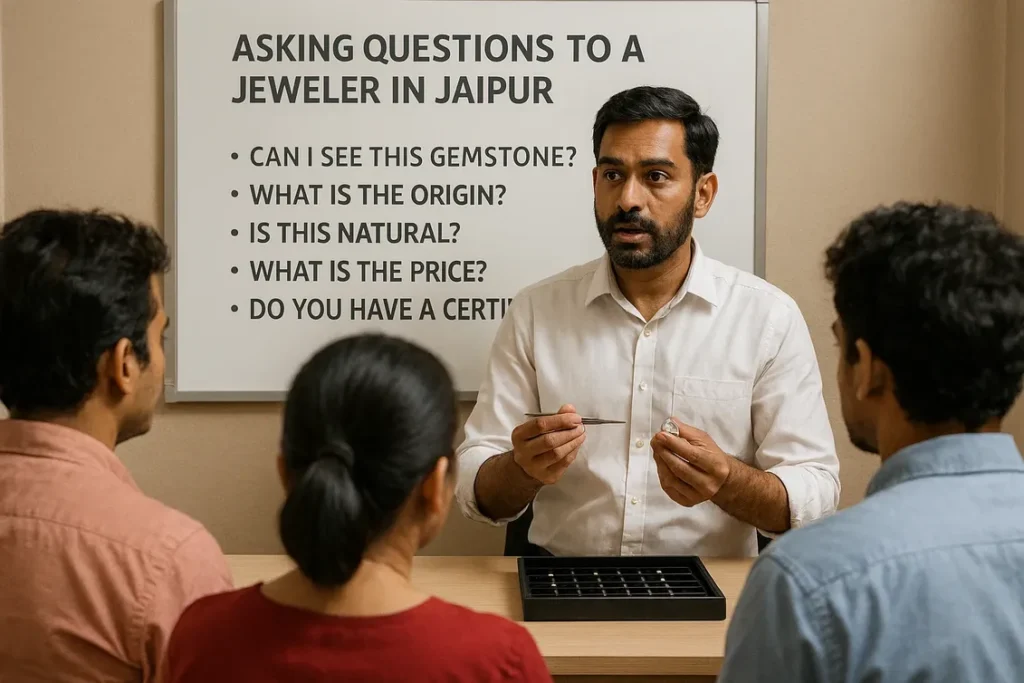
3. Ask Smart Questions
Instead of asking “Is this real?” ask:
“Is this gemstone natural, treated, or synthetic?”
A trustworthy seller gives a clear answer. Avoid vague responses.
For more guidance, see Gem Buying Mistakes to Avoid.
4. Certificates Matter
Request certificates from IGI, GII, or GIA.
Avoid unverified local labs.
Verify authenticity on IGI Laboratory.
You can also read our article on Understanding BIS Hallmark for Jewelry to learn about certified gold and gem authenticity.
5. Compare Before Buying
Visit multiple stores in Johari Bazaar, Jaipur.
Price differences can indicate whether a gemstone is synthetic or treated.
Natural gemstones are rarer and cost more.
For more buying strategies, see Gold Buying Checklist for Malayalis.
6. Trust Your Instincts
Glass-like appearance or overly smooth texture can indicate a fake.
Gently rub unmounted stones on your teeth — real gems feel slightly gritty.
Also check Atlas Pearls Farming Process to understand how natural pearls differ from synthetic ones.
FAQs on Natural vs Synthetic Gems
1. How can I spot natural vs synthetic gems in Jaipur?
Look for inclusions, uneven color, and growth patterns. Synthetic stones appear flawless.
2. Are synthetic gems cheaper than natural ones?
Yes. Lab-grown stones cost less than mined natural gemstones.
3. Which lab certificates are reliable?
IGI, GII, and GIA are trusted globally for gemstone verification.
Introduction
This Responsible Travel FAQ provides comprehensive answers to help you make ethical tourism choices.
Our guide covers eco-friendly accommodations, local community support, sustainable transportation, cultural respect, wildlife ethics, and ways to reduce waste.
Following these practices ensures your adventures benefit both destinations and travelers.
What is Responsible Travel and Why Does It Matter?
Responsible travel means making conscious choices that minimize negative impact while maximizing benefits for local communities and the environment.
Tourism generates $1.4 trillion annually but produces 8% of global carbon emissions.
Your travel decisions affect local economies, cultural preservation, and environmental conservation.
How Do I Choose Sustainable Accommodations?
Look for eco-certifications such as:
- Green Key
- LEED building standards
- EarthCheck approval
- Rainforest Alliance verification
Check if hotels use renewable energy, water-saving systems, and source food locally.
Ask about waste reduction programs and community involvement. Calling properties directly helps verify claims.
Transportation Options for Responsible Travel
- Train travel emits 80% less carbon than flying for similar distances.
- Choose direct flights when necessary and book economy class.
- Use public transport, bicycles, or walk instead of renting cars.
- Consider verified carbon offsets for unavoidable flights.
Supporting Local Economies
- Buy from locally-owned businesses instead of chains.
- Book community-based tours with local guides.
- Eat at family-owned restaurants with local ingredients.
- Stay in homestays or boutique hotels rather than international chains.
- Purchase authentic handicrafts fairly from artisans.
Packing Tips for Responsible Travel
- Reusable water bottle with filtration
- Solid toiletries to reduce plastic
- Reef-safe mineral sunscreen
- Reusable shopping bags
- Bamboo or metal utensils
- Portable laundry soap
Pack light and choose durable, multipurpose items.
Respecting Local Cultures
- Learn cultural customs, dress codes, and etiquette.
- Learn basic local phrases.
- Dress appropriately for religious and conservative areas.
- Ask permission before photographing people.
- Participate respectfully in cultural activities.
Ethical Wildlife Encounters
- Maintain safe distances and avoid feeding animals.
- Choose conservation-focused sanctuaries, not entertainment attractions.
- Avoid elephant rides, direct contact, or photo opportunities with captive animals.
- Use certified naturalist guides who prioritize welfare and habitat protection.
Reducing Waste During Travel
- Use reusable containers, bags, and utensils.
- Refuse single-use plastics.
- Choose digital tickets and receipts.
- Carry a small trash bag where disposal is limited.
Questions to Ask Tour Operators
- Are staff local and fairly paid?
- How does your business give back to communities?
- What environmental practices are in place?
- Are group sizes limited to reduce pressure on sensitive areas?
- Are wildlife experiences ethical and conservation-focused?
Money and Overtourism Practices
- Use local ATMs and tip according to local customs.
- Support social enterprises and cooperatives.
- Visit during shoulder seasons, off-peak hours, or lesser-known areas.
- Stay longer in fewer destinations.
Responsible Travel on a Budget
- Cook using local market ingredients.
- Use public transportation.
- Stay in local hostels, guesthouses, or homestays.
- Explore free cultural events or walking tours.
- Exchange skills or volunteer for free accommodation.
Pre-Travel Research
- Learn about environmental challenges and cultural sensitivities.
- Check seasonal weather and political situations.
- Identify local organizations to support.
- Read destination-specific responsible travel guides.
Creating a Positive Impact Post-Travel
- Share authentic stories on social media.
- Write detailed reviews for responsible businesses.
- Continue supporting local organizations.
- Apply sustainable practices in daily life.
- Recommend responsible travel to others.
Learn more: