Summary
In Jaipur, not all gemstones are natural. Learning to identify natural vs synthetic gems helps you avoid fakes. This guide explains visual clues, questions to ask, and trusted lab certificates so you can buy with confidence.
Table of Contents
- Perfect Clarity Can Be Misleading
- Unnatural Colors Stand Out
- Ask Smart Questions
- Certificates Matter
- Compare Before Buying
- Trust Your Instincts
- FAQs on Natural vs Synthetic Gems
1. Perfect Clarity Can Be Misleading
When comparing natural vs synthetic gems, notice tiny inclusions or fine lines. Flawless stones are often lab-made.
Use a 10x jeweler’s loupe or ask the seller to show the stone under magnification.
Learn more about spotting real inclusions in Understanding Gemstone Treatments or check our guide on 24K, 22K, 18K Gold Buying Tips for related jewelry advice.
2. Unnatural Colors Stand Out
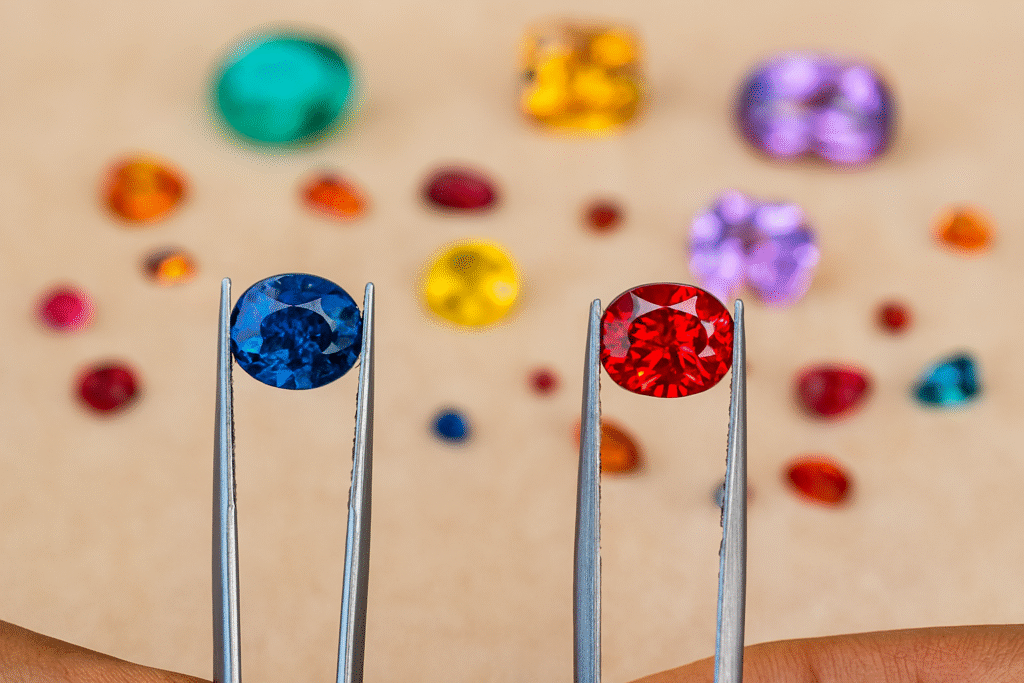
Synthetic gemstones often appear overly bright or uniform.
Natural stones have subtle variations.
A neon-green emerald or ruby-like red glass may be lab-grown or dyed.
Check official grading on GIA Gem Education and see our post on Gemstone Color and Clarity Guide for more tips.
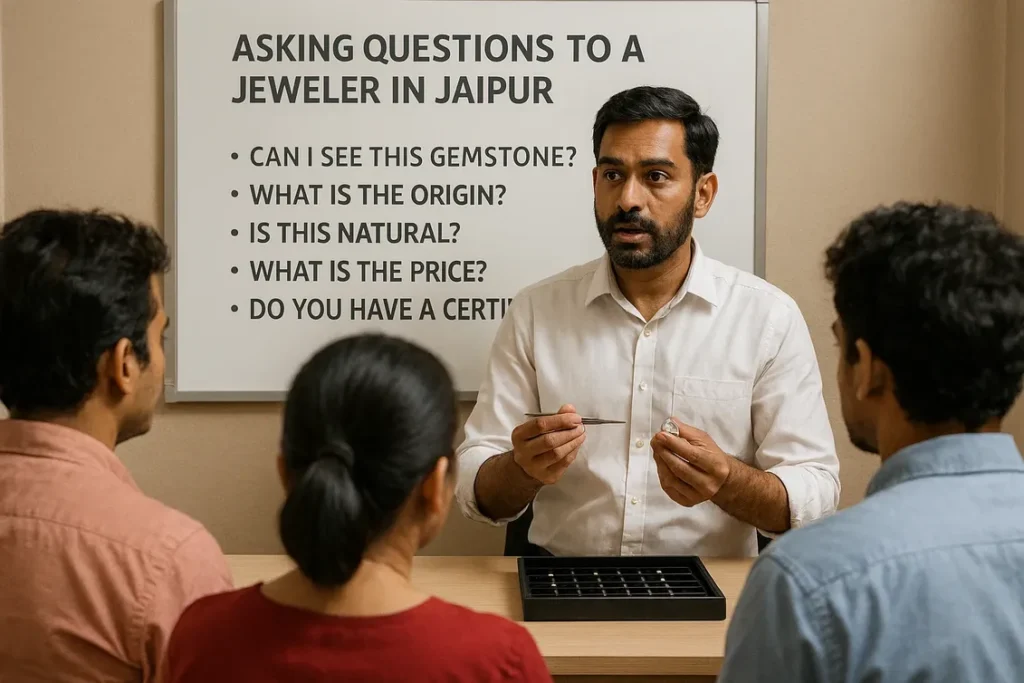
3. Ask Smart Questions
Instead of asking “Is this real?” ask:
“Is this gemstone natural, treated, or synthetic?”
A trustworthy seller gives a clear answer. Avoid vague responses.
For more guidance, see Gem Buying Mistakes to Avoid.
4. Certificates Matter
Request certificates from IGI, GII, or GIA.
Avoid unverified local labs.
Verify authenticity on IGI Laboratory.
You can also read our article on Understanding BIS Hallmark for Jewelry to learn about certified gold and gem authenticity.
5. Compare Before Buying
Visit multiple stores in Johari Bazaar, Jaipur.
Price differences can indicate whether a gemstone is synthetic or treated.
Natural gemstones are rarer and cost more.
For more buying strategies, see Gold Buying Checklist for Malayalis.
6. Trust Your Instincts
Glass-like appearance or overly smooth texture can indicate a fake.
Gently rub unmounted stones on your teeth — real gems feel slightly gritty.
Also check Atlas Pearls Farming Process to understand how natural pearls differ from synthetic ones.
FAQs on Natural vs Synthetic Gems
1. How can I spot natural vs synthetic gems in Jaipur?
Look for inclusions, uneven color, and growth patterns. Synthetic stones appear flawless.
2. Are synthetic gems cheaper than natural ones?
Yes. Lab-grown stones cost less than mined natural gemstones.
3. Which lab certificates are reliable?
IGI, GII, and GIA are trusted globally for gemstone verification.
Introduction
Welcome to our Technology AI Emerging Tech FAQ.
Here, you’ll find clear answers to common questions about artificial intelligence, emerging technologies, and their impact on daily life.
This guide helps you understand AI tools, automation, and the latest tech trends quickly and easily.
Whether you are a beginner or an enthusiast, these insights will help you make informed decisions about adopting and using technology.
FAQ Section
What is Artificial Intelligence (AI)? – Technology AI Emerging Tech Explained
Artificial intelligence (AI) is technology that allows machines to perform tasks that normally require human intelligence.
Examples include smart assistants, voice recognition, language translation, and self-driving cars.
AI continues to evolve rapidly, influencing industries such as healthcare, finance, manufacturing, and education.
Understanding AI basics helps you leverage its benefits while avoiding potential risks.
What Are Emerging Technologies? – Technology AI Emerging Tech Insights
Emerging technologies are innovations that are reshaping our world.
Key examples include AI, blockchain, quantum computing, augmented reality (AR), virtual reality (VR), and Internet of Things (IoT) devices.
These technologies impact how we work, learn, communicate, and even entertain ourselves.
Staying aware of emerging tech trends ensures you can adapt to new opportunities and challenges.
How Does AI Impact Daily Life? – Practical AI Applications
AI powers tools like personalized recommendations, automated customer service, smart home devices, and medical diagnostics.
It improves efficiency, reduces errors, and helps individuals and businesses make smarter decisions.
Even simple tasks like filtering emails, scheduling appointments, or optimizing energy use are increasingly managed by AI systems.
Are AI and Automation Safe? – Technology AI Emerging Tech Safety
AI is generally safe when designed ethically and monitored carefully.
Developers must follow guidelines to prevent bias, misuse, or unintended consequences.
Regulations, ethical frameworks, and transparent design practices help ensure AI benefits society responsibly.
Learning how AI systems work improves your confidence and safety when using emerging tech.
How Can I Learn About AI and Emerging Tech? – Beginner’s Guide
You can learn through online courses, tech blogs, webinars, or hands-on projects.
Following tech news, experimenting with AI tools, and joining tech communities keeps you updated.
Many platforms also provide free tutorials, coding exercises, and AI simulations to help you gain practical experience.
Learn more:
. Learn about advanced AI research.