Introduction
In the heat of Tamil Nadu, one scent defines the atmosphere: Madurai Malli. This iconic Jasmine flower captivates with its pearl-like beauty and intoxicating aroma. Often compared to gems in literature, this GI-tagged flower shares striking resemblances with the Queen of Gems. Madurai Malli and Pearls evoke the same feelings of purity, luxury, and heritage.
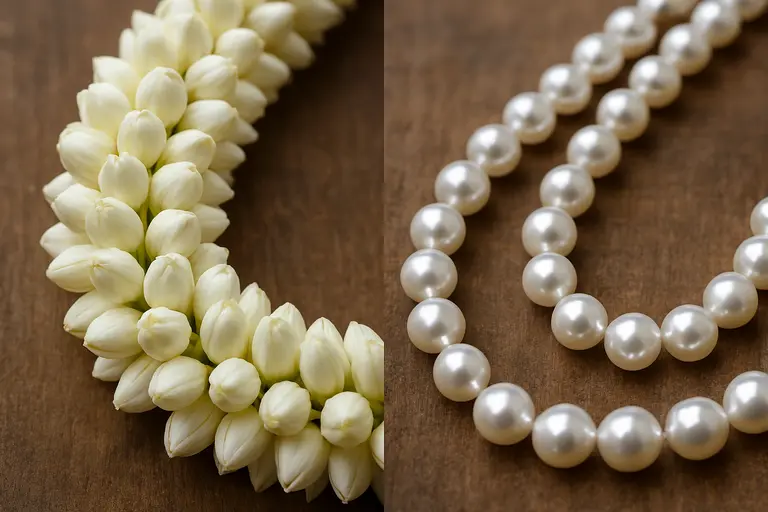
As a Gemologist with roots in the South, I see a clear parallel. For instance, when you look at a fresh, unopened bud of Madurai Malli, it looks exactly like a high-luster Mississippi Pearl. In this article, we will explore these parallels deeply. Additionally, we will highlight the flower’s unique traits that set it apart. Whether you are a gemology enthusiast or a cultural explorer, discover why these treasures shine together.
Appearance: The “Floral Pearl”
First and foremost, let’s look at the visual connection. Madurai Malli buds gleam in pearl-white hues. Unlike other jasmines, which are slender, these buds are rounded and oblong. Consequently, they mimic the shape of small, lustrous Rice Pearls perfectly. When harvesters pluck them young, the buds cluster like a necklace. Imagine threading them—they transform instantly into shimmering organic strands.
Furthermore, this visual similarity isn’t coincidental. In Tamil poetry, writers like Subramania Bharati likened the flower’s buds to “dewdrops on pearl strings.” Thus, artists and jewelers draw inspiration from both. While Pearls reflect light with a “creamy” luster (Orient), Madurai Malli petals reflect sunlight with a waxy, thick sheen. You can read about pearl luster in my guide on The Hyderabad Pearl Myth.
The Jewelry Connection: Mullamottu Mala
Building on this visual link, the flower actually inspired one of the most famous gold ornaments in Kerala and Tamil Nadu: The Mullamottu Mala. Literally translating to “Jasmine Bud Necklace,” this piece features gold beads shaped exactly like the Madurai Malli bud.
Therefore, women wear the “Temporary Pearl” (The Flower) in their hair and the “Permanent Pearl” (The Gold/Gem) on their necks. This pairing creates a harmony of white and gold. In fact, during festivals, the scent of the flower enhances the visual appeal of the jewelry. If you are interested in traditional designs, check my article on Temple Jewelry South India.
Historical Ties: The Pandya Legacy
Next, history weaves Madurai Malli and Pearls closely together. Crucially, the ancient Pandya Kings of Madurai controlled two major assets:
- The Flower: They cultivated vast Jasmine gardens in Madurai.
- The Gem: They controlled the Pearl Fisheries of the Gulf of Mannar (near Tuticorin).
As a result, Sangam literature (circa 300 BCE) praises both as royal gifts. Traders shipped them via the Silk Road. Consequently, folklore depicts Goddess Meenakshi wearing both jasmine garlands and pearl jewelry. Thus, the two items are linked by the same soil and the same dynasty. Read more about royal collections in my Madurai Meenakshi Temple Jewels post.
Unique Traits: Why the Flower is Special
While similarities abound, Madurai Malli stands out vividly on its own merit.
The Power of Scent
First, its fragrance intoxicates. Unlike scentless pearls, one whiff of Madurai Malli lingers for hours, evoking moonlit nights. Scientifically, the unique “Alkaline” soil of the Madurai region creates this intense alkaloid profile.
Durability and Structure
Second, the physical structure shines. It has thick petals and sturdy petioles (stalks). This makes stringing effortless for artisans. Moreover, the shelf life impresses. Blooms stay fresh up to 48 hours post-harvest. In contrast, regular jasmine wilts faster. Additionally, the GI (Geographical Indication) Tag ensures authenticity. Only jasmine grown in this specific region can carry the name. This is similar to how Kashmiri Saffron and Padparadscha rely on origin for value.
Economic Luxury and Global Appeal
Finally, let’s talk value. Genuine GI-tagged Madurai Malli commands premium prices, just like high-grade South Sea pearls. Farmers in Madurai export them worldwide for luxury perfumes. For example, brands like Dior and Chanel source similar high-grade jasmines for scents like J’adore.
Furthermore, this elevates their status. A kilogram of these flowers fetches a high price due to stringent quality controls. Similarly, pearls are traded as luxury gems. Therefore, both thrive in global markets, blending tradition with commerce.
Conclusion: Purity in Two Forms
Ultimately, Madurai Malli and Pearls symbolize the same thing: Unblemished Purity. One is born of the earth; the other, of the water. In summary, when you wear a string of jasmine in your hair, you are wearing a crown of pearls that nature grew just for you.
FAQ: Madurai Malli and Pearls
What makes Madurai Malli look like pearls?
Its unique “Ovate” (egg-shaped) buds and thick, waxy petals give it a rounded, creamy appearance that mimics the shape and luster of natural pearls.
Why are both symbols of purity?
Culturally, white is the color of purity. Because both the flower and the gem are naturally white and flawless, people use them in temples to honor deities.
How long does Madurai Malli stay fresh?
Remarkably, it stays fresh for up to 2 days (48 hours) due to its thick petals. This durability allows it to be exported to markets in Dubai and the USA.
Is Madurai Malli used in perfumes?
Yes. Its potent essential oils make it a favorite for global perfumeries. It provides a deep, rich floral note that synthetic scents cannot replicate.
Where can I buy authentic Madurai Malli?
You should source it from the Madurai Flower Market (Mattuthavani). Look for the GI Tag certification if you are buying processed extracts.
Author Bio
P.J. Joseph, also known as Saju Elizamma, Gemstone & Gold Consultant serving Kerala, Tamil Nadu, and Karnataka.