
Introduction
Nestled in the lush landscapes of Kannur district, Kerala, lies a village that time seems to have honored rather than forgotten. Indeed, Kunjimangalam stands as a timeless testament to India’s rich craftsmanship. For over nine centuries, this quaint village has been the heart of Kunjimangalam Bell-Metal sculpting, a tradition upheld exclusively by the skilled Moosari community.
Moreover, these artisans masterfully employ the ancient “Lost-Wax” casting technique (Cire Perdue) to craft exquisite, divine-Metal idols and ornate ritual lamps. As a Gemologist and lover of heritage, I am fascinated by this process. In this article, I will explore the science behind the alloy, the grueling process of creation, and why the Kerala government declared this a Heritage Village in 2018.
The Science of Kunjimangalam Bell-Metal
To begin with, we must understand the material. For instance, in Kerala, we call this alloy Otu. It is not just brass or bronze; it is a precise metallurgical recipe. Specifically, Kunjimangalam Bell-Metal is an alloy of Copper and Tin, traditionally mixed in a ratio of roughly 4:1.
Why does this matter?
- Resonance: High tin content gives the metal a “Bell” quality. When you strike a Kunjimangalam lamp, it sings.
- Luster: Unlike common brass, which looks yellow, this alloy has a deep, golden-white glow that mimics gold. Consequently, these idols are preferred for temples because they do not corrode easily, even after centuries of Abhishekam (ritual bathing). You can compare this durability to the metals I discussed in Traditional Maharashtrian Jewellery.
The Kunjimangalam Bell-Metal Casting Process
At the core of this art lies the lost-wax method. It is a labor-intensive process that ensures uniqueness. Unlike factory molds that produce thousands of identical copies, this process destroys the mold every single time.
Step 1: Wax Modeling
First, artisans begin with wax modeling. Then, they sculpt detailed figures using a mixture of beeswax and resin (kungiliyam). Remarkably, they capture every nuance—from the flowing garments of Krishna to the fierce eyes of a Theyyam deity. Finally, this step sets the foundation, as the wax model is the exact blueprint for the final metal piece.
Step 2: The Clay Mold
Next, they proceed to clay layering. Then, the delicate wax sculpture gets encased in multiple layers of a special earth mixture—typically riverbed clay blended with cow dung and charred husk. Importantly, this coating hardens into a sturdy mold. Specifically, it must be strong enough to hold molten metal but porous enough to let air escape.
Step 3: The “Lost” Wax
Once the mold cures, the “Lost” phase begins. Artisans heat the structure, causing the wax to melt and drain out. What remains is a hollow cavity, perfectly mirroring the original sculpture.
Step 4: Metal Casting and Finishing
Finally, skilled workers pour the glowing, molten bell-metal into the cavity. After cooling, they break the clay shell—destroying the mold forever—to reveal the rough casting. Subsequently, there come weeks of chiseling and polishing to achieve that famous golden sheen. To understand the value of hand-finishing, read my guide on Jewelry Sales Secrets.
Heritage of Kunjimangalam Bell-Metal
Beyond technique, Kunjimangalam Bell-Metal weaves deeply into Kerala’s spiritual fabric. In 2018, the Kerala state government recognized Kunjimangalam as a Heritage Village, cementing its status.
Today, these creations play vital roles:
- Temples: The iconic Nilavilakku (floor lamp) illuminates the sanctum.
- Theyyam: The elaborate metal headdresses and ornaments worn by Theyyam performers are often crafted here. Therefore, the craft blends metallurgy with mythology. Notably, Master artisan Valsan Kunhimangalam leads workshops to ensure this knowledge passes to the next generation.
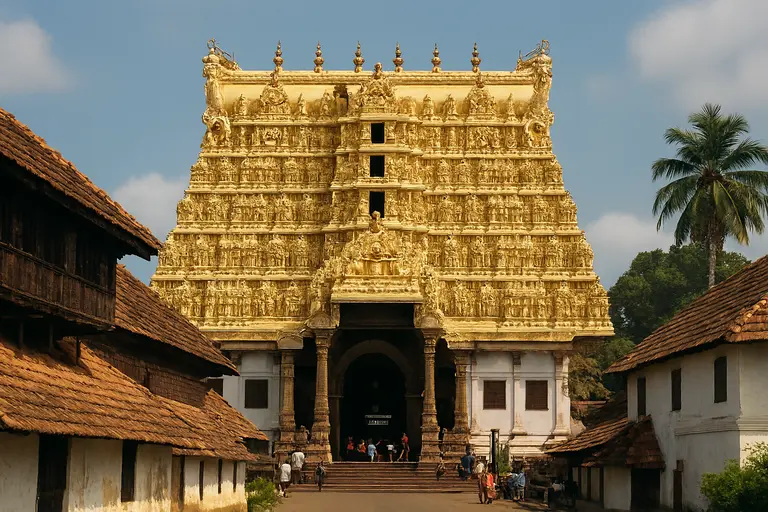
If you are interested in the intersection of art and faith, check my article on Padmanabhaswamy Temple Treasures.
Buying Authentic Kunjimangalam Bell-Metal
As an expert, I must warn you. Markets are flooded with cheap, machine-made brass lamps from other states that claim to be “Kerala Lamps.”
Crucially, here is how to spot an authentic Kunjimangalam Bell-Metal:
- Weight: First, authentic bell-metal is heavy. A small lamp will feel dense in your hand.
- Color: Second, look for a whitish-golden tint, not a bright yellow-brassy color.
- Finish: Hand-made items have subtle imperfections and sharp detailing in the carvings. Machine items look “too smooth” or blurry.
Consequently, buying from Kunjimangalam supports the Moosari community and ensures you own a piece of history.
Conclusion: A Living Bridge to the Past
In essence, Kunjimangalam embodies resilience. As globalization challenges handmade arts, these craftsmen endure. For the collector, a piece from this village is not just a lamp; it is a connection to the Indus Valley Civilization, kept alive by the hands of Kerala.
Ultimately, whether you light a lamp for prayer or aesthetic beauty, knowing its origin adds a glow that electricity cannot match.
FAQ: Kunjimangalam Bell-Metal
What is lost-wax casting in Kunjimangalam Bell-Metal sculpting?
Lost-wax casting (cire perdue) involves sculpting a wax model, encasing it in clay, melting out the wax to create a hollow mold, and then pouring molten alloy into it.
Why is each piece unique?
Because the clay mold must be broken to remove the metal casting, the mold cannot be reused. Therefore, every single idol or lamp is a “One of One” creation.
What recognition has the village received?
In 2018, the Kerala government declared Kunjimangalam a Heritage Village, honoring the 900-year tradition of the Moosari community.
How does this connect to Theyyam?
Artisans here create the intricate metal breastplates, armbands, and mirror idols (Valkannadi) essential for Theyyam rituals in Northern Kerala.
Can I visit the Kunjimangalam Bell-Metal village?
Yes. Located in Kannur, it is open to visitors who wish to watch the artisans at work. It is a fantastic cultural tourism destination.
Author Bio
P.J. Joseph, also known as Saju Elizamma, Gemstone & Gold Consultant serving Kerala, Tamil Nadu, and Karnataka.