
Introduction
In the world of luxury gems and spices, few treasures rival the allure of Kashmiri Saffron and Padparadscha sapphires. At first glance, they seem worlds apart—one is a delicate thread harvested from a flower, and the other is a hard crystal mined from the earth. However, they share a visual poetry rooted in the sacred Lotus blossom (Padma) and the tropical sunset.
Both captivate with extreme rarity, prestigious origins, and colors that evoke sacredness in Eastern cultures. Moreover, their stories intertwine through royal legacies and spiritual symbolism. In this article, I will explore these connections. As a Gemologist who appreciates fine ingredients, I will also teach you how to distinguish the real “Red Gold” from the fakes in both the spice market and the gem trade.
The Color Palette of Kashmiri Saffron and Padparadscha
To begin with, the overlap in color is striking. Gemologists and spice traders describe these hues using identical nature-inspired metaphors.
The Padparadscha: The Lotus Gem
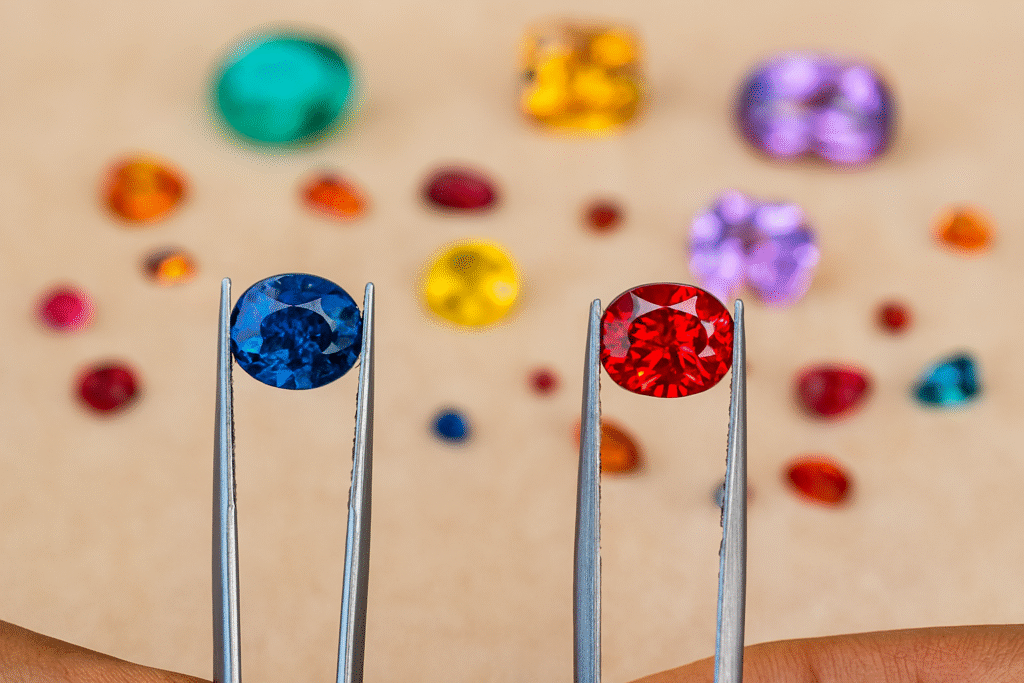
The term “Padparadscha” stems from the Sanskrit word Padmaraga (Lotus Color). Specifically, it is a delicate marriage of Pink and Orange. According to the GIA, a true Padparadscha must balance these two hues perfectly, creating a pastel tone that mimics a sunrise in Sri Lanka. It is the only variety of Corundum other than Ruby that has its own specific name.
The Saffron: The Red Gold
Similarly, Kashmiri Saffron boasts deep crimson or maroon-purple stigmas (Mongra). When infused in water or milk, it yields a rich Golden-Yellow infusion. Consequently, the transition from the red thread to the yellow liquid perfectly mirrors the pink-to-orange flash of the sapphire. Thus, whether adorning a ring or flavoring a Biryani, these colors symbolize purity and divinity.
The Science of Kashmiri Saffron and Padparadscha
Furthermore, let us look at the chemistry that creates this beauty.
- In the Gem: The color comes from trace elements. It is a rare mix of Chromium (Red) and Iron (Yellow). Nature rarely mixes these two in the exact proportion needed to create the “Lotus” shade.
- In the Spice: The color comes from Crocin and Picrocrocin. These are organic chemical compounds developed by the Crocus flower to protect itself from the harsh UV light of the high-altitude Kashmir mountains.
Therefore, both treasures are chemical anomalies. They are nature’s way of showing off.
Origins of Kashmiri Saffron and Padparadscha
Beyond visuals, the narratives of Kashmiri Saffron and Padparadscha are bound together by geography.
The Legend of Pampore
The tale of Kashmiri saffron begins in the 12th century. Two Sufi saints reportedly gifted a crocus bulb to a local chieftain in the Pampore Valley. Grateful for his healing aid, they blessed the land. Today, Pampore is the only place in India (and one of the few in the world) with the unique soil chemistry to grow the highest potency saffron.
The Legend of Sri Lanka
On the other hand, Padparadscha sapphires hail primarily from Sri Lanka (Ceylon). The name reflects deep Sinhalese roots. Just as Kashmir is the “Brand Name” for the world’s best saffron, Sri Lanka is the “Brand Name” for the world’s best Padparadscha. Interestingly, the word “Kashmir” also signifies the world’s best Blue Sapphires. You can read about that connection in my article Kashmir Sapphire vs Grandala.
Fakes of Kashmiri Saffron and Padparadscha
As an expert, I must warn you. Because these two items are so expensive, they are heavily counterfeited.
Fake Saffron
Unfortunately, markets are flooded with dyed corn silk or paper threads sold as Saffron. The Test: Put a thread in cold water. Real Saffron releases a golden hue slowly over 15 minutes, and the thread remains red. Fake saffron releases color instantly and the thread turns white.
Fake Padparadscha
Similarly, the gem market is full of Beryllium-Diffused stones. Traders take cheap pink sapphires and bake them with Beryllium to force an orange color. Consequently, the stone looks like a Padparadscha but is worth a fraction of the price. Always demand a lab report checking for “Lattice Diffusion.” Read more in my Gemstone Buying Mistakes guide.
Healing with Kashmiri Saffron and Padparadscha
Finally, both offer metaphysical allure. Kashmiri Saffron features in Ayurvedic medicine to combat depression and boost vitality (Ojas). In contrast, Padparadscha Sapphires are believed to inspire creativity and emotional healing associated with the Sacral Chakra.
For collectors in Kerala and beyond, pairing these is the ultimate luxury. Imagine wearing a Padparadscha ring while enjoying a saffron-infused Payasam. It is a sensory celebration of life. For more on healthy eating, check my Healthy Living and Diet page.
Conclusion: Kashmiri Saffron and Padparadscha
Ultimately, Kashmiri Saffron and Padparadscha represent the pinnacle of nature’s artistry. One requires 150,000 flowers to make a kilogram. The other requires millions of years of geological pressure to form a single crystal. In summary, they teach us that true beauty is rare, hard to find, and worth waiting for.
FAQ: Saffron and Sapphires
What makes Kashmiri Saffron the most expensive spice?
It earns its “Red Gold” nickname from the labor intensity. It takes 150,000 flowers, hand-picked at dawn in Pampore, to produce just one kilogram of dried spice.
How rare are Padparadscha sapphires?
Extremely rare. They are far scarcer than blue sapphires or rubies. A fine, untreated Padparadscha is one of the most expensive gems per carat in the world.
Do Kashmiri Saffron and Padparadscha share symbolism?
Yes. Both symbolize sacredness, prosperity, and the Lotus Flower (Padma). In Indian tradition, the color of the sunrise/lotus is considered the color of life itself.
Can Padparadscha sapphires be found outside Sri Lanka?
Primarily no. While some stones from Madagascar and Tanzania are similar, purists argue that the true “Lotus Color” only comes from the soil of Sri Lanka.
Is Saffron good for health?
Absolutely. It is a powerful antioxidant. In Ayurveda, it is used for glowing skin, mood enhancement, and heart health.
Author Bio
P.J. Joseph, also known as Saju Elizamma, Gemstone & Gold Consultant serving Kerala, Tamil Nadu, and Karnataka.