Introduction
In the history of Swiss watchmaking, the Jean-Claude Biver Business Model looms larger than any brand. Jean-Claude Biver is the man who saved Blancpain, resurrected Omega, and created the “Art of Fusion” at Hublot. However, in 2023, he launched his final and most personal venture: Biver Watches.
Significantly, this venture marks a bold departure from the corporate mass-luxury giants he once led. Instead, the Jean-Claude Biver Business Model embraces a highly exclusive, family-run “Établisseur“ approach. As an expert who has followed his career for decades, I see this as his “Magnum Opus.” In this article, I will explore the core principles driving Biver’s success and how he is using scarcity and “Invisible Beauty” to disrupt the $50 billion Swiss watch industry.
The Établisseur Model: Organizing Genius
At the heart of the Jean-Claude Biver Business Model lies the Établisseur approach. Essentially, this is a time-honored Swiss tradition reimagined for 2026. Unlike a full manufacture—where brands like Rolex Business Model or Jaeger-LeCoultre produce every component in-house—Biver acts as a conductor of an orchestra.
Specifically, he assembles a “commando team” of elite independent specialists. For instance, Biver partners with Cercle des Horlogers for intricate movements, while other artisans handle case-making and dial guilloché. This collaborative ecosystem not only leverages the best talents but also fosters innovation without the overhead of a massive factory. Consequently, production remains nimble. It is similar to how MB&F Watch Brand uses “Friends” to build their machines.
Mastering the Invisible: The Soul of the Watch
What truly sets Biver Watches apart is the philosophy of “Mastering the Invisible.” Biver believes a watch’s “soul” hides in elements the wearer never sees—like the underside of screws or the hidden side of bridges.
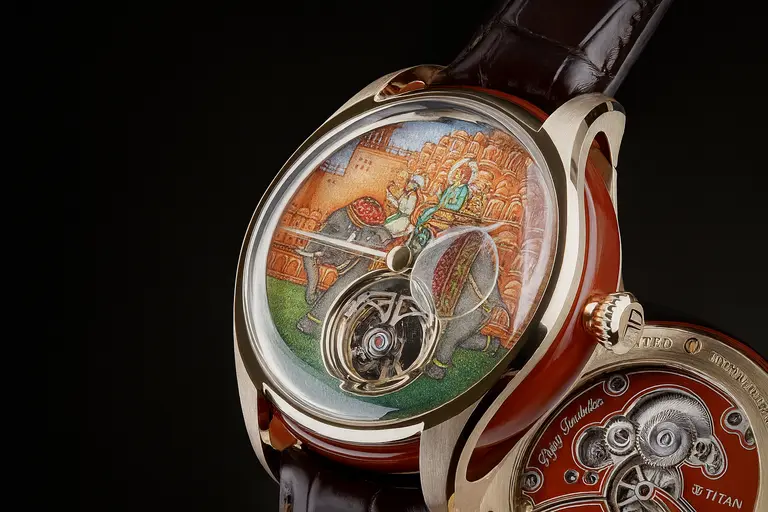
Therefore, every single part receives hand-finishing to the same obsessive standard as the dial. Consider the Carillon Tourbillon Minute Repeater, their flagship complication. Even its concealed gears gleam with Black Polishing (polished until they look black) and internal angles. As a Gemologist, I compare this to the “Cut” of a diamond. Even if the culet is hidden in the setting, a master cutter ensures it is perfect. Biver’s mantra? “If it’s worth doing, it’s worth doing, whether perfectly visible or not.”
Hyper-Exclusivity in the Jean-Claude Biver Business Model
Interestingly, Biver is doing the exact opposite of what he did at Hublot. At Hublot, the goal was Volume and Visibility. At Biver, the goal is Scarcity and Silence.
Hyper-exclusivity forms a key pillar of the Jean-Claude Biver Business Model. In 2023, the brand produced just 15 pieces. The goal is to cap output at around 50 to 100 annually. This deliberate scarcity mirrors strategies from ultra-rare brands like Richard Mille. Furthermore, prices reflect this rarity—often exceeding $550,000 per watch. Consequently, these are positioned not as accessories, but as “Eternal Art” assets.
Family Ownership in the Jean-Claude Biver Business Model
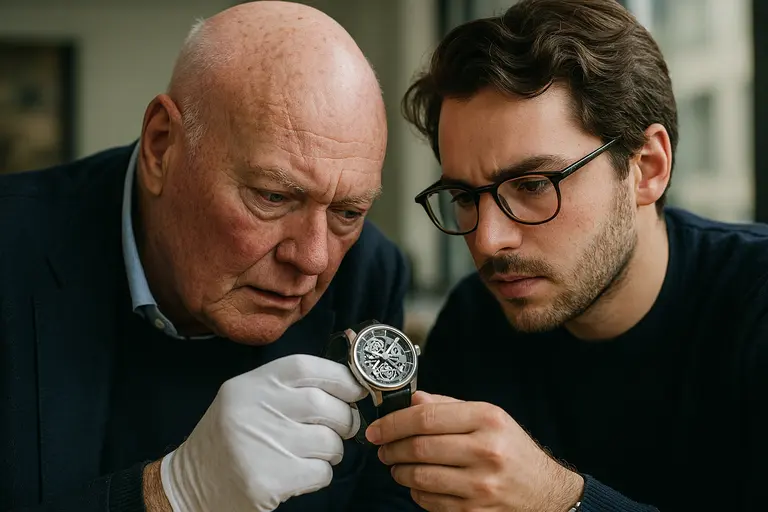
Unlike the boardroom-driven empires of LVMH or Richemont, Biver Watches is an intimate family affair. Co-founded with his son, Pierre Biver—a rising star in complications—the brand thrives on generational synergy. Remarkably, Jean-Claude liquidated his personal watch collection (selling Patek Philippes he owned for decades) to fund this startup.
This proves his commitment to independence. For my Indian readers, this resonates deeply. We value family businesses in which the father passes on wisdom (Guru-Shishya parampara) to the son. As a result, customers aren’t transactions; they are guests. For example, Biver often sends loyal clients artisanal cheese from his own farm in the Swiss Alps. This hospitality builds a bond that corporate brands cannot fake. Read about hospitality in my Creative Hospitality in Indian Jewelry Stores guide.
Strategic Pillars of the Jean-Claude Biver Business Model
Shifting to marketing, Biver challenges luxury norms. He does not sell “Specs” (Accuracy, Water Resistance). Instead, he sells Emotion. He famously states, “A watch has no purpose. It is useless. That is why it is art.”
Additionally, he future proofs the brand by framing mechanical watches as timeless. “Technology obsolesces; horology endures,” he asserts. A smartwatch from 2026 will be trash in 2030. A Biver watch will be an heirloom in 2100. Thus, the Jean-Claude Biver Business Model targets the soul of the collector.
Conclusion on the Jean-Claude Biver Business Model
In summary, Jean-Claude Biver is not just making watches; he is writing his final chapter. By rejecting mass production and embracing the human touch, he has created a brand that is smaller, quieter, but arguably more powerful than the giants he once ruled. Ultimately, Biver Watches is a love letter to the history of Swiss watchmaking.
FAQ: Jean-Claude Biver Business Model
What is the Jean-Claude Biver Business Model Établisseur approach?
The Établisseur model involves curating top independent specialists to manufacture components, which are then assembled and finished under the brand’s name. It prioritizes “Best in Class” partnerships over in-house ego.
How many Biver Watches are made yearly?
Extremely few. Initially, they started with 15 pieces in 2023 and plan to scale slowly to maybe 50-100 pieces per year. This ensures hyper-exclusivity.
Why does Biver focus on invisible finishing?
To infuse the watch with a “Soul.” By finishing parts that no one sees, the watchmaker proves their dedication to the art form, creating a spiritual value beyond the physical object.
Is Biver Watches family-owned?
Yes. It was co-founded by Jean-Claude and his son Pierre Biver. It is fully independent and funded by Biver’s own capital to ensure they answer to no shareholders.
What prices do Biver Watches command?
Prices typically start upwards of $550,000. This reflects the complexity (Minute Repeaters, Tourbillons) and the hundreds of hours of hand-finishing involved.