Summary
Even a tiny chip can halve your emerald’s value. Learn how to inspect your stone for cracks, edge wear, and abrasions before you buy — straight from 40 years in the gem trade.
From My Desk as a Gemologist
A client once brought in a sparkling emerald he bought abroad for ₹3 lakh. Under a loupe, a small chip on the crown edge brought its price down to ₹1.2 lakh.
That moment taught him what every gem buyer eventually learns — condition decides value.
Why Emeralds Damage Easily
Emeralds rank 7.5–8 on the Mohs hardness scale, softer than rubies and sapphires.
They often contain tiny natural fissures (jardin), making them prone to cracks and chips.
Even gentle wear can lead to:
- Small chips along facet edges
- Surface-reaching cracks
- Abrasions around the girdle
Each flaw interrupts light flow, reducing brilliance and price.
How to Check an Emerald for Damage
You can inspect your emerald at home or in-store before purchase:
- Hold it under a bright, focused light.
- Tilt it slowly and watch for broken reflections.
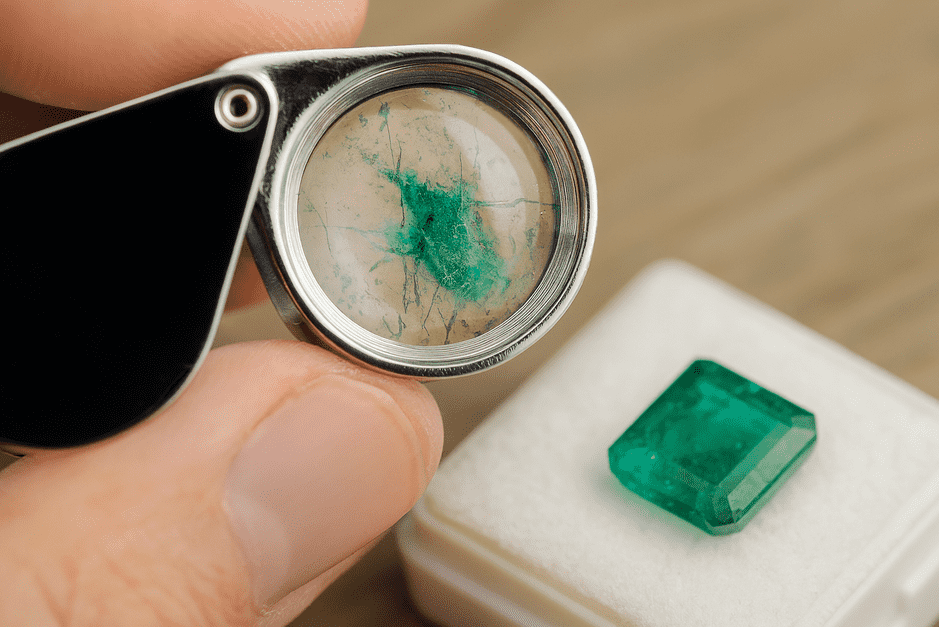
- Use a 10x loupe to check facet junctions and corners.
- Gently run a fingernail along the edge; rough spots mean wear.
- Always view the gem before oiling or setting, since oil can hide fractures.
Every professional buyer starts with edge inspection — color and origin come later.
How Damage Affects Emerald Value
A single chip can drop value by 40–60% overnight.
Even top-grade Colombian or Zambian emeralds can’t escape the penalty of visible damage.
The key is simple:
Inspect before you invest.
Want to understand clarity grading better?
Explore Natural vs Synthetic Gems and Gemstone Treatment Myths.
You can also read Understanding Gem Cuts to see how shape influences how chips appear — or hide.
For long-term care, visit Caring for Your Emerald Jewelry.
To check gold purity on your jewelry, read Understanding BIS Hallmark.
See Also: GIA – Emerald Care & Cleaning
FAQ
Q: Can polishing fix emerald chips?
Yes, if the chip is shallow. But re-polishing can reduce carat weight and symmetry.
Q: Does oiling remove or hide cracks?
It fills them temporarily. Once oil dries, the damage becomes visible again.
Q: Should I buy a discounted emerald with small chips?
Only if you plan to keep it. Reselling a damaged stone is difficult.
Q: Which labs report emerald damage?
GIA and IGI list surface-reaching cracks or chips under comments in their certificates.
This comprehensive global cuisine FAQ covers everything about Asian and Western food and drinks. Whether you’re exploring international cooking techniques or discovering new flavors, this global cuisine FAQ answers the most frequently asked questions about world food traditions, ingredients, and culinary practices from both Eastern and Western cultures.
Global Cuisine FAQ: Asian & Western Food & Drinks
Food reveals cultural contrasts in clear and delicious ways. From cooking methods to dining customs, Asian and Western cuisines showcase unique traditions while also offering fascinating overlaps. Below, you’ll find answers to the most common questions about these culinary worlds.
Understanding Core Differences in Cuisine
1. What distinguishes Asian and Western culinary traditions?
Asian meals often rely on rice or noodles as a foundation. Flavors usually come from soy sauce, ginger, garlic, and a wide variety of spices. Meanwhile, Western gastronomy emphasizes bread, potatoes, and pasta. Dairy plays a key role, with butter, cream, and cheese giving richness to many dishes. Herbs such as rosemary and thyme highlight European cooking. These contrasts create distinct dining habits and flavor profiles.
2. Are Asian dishes always spicy?
No, not at all. While cuisines from Thailand and parts of India feature bold use of chilies, not every dish follows this pattern. Japanese sushi, Chinese dim sum, and Korean bulgogi are mild examples. In fact, Asian cuisines range from fiery to delicate, showcasing a rich palette of flavor.
Western Breakfast Staples and Comfort Foods
1. What constitutes typical Western morning meals?
Western breakfasts often include eggs, bacon, and toast. Pancakes, waffles, and cereal are also popular choices. These hearty starts are usually enjoyed with coffee, tea, or juice, providing both energy and comfort.
2. What represents popular Western comfort foods?
Comfort foods in the West speak to nostalgia and indulgence. Creamy macaroni and cheese, pizza, and hearty casseroles are favorites. Similarly, burgers and fried chicken have wide appeal. Because they are warm, filling, and familiar, these dishes strongly connect to emotion.
Cultural Dining Practices
1. Do all Asian cultures employ chopsticks?
No. Chopsticks dominate in East Asia—China, Japan, and Korea. However, Southeast Asia prefers spoons and forks, while India and parts of the Middle East often use flatbreads or hands. This diversity highlights how food customs closely reflect culture.
2. Why are some Asian foods fermented?
Fermentation preserves food while also enhancing nutrition and flavor. Korean kimchi, Japanese miso, and Indonesian tempeh show how tradition meets health benefits. These foods are valued not only for taste but also for their role in well-being.
Common Western Beverages
1. What beverages are common with Western meals?
Western dining often features water, soda, or fresh juice. Alcohol also has a strong cultural connection, with wine served at European dinners and beer central in North America. In the southern United States, sweet iced tea is a staple.
Dietary Flexibility and Options
1. Can one discover plant-based options easily?
Yes. Asian cuisines offer tofu stir-fries, lentil dals, and vegetable curries that are naturally vegetarian. Western food, similarly, embraces plant-based eating. Salads, vegetarian pastas, and vegan burgers have grown popular, making meat-free dining accessible worldwide.
Unique Asian Drinks to Explore
1. What are some unique Asian beverages?
Asia provides a wide variety of distinctive drinks. Bubble tea, from Taiwan, combines tea with chewy tapioca pearls. Japanese sake, made from rice, holds deep cultural meaning. Strong Vietnamese iced coffee, sweetened with condensed milk, adds a bold twist compared to Western brews.
Portion Sizes and Dining Habits
1. How do portion sizes compare?
Western meals often emphasize large servings, reflecting abundance. By contrast, Asian meals are usually smaller yet balanced, encouraging sharing and mindful eating. This creates different social experiences around the table.
The Art of Fusion Cuisine
1. Is it feasible to integrate Asian and Western flavors?
Absolutely. Fusion cuisine blends traditions in creative ways. For instance, teriyaki burgers combine Japanese flavors with American fast food, while kimchi tacos bring Korean spice to Mexican street food. These playful mixes show how food bridges cultures.