Introduction
In the galaxy of high jewelry, one star burns brighter than the rest. Harry Winston stands as the pinnacle of American luxury, now shining under the Swiss umbrella of the Swatch Group. Known as the “King of Diamonds,” the founder revolutionized the industry in the 1930s. However, the Harry Winston Business Model of 2026 is a sophisticated blend of heritage and corporate strategy.
It thrives on timeless pillars while embracing strategic evolutions like High Horology. As a Gemologist, I admire this brand because it puts the stone first. In this article, I will explore how a single jeweler became a global empire. We will analyze the “Winston Cluster,” the daring “Opus” watch series, and why the Swatch Group paid $1 Billion to acquire it. Whether you are an investor or a collector, this is the blueprint of ultra-luxury.
Product Philosophy of the Harry Winston Business Model
First and foremost, Harry Winston’s philosophy prioritizes “stones over metal.” Unlike brands that focus on heavy gold settings, Winston believed the diamond should float. For instance, the signature “Winston Cluster” technique groups Pear-shaped, Marquise, and Round Brilliant diamonds with minimal platinum wire. Consequently, this maximizes brilliance and light capture from every angle.
Moreover, the brand insists on the rarest gems. They specialize in D-Color and Type IIa diamonds—the highest purity grades, free of nitrogen traces. This approach, rooted in founder Harry Winston’s vision since 1932, ensures each creation showcases nature’s finest rarities. As a result, collections like the Lily Cluster and Sunflower pay homage to 1940s icons. If you want to understand diamond quality, check my Rapaport vs IDEX Diamond Prices guide.
Legacy in the Harry Winston Business Model
To understand the Harry Winston Business Model, you must understand the man. Harry Winston was not just a jeweler; he was a daredevil. Most notably, he owned the legendary Hope Diamond (45.52 carats, Blue). Instead of selling it to a king, he donated it to the Smithsonian Institution in 1958 to help build a national gem collection for the American people.
Remarkably, he sent the priceless gem via regular US Mail in a simple brown box! This act cemented the brand’s reputation for integrity and philanthropy. Today, these legacy fuels the brand’s mystique. When you buy a Winston piece, you are buying into the history of the most famous diamonds on Earth. Read about other blue gems in my Marble Berry vs Blue Diamond comparison.
Distribution in the Harry Winston Business Model
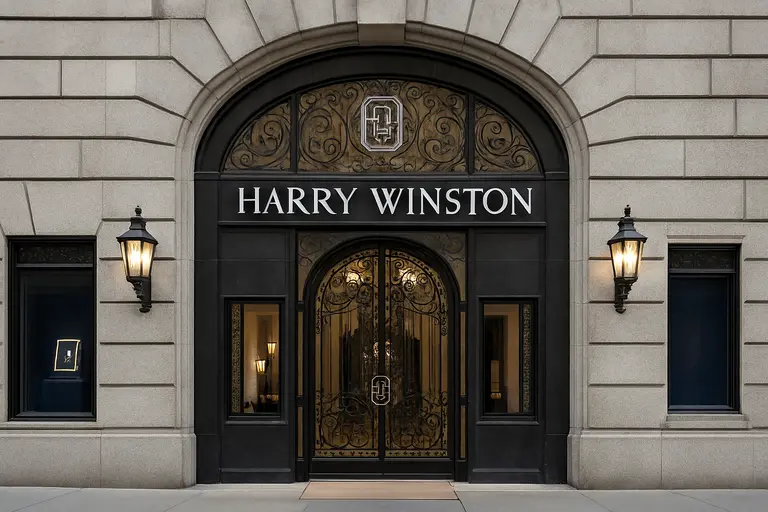
Furthermore, exclusivity defines Harry Winston’s retailing. The brand operates over 40 prestige “Salons” in global hubs such as New York, Paris, London, and Tokyo. These salons offer appointment-based, personalized services. Recently, expansions included Japan’s largest salon in Ginza and an eighth in mainland China at Hangzhou Tower, targeting Asia’s booming markets.
In addition, a hybrid model blends wholly-owned flagships with partner salons. This strategy preserves the intimate “salon experience.” For elite clients, the brand will fly high-net-worth individuals to the Fifth Avenue flagship for private viewings. Therefore, it balances tradition with accessibility, fostering loyalty among the global elite. This is similar to the “Boutique Strategy” I discussed in the Richard Mille Business Model.
Horology in the Harry Winston Business Model
Since 1989, Harry Winston has diversified into Swiss watchmaking. Crucially, under the Swatch Group (which acquired the brand in 2013), this division has flourished. The “Opus Series” is legendary in the watch world. Started in 2001, it partnered with independent geniuses like F.P. Journe and MB&F Watch Brand Founder Max Büsser to create avant-garde machines.
For 2026, the focus has shifted to the Premier and Ocean collections. Specifically, for the Lunar New Year (Year of the Horse), limited-edition Rose Gold automatics feature red lacquer dials. This expansion bridges jewelry expertise with horology, appealing to collectors who want both mechanics and sparkle. Consequently, it strengthens Swatch Group’s prestige segment, sitting above Omega and Longines.
2026 Strategic Updates under Swatch Group
Under Swatch Group ownership, Harry Winston adapts dynamically. Aggressive Asian growth counters market challenges in the West. Retail integrates digital services for efficiency without diluting exclusivity.
Sustainability gains prominence through the Responsible Jewellery Council (RJC) certification. This verifies ethical sourcing, human rights, and anti-slavery practices across the supply chain. Therefore, it meets 2026 consumer demands for transparency, similar to the Future of Single Mine Origin Gold. Overall, these updates position Harry Winston at luxury’s apex.
Conclusion: The Jewel in the Crown
In summary, the Harry Winston Business Model proves that a brand can be corporate without losing its soul. By maintaining the strict quality standards of the founder while leveraging the distribution power of the Swatch Group, Harry Winston remains the King. Ultimately, diamonds are forever, and so is this business model.
FAQ: Harry Winston Business Model
How many Harry Winston salons exist worldwide?
Harry Winston operates over 40 salons, recently hitting 44, with significant expansions in Asia (China and Japan) to capture the growing luxury market there.
What is the Winston Cluster?
It is a signature design technique where diamonds (Pear, Marquise, Round) are set at varying angles with minimal metal, creating a 3D cluster that captures maximum light.
Is Harry Winston RJC certified?
Yes. The brand adheres to the strict standards of the Responsible Jewellery Council (RJC), ensuring that all diamonds and gold are ethically sourced and conflict-free.
What are Type IIa diamonds?
They are the purest form of diamonds, containing no measurable nitrogen. They are often colorless (D-Color) and are extremely rare, making up less than 2% of all natural diamonds.
Who owns Harry Winston in 2026?
The Swatch Group, a Swiss conglomerate, acquired the brand in 2013 for $1 Billion. It sits at the very top of their Prestige and Luxury range, above Breguet and Blancpain.