Introduction to the Grand Seiko Business Model
Grand Seiko has earned global respect by focusing on meticulous craftsmanship, extreme precision, and quiet innovation rather than flashy marketing. Although the brand belongs to the Seiko Watch Corporation, it operates as an independent luxury entity with its own distinct identity. Instead of relying on celebrity endorsements, the Grand Seiko business model builds customer trust through exceptional engineering and dependable performance.
Moreover, the brand appeals strongly to buyers who value intrinsic quality over loud status symbols. Because its watches blend traditional Japanese craftsmanship with modern technology, they attract both seasoned collectors and first-time luxury buyers. As a result, Grand Seiko has grown into a formidable competitor against established Swiss powerhouses. This article explains how this model works, what sets it apart, and why India has become a central pillar of its global growth strategy. To see how other high-end industries manage quality, you can read our guide on industry sheepdogs in tech and jewelry.
The Independent Strategy of the Grand Seiko Business Model
Grand Seiko began in 1960 as Seiko’s flagship collection, and its original mission was to exceed the finest watches available anywhere in the world. Over the following decades, the collection steadily earned a reputation for durability and accuracy. However, a major turning point arrived in 2017 when the Seiko Watch Corporation established Grand Seiko as a fully independent global luxury brand.
Consequently, the company developed its own marketing strategy and expanded its dedicated retail presence. Furthermore, international models dropped the “Seiko” name from their dials, reinforcing a distinct identity. Today, Grand Seiko competes directly with Swiss giants while maintaining a uniquely Japanese philosophy. For a broader look at the region’s impact, explore our guide to Japanese Luxury Watch Brands: A Complete Guide. You can also visit the official Grand Seiko website for current collection details.
Vertical Integration in the Grand Seiko Business Model
Most importantly, one of the greatest advantages of the Grand Seiko business model lies in its extensive vertical integration. Unlike many manufacturers that purchase movements from outside suppliers, Grand Seiko designs and produces virtually all critical parts in-house. This includes everything from the hairsprings to the dials and cases.
Specifically, production takes place at two specialized facilities in Japan:
- The Shizukuishi Watch Studio: Produces high-end mechanical movements.
- The Shinshu Watch Studio: Manufactures the famous Spring Drive and high-accuracy quartz calibers.
Due to this integrated approach, the brand maintains absolute quality control throughout the entire production cycle. Consequently, customers receive watches that reflect consistent craftsmanship from the smallest internal gear to the polished exterior. This level of oversight is similar to the Chow Tai Fook business model, which prioritizes supply chain control to ensure consumer trust.
Tech and Standards of the Grand Seiko Business Model
The company does not rely solely on its heritage; instead, it continues to invest in proprietary technologies that differentiate its watches from those of its Swiss rivals. Their lineup centers on three movement families: mechanical, high-accuracy quartz, and the exclusive Spring Drive. Specifically, the Spring Drive combines mechanical power with an electronic regulator, producing a smooth gliding seconds hand that symbolizes the “nature of time.”
Equally important, every mechanical piece undergoes the “Grand Seiko Standard” testing. This rigorous evaluation runs for 17 days across six positions and three temperatures. Although this process differs from the Swiss COSC certification, many experts regard it as more demanding. This focus on verifiable data is a key lesson in building India’s global brands for the future. For more on international standards, visit the Watches and Wonders official site.
Artistry Driving the Grand Seiko Business Model
Technology alone does not explain the success of the Grand Seiko business model. Instead, the brand blends engineering with traditional Japanese artistry. For instance, the Zaratsu polishing technique creates distortion-free mirror surfaces. Skilled artisans perform this finishing by hand, a task that requires years of training to master.
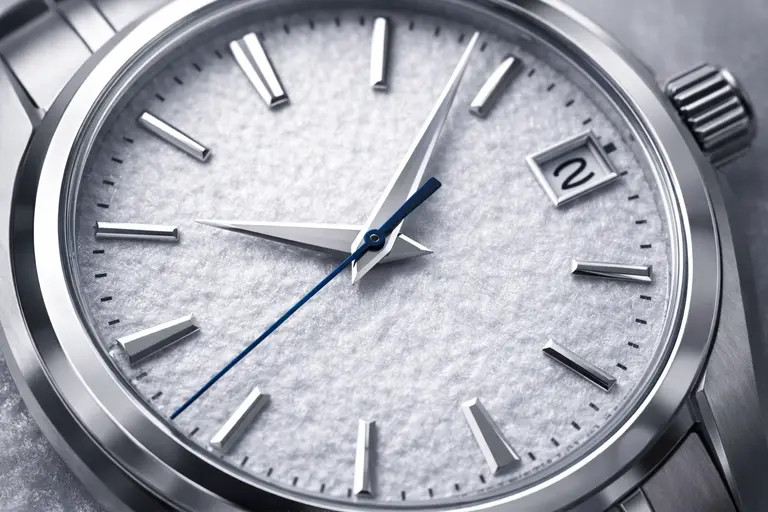
Likewise, the brand has become legendary for its nature-inspired dials, such as the “Snowflake” and “White Birch.” These designs reflect the snow-covered fields and forests surrounding their Japanese studios. Consequently, every watch tells a visual story that connects modern horology with cultural heritage. This artisanal focus mirrors why Indian designers choose raw diamond and Polki jewelry, highlighting natural imperfections and character.
Expanding the Grand Seiko Business Model in India
In addition to manufacturing excellence, the brand has invested heavily in the Indian retail experience. India has become one of Grand Seiko’s most important growth markets due to rising disposable incomes and a growing appreciation for “quiet luxury.” Many Indian buyers now prefer understated craftsmanship over prominent logos.
To meet this rising demand, the brand has opened exclusive Salons in major hubs like Bengaluru and Mumbai. Unlike Swiss brands that often create artificial waiting lists, Grand Seiko keeps its core collection accessible. Therefore, buyers can usually purchase their preferred model without years of waiting. However, challenges remain, as some consumers still associate the name with affordable everyday watches. Nevertheless, positive word-of-mouth is rapidly shifting this perception among the Indian elite. This evolution is similar to the gold demand shifting from jewelry to investment, as buyers become more savvy about long-term value.
FAQ About the Grand Seiko Business Model
Is Grand Seiko a better investment than Rolex?
While Rolex currently has a higher resale value due to brand recognition, the Grand Seiko business model focuses on finishing and movement technology that many collectors believe exceeds Swiss standards at the same price point.
What is the most famous Grand Seiko watch?
The “Snowflake” (Ref. SBGA211) is arguably the most iconic model. It features a titanium case and a dial texture inspired by the snow outside the Shinshu Watch Studio.
Do Grand Seiko watches need to be sent to Japan for service?
Most routine services can be handled by authorized regional centers. However, certain complex Spring Drive or Hi-Beat movements may require the expertise found only at the Japanese studios.
How does Spring Drive technology work?
Spring Drive uses a mainspring for power but replaces the traditional escapement with a Tri-synchro regulator. This results in quartz-like accuracy with a completely silent, smooth hand sweep.
Why is Zaratsu polishing so special?
Zaratsu is a hand-finishing technique that requires pressing the case against a rotating tin plate. It creates a “black” mirror finish with no distortion, a hallmark of the Grand Seiko business model.
Disclaimer
This article is for educational purposes only. The author has no financial affiliation with Grand Seiko or Seiko Watch Corporation. Watch specifications and market availability in India may change; therefore, readers should verify details with authorized retailers before making a purchase. Always seek professional advice for high-value investments.