
Introduction
For over two decades, the Diavik Diamond Mine quietly powered one of the world’s most important sources of high-quality rough diamonds—all from a remote island in Canada’s frozen north. In March 2026, the mine produced its last commercial diamond, officially closing after 23 years of operation.
As a Gemologist who tracks global supply chains, I know that losing a mine of this caliber sends ripples through the trading floors of Antwerp and Surat. In this article, I will break down everything you need to know about Diavik: how it started, how it worked, and what happens next. Whether you are a jewelry investor or a fan of extreme engineering, the story of this Arctic giant reveals the true cost of pulling “Ice” from the ice.
How Geologists Discovered the Diavik Diamond Mine
The story of Diavik begins with detective work in the snow. In 1991 and 1992, geologists traced “Indicator Minerals” (like specific garnets that travel in glacial debris) back to their source in the Northwest Territories of Canada. Eventually, those minerals pointed to a cluster of Kimberlite pipes: the volcanic rock formations that carry diamonds to the Earth’s surface. This discovery was a breakthrough, setting off years of planning before a single diamond ever reached the surface.
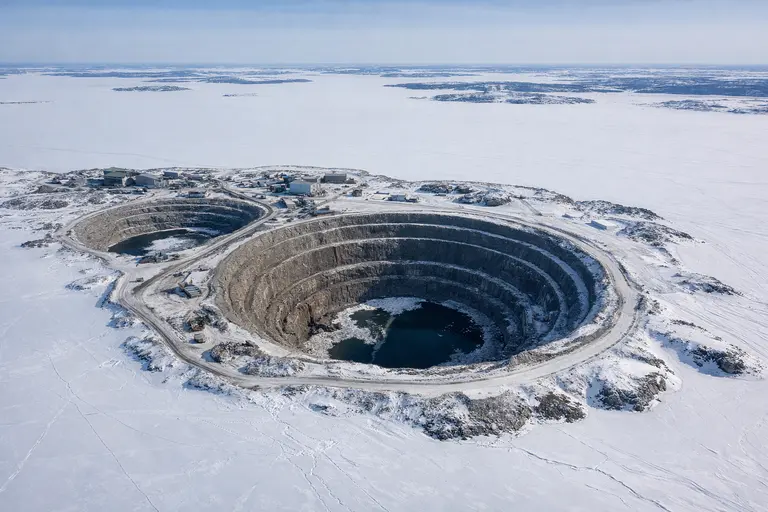
Geographically, the mine sits on a 20-square-kilometer island in Lac de Gras, roughly 300 kilometers northeast of Yellowknife. To mine there, the engineering team had to construct massive rock dikes—essentially watertight walls built directly into the lake—to hold back the water and expose the kimberlite pipes underneath. Consequently, it was an enormous feat of Arctic engineering.
Who Owned and Operated the Diavik Diamond Mine?
Next, let’s look at the corporate structure. Diavik Diamond Mines Inc. owned and operated the project as a joint venture. Primarily, mining giant Rio Tinto held a 60% stake and served as the operating partner. Dominion Diamond Mines held the remaining 40%. Over the years, ownership of the minority stake changed hands, but Rio Tinto maintained consistent operational control. Furthermore, the partnership invested heavily in infrastructure and environmental planning—all of which shaped how the mine ran and how it is now closing. You can compare this corporate mega-structure to the artisanal methods I discussed in Panna Diamond Mining.
Production: The “Ice Road” Logistics
Between 2003 and 2026, the Diavik Diamond Mine produced over 150 million carats of rough diamonds. That is an extraordinary figure, and the quality made it even more remarkable. Unlike some African mines that produce heavily included industrial stones, Diavik produced mostly colorless, high-value gems. Therefore, they were highly sought after by cutters in India.
The Extraction Method
The mine exploited four main kimberlite pipes using two methods. First, workers used open-pit mining to remove diamonds close to the surface. Then, as those deposits ran out, the operation shifted to underground mining to follow the pipes deeper.
The Famous Ice Road
Crucially, the Arctic location created unique logistical challenges. Every year, workers brought in heavy supplies (fuel, explosives, trucks) over the Tibbitt to Contwoyto Winter Road. Famously featured on the TV show Ice Road Truckers, this temporary highway built across frozen lakes only stays open for a few weeks in winter. Outside of that window, the mine relied on air transport, which made everything exponentially more expensive.
Why the Diavik Diamond Mine Is Closing Now
The short answer is that the diamonds simply ran out. Diavik did not close because of financial trouble, regulatory problems, or falling demand. Instead, the mine reached the natural end of its economic reserves. This means they reached the point where extracting more diamonds would cost more than the diamonds are worth.
Therefore, final commercial production wrapped up in March 2026, exactly on schedule. This planned life cycle proves the accuracy of the original geological surveys. If you want to know how rough diamonds are priced globally, read my Rapaport vs IDEX Diamond Prices guide.
Environmental Rehabilitation of the Diavik Diamond Mine
Closing a mine in the Arctic is not as simple as switching off the lights. Rio Tinto has committed to a full environmental rehabilitation program that runs through 2029. The primary goal is to return the island to something close to its natural state.
Workers will remove the rock dikes that kept the lake water out, allowing Lac de Gras to flood the pits and reclaim that space. Additionally, the team will re-establish native vegetation and monitor water quality. Importantly, these commitments are legally binding agreements with local Indigenous communities (the Tłı̨chǫ and Yellowknives Dene). This ethical closure sets a new standard, much like the ethical sourcing rules I discussed in Future of Single Mine Origin Gold.
Conclusion: The Impact on the Market
In summary, the closure of the Diavik Diamond Mine removes millions of carats of clean, white rough diamonds from the global supply chain. While Lab-Grown diamonds are filling the volume gap, the loss of this natural supply will likely support the prices of existing high-quality natural diamonds. Ultimately, Diavik proved that you can mine in the harshest environment on earth—and leave it as you found it.
FAQ: Diavik Diamond Mine
Where is the Diavik Diamond Mine located?
It sits on a 20-square-kilometer island in Lac de Gras, in the Northwest Territories of Canada—about 300 kilometers northeast of Yellowknife, just south of the Arctic Circle.
How many carats did it produce?
Over its 23-year lifespan (2003–2026), it produced more than 150 million carats of mostly colorless, high-quality rough diamonds.
Why did the mine close in 2026?
The mine exhausted its economically viable reserves. Essentially, digging deeper into the freezing earth became more expensive than the value of the diamonds they were pulling out.
What happens to the site now?
Rehabilitation activities will run through 2029. Engineers will breach the dikes, allowing the lake to flood the open pits, and workers will restore the native vegetation.
Who owned the mine?
Rio Tinto operated the mine and held a 60% majority stake. Washington Companies (formerly Dominion Diamond Mines) held the remaining 40%.
Disclaimer
This article is written for general informational purposes only. Production figures, ownership details, and closure timelines are sourced from publicly available reports and may change as the rehabilitation program progresses. This content does not constitute financial, investment, or legal advice. Readers should consult official sources such as Rio Tinto or the Government of Canada for the most current information on the Diavik Diamond Mine closure.